Ayurveda and the Science of Prakriti: How Ancient Constitutional Medicine Is Reshaping Personalized Health
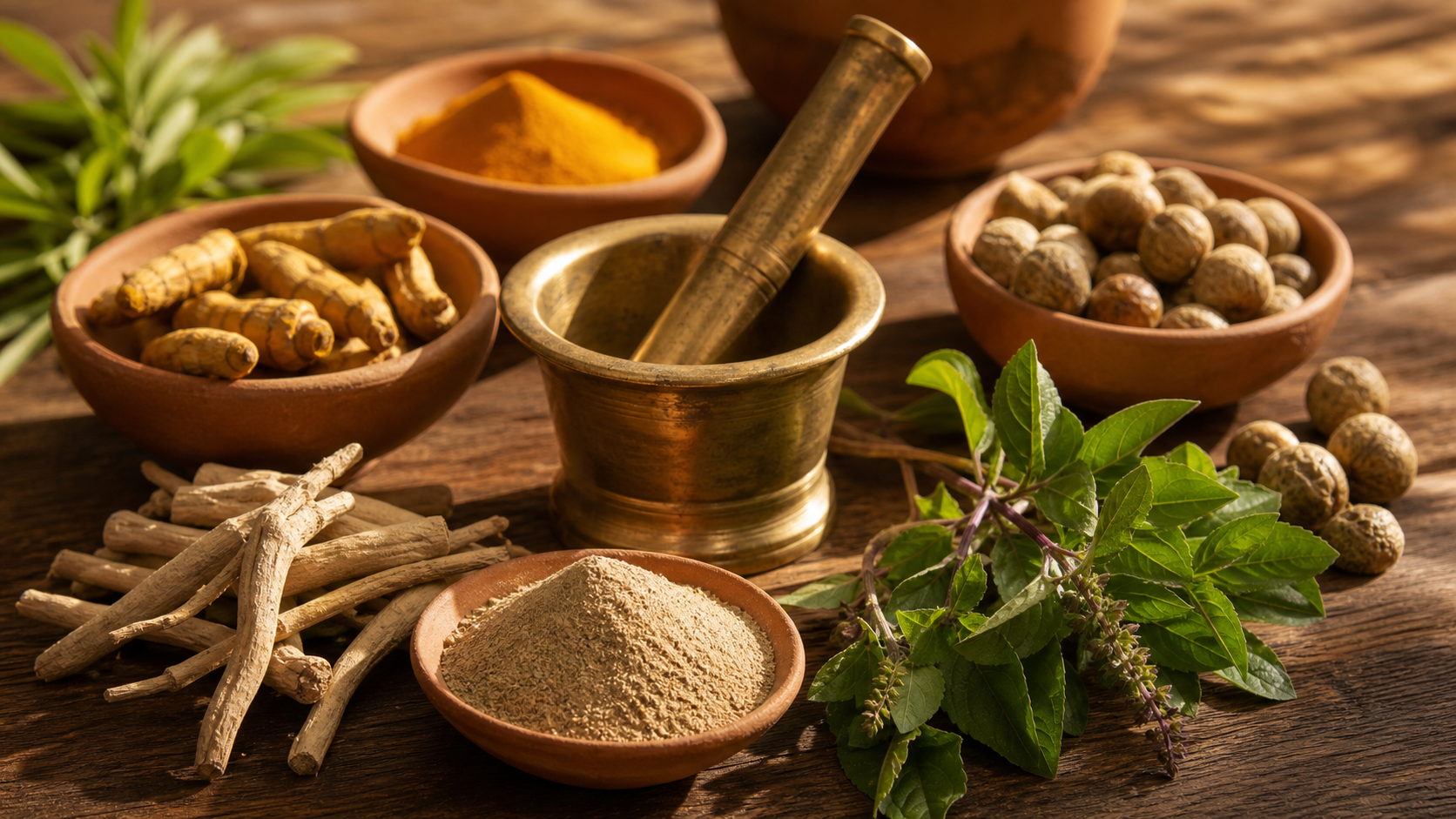
Ayurveda and the Science of Prakriti: How Ancient Constitutional Medicine Is Reshaping Personalized Health
More than 5,000 years before the term "precision medicine" entered the medical lexicon, Ayurvedic physicians were already practicing it. They called it Prakriti — the unique constitutional blueprint that determines how each person digests food, responds to stress, sleeps, ages, and heals. Today, a convergence of genomics, metabolomics, and clinical research is revealing that this ancient framework may have been onto something profound all along.
In May 2025, the World Health Organization formally adopted the WHO Global Traditional Medicine Strategy 2025–2034, providing an institutional framework for integrating traditional systems like Ayurveda into national healthcare infrastructures worldwide. Simultaneously, a growing body of clinical research is validating specific Ayurvedic interventions — from ashwagandha's measurable cortisol-lowering effects to curcumin's anti-inflammatory mechanisms — with the rigor of randomized controlled trials. The ancient and the modern are converging, and the implications for whole-person health are significant.
At Genesis World Health, our principles — Ancient Wisdom. Modern Science. Divine Health. — were built for exactly this moment. Ayurveda represents one of the most complete expressions of integrative health ever developed: a system that honors the body as a sacred, uniquely designed creation, and that recognizes healing as a deeply personal journey. This article explores what Ayurveda is, what the science now confirms, and how its principles can inform your path to whole-person wellness.
What Is Ayurveda? A 5,000-Year System of Personalized Medicine
Ayurveda — from the Sanskrit Ayur (life) and Veda (knowledge) — is one of the world's oldest comprehensive health systems, originating in the Indian subcontinent and documented in ancient texts including the Charaka Samhita and Sushruta Samhita. Unlike Western medicine's disease-centered model, Ayurveda is fundamentally a person-centered system: its primary question is not "What disease does this person have?" but "What kind of person has this condition?"
This distinction is not merely philosophical — it has profound practical implications. Two people with identical symptoms may receive entirely different Ayurvedic guidance based on their constitutional type, their current state of imbalance, the season, their age, and their life circumstances. This is personalized medicine in its most ancient and complete form.
The Three Doshas: Vata, Pitta, and Kapha
At the heart of Ayurvedic medicine is the concept of the three doshas — fundamental biological energies that govern all physiological and psychological functions. Each dosha is composed of two of the five classical elements (space, air, fire, water, earth) and expresses a distinct set of qualities:
- Vata (Air + Ether): Governs movement — breathing, circulation, nerve impulses, and the flow of thoughts. Vata types tend to be creative, quick-thinking, and energetic when balanced; when imbalanced, they may experience anxiety, insomnia, digestive irregularity, and scattered focus.
- Pitta (Fire + Water): Governs transformation — metabolism, digestion, body temperature, and the processing of information and emotions. Pitta types tend to be driven, focused, and articulate when balanced; imbalance may manifest as irritability, inflammation, acid reflux, and burnout.
- Kapha (Earth + Water): Governs structure — stability, lubrication, immunity, and emotional groundedness. Kapha types tend to be calm, nurturing, and resilient when balanced; imbalance may present as lethargy, congestion, weight gain, and emotional attachment.
Every person is born with a unique ratio of these three doshas — their Prakriti, or constitutional type. This blueprint is considered fixed at birth and serves as the reference point for health. Disease, in Ayurvedic understanding, arises when the current state (Vikriti) deviates from the constitutional baseline — and healing is the process of restoring that alignment.
Prakriti Meets Genomics: The Emerging Science of Ayurgenomics
For decades, Western medicine viewed the dosha framework as metaphorical at best. That view is changing. A field called Ayurgenomics is now mapping Prakriti constitutional types to measurable molecular markers — genetic polymorphisms, DNA methylation patterns, transcriptomic profiles, and metabolomic signatures — and finding statistically significant correlations.
Research published in peer-reviewed journals has demonstrated that individuals classified as different Prakriti types show distinct patterns in immune function, metabolic markers, and cardiovascular risk factors. A 2025 critical review published in Frontiers in Medicine identified 64 validated Prakriti assessment tools, with the CCRAS-PAS software and ACPI scale showing the highest levels of scientific rigor. Artificial intelligence and machine learning are now being applied to standardize these assessments, allowing for reproducible clinical outcomes that were previously impossible to achieve.
This is not a claim that doshas are literal biological entities in the Western sense. Rather, it suggests that the Ayurvedic framework — developed through millennia of careful clinical observation — may have identified real patterns in human physiology that modern genomics is only now beginning to characterize. The ancient physicians were mapping the terrain; modern science is now drawing the molecular map.
"I praise you because I am fearfully and wonderfully made; your works are wonderful, I know that full well." — Psalm 139:14
This verse captures something Ayurveda has always understood: that each person is uniquely and intentionally designed. The diversity of human constitutions is not a problem to be standardized away — it is a feature of divine craftsmanship, and health approaches that honor that uniqueness are more likely to serve the whole person.
The Clinical Evidence: What Research Now Confirms
Beyond the constitutional framework, Ayurveda has produced a rich pharmacopoeia of botanical medicines that are now among the most rigorously studied natural compounds in the world. Here is what the current evidence shows for three of the most important:
Ashwagandha (Withania somnifera): The Stress-Cortisol Connection
Ashwagandha is Ayurveda's premier adaptogen — an herb used for millennia to build resilience, reduce stress, and restore vitality. Modern clinical research has validated these traditional uses with remarkable consistency.
A randomized, double-blind, placebo-controlled trial published in January 2026 evaluated a standardized ashwagandha root extract in 141 healthy adults experiencing moderate stress and anxiety. Over eight weeks, participants receiving 300 mg twice daily showed significant improvements on the Perceived Stress Scale (PSS), Hamilton Anxiety Rating Scale (HAM-A), Oxford Happiness Questionnaire, and Profile of Mood States — outperforming both a standard extract group and placebo. Critically, all treatment groups showed measurable reductions in serum cortisol levels by the end of the study period.
The World Federation of Societies of Biological Psychiatry (WFSBP) and the Canadian Network for Mood and Anxiety Treatments (CANMAT) have issued provisional recommendations for ashwagandha at 300–600 mg daily for generalized anxiety, noting its favorable safety profile and consistent efficacy across trials. Beyond stress, research links ashwagandha to improvements in sleep quality, mental clarity, energy levels, and cognitive performance.
Turmeric and Curcumin: The Anti-Inflammatory Powerhouse
Turmeric (Curcuma longa) has been used in Ayurvedic medicine for thousands of years as an anti-inflammatory, digestive aid, and wound healer. Its primary active compound, curcumin, is now one of the most studied phytochemicals in the world.
Clinical research demonstrates that curcumin can reduce markers of systemic inflammation including C-reactive protein (CRP), support metabolic health, and assist in managing blood sugar levels. Emerging phase II oncology trials are investigating intravenous curcumin combined with paclitaxel, showing promise in enhancing objective response rates and reducing chemotherapy-induced fatigue. For everyday wellness, curcumin's anti-inflammatory properties make it relevant to virtually every chronic disease category — from cardiovascular health to joint function to cognitive aging.
One important note: curcumin has poor bioavailability on its own. Combining it with piperine (black pepper extract) or using phospholipid-complexed formulations significantly enhances absorption. This is a case where modern delivery science enhances an ancient remedy — exactly the kind of integration that defines the best of whole-person medicine.
Triphala: The Three-Fruit Formula for Gut and Systemic Health
Triphala — a combination of three fruits (Emblica officinalis/Amla, Terminalia bellirica, and Terminalia chebula) — is one of Ayurveda's most versatile and widely used formulations. It has been used for millennia to support gastrointestinal health, bowel regularity, and systemic detoxification.
Modern research confirms Triphala's antioxidant, anti-inflammatory, and antimicrobial properties. It supports gut motility and microbiome diversity, and preliminary research suggests benefits for metabolic health and immune function. Its gentle, tridoshic nature — meaning it is considered balancing for all three constitutional types — makes it one of Ayurveda's most universally applicable remedies.
Ayurvedic Daily Rhythms: The Science Behind Dinacharya
Ayurveda is not only a system of herbal medicine — it is a complete lifestyle framework. The concept of Dinacharya (daily routine) outlines specific practices aligned with the body's natural rhythms: rising before sunrise, oil pulling (gandusha), self-massage (abhyanga), tongue scraping, mindful eating aligned with digestive capacity, and winding down before 10 PM when Kapha energy supports deep sleep.
Modern chronobiology — the science of biological rhythms — validates many of these practices. Rising with the sun aligns with circadian cortisol rhythms. Eating the largest meal at midday corresponds to peak digestive enzyme activity. Evening wind-down practices support melatonin production and sleep architecture. What Ayurveda encoded as spiritual discipline, modern science is now explaining as circadian biology.
The Ayurvedic approach to seasonal living (Ritucharya) is similarly validated by modern research on seasonal immune variation, vitamin D fluctuations, and the impact of light exposure on mood and metabolism. Eating heavier, warming foods in winter and lighter, cooling foods in summer is not merely tradition — it reflects real physiological shifts in digestive capacity and metabolic demand across seasons.
Ayurveda and Faith: Ancient Wisdom Meets Divine Design
For those who approach health through a faith lens, Ayurveda offers a compelling resonance. Its foundational premise — that each person is uniquely constituted, that the body is a sacred vessel deserving of careful stewardship, and that healing involves restoring alignment with one's original design — echoes the biblical understanding of human dignity and divine craftsmanship.
"Do you not know that your bodies are temples of the Holy Spirit, who is in you, whom you have received from God? You are not your own; you were bought at a price. Therefore honor God with your bodies." — 1 Corinthians 6:19-20
Honoring the body as a temple means understanding how it was uniquely designed — and Ayurveda's constitutional framework offers one of the most sophisticated tools ever developed for that purpose. At Genesis World Health, we believe that all paths of healing have value, and that ancient wisdom traditions like Ayurveda carry insights that deserve to be honored alongside modern science.
Important Considerations: Safety and Professional Guidance
While Ayurveda offers remarkable tools for whole-person wellness, several important cautions apply:
- Product quality matters enormously. Approximately 20% of Ayurvedic products available online have been found to exceed WHO safety limits for heavy metals including lead, mercury, and arsenic. Always choose products that are GMP-certified and third-party tested.
- Herb-drug interactions are real. Curcumin may increase bleeding risk when combined with anticoagulants. Ashwagandha may interact with thyroid, diabetes, and immunosuppressant medications. Triphala may affect the metabolism of certain chemotherapy agents. Always disclose herbal use to your healthcare providers.
- Ayurveda complements, not replaces, evidence-based care. For serious conditions, Ayurvedic interventions are best used as adjuncts to conventional medical care under qualified supervision.
"He makes me lie down in green pastures, he leads me beside quiet waters, he refreshes my soul." — Psalm 23:2-3
May your journey toward whole-person health be guided by both ancient wisdom and modern understanding — and may you find in that integration the divine health you were created to experience.
Ready to Discover Your Unique Health Blueprint?
Your constitutional type shapes how you digest, sleep, respond to stress, and heal. GWH's AI Agent Council brings together specialists in Ayurveda, Naturopathy, nutrition, and integrative medicine to deliver personalized health insights tailored to your unique design — not a one-size-fits-all approach. Begin with the Health Assessment to establish your baseline, then explore Deep Dive Sessions with our Ayurveda specialist for focused, one-on-one insights on constitutional wellness.
Medical Disclaimer: As always, we encourage you to work with qualified healthcare providers — including licensed Ayurvedic practitioners, integrative medicine physicians, registered dietitians, and your primary care provider — when making significant changes to your personalized health and constitutional medicine approach. Genesis World Health is an educational platform, not a substitute for professional medical care. Our role is to equip you with knowledge, insight, and the integrative perspective you need to have more informed conversations with your healthcare team.
Sources & References
- Top Doctor Magazine: Ayurvedic Medicine — Modern Health Applications (2026)
- Frontiers in Medicine: Prakriti Assessment Tools — Critical Review (2025)
- PubMed: Ashwagandha Root Extract RCT — Stress and Cortisol (2026)
- NIH Office of Dietary Supplements: Ashwagandha — Health Professional Fact Sheet
- CAYEIT: Ayurveda Scientific Maturation and Systems Research (2025)
- Prevention Only: Ayurveda Meets Science — What the Research Says
- Springer: Ayurgenomics — Prakriti and Molecular Correlates