Sacred Oils, Ancient Healing: The Biblical Science of Anointing Oils and Their Proven Antimicrobial Power
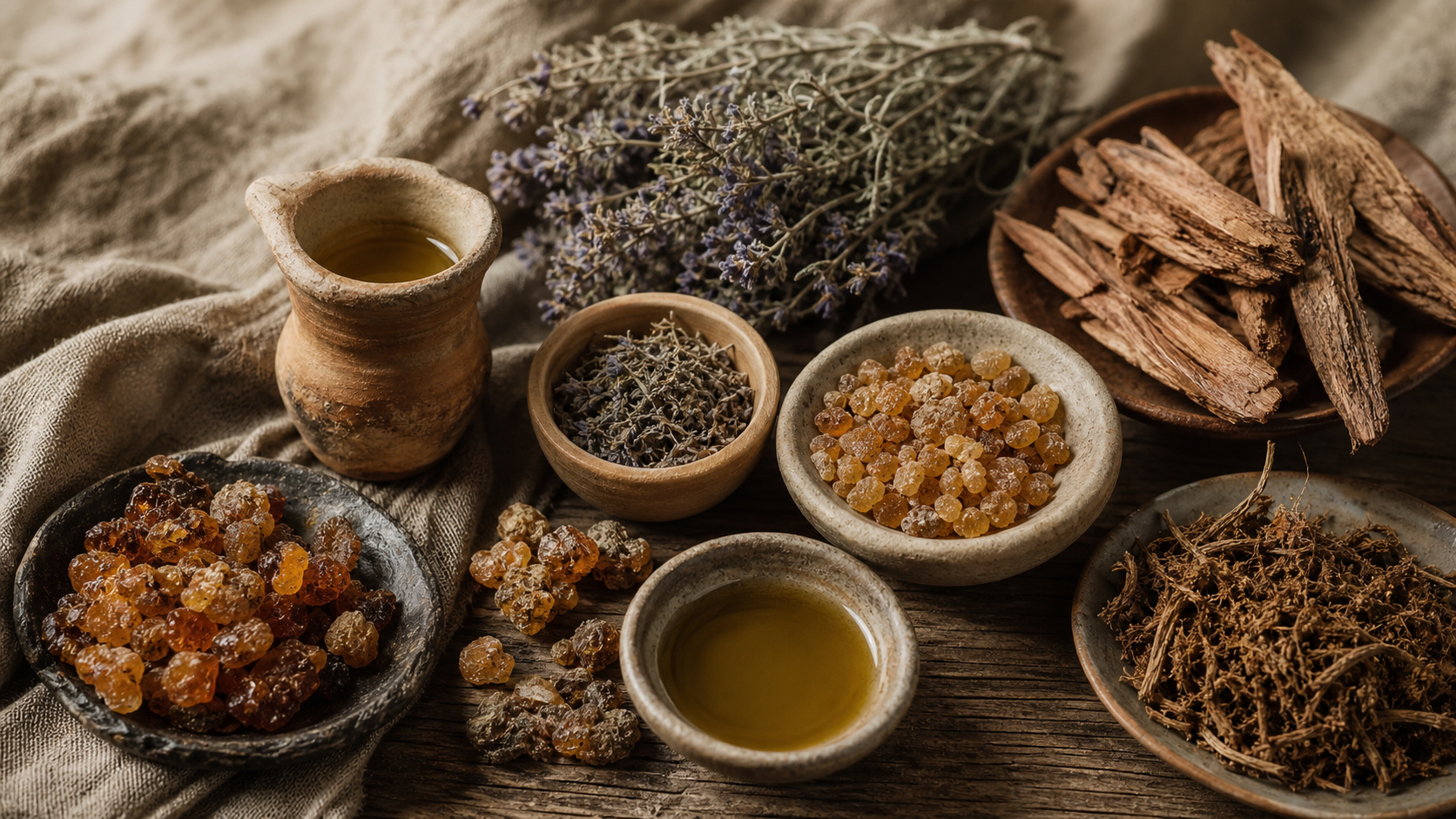
Sacred Oils, Ancient Healing: The Biblical Science of Anointing Oils and Their Proven Antimicrobial Power
Long before the age of antibiotics, before pharmaceutical laboratories and clinical trials, the Creator encoded healing into the natural world — and the people of Scripture knew exactly where to find it. The anointing oils described throughout the Bible were not merely ceremonial props or poetic metaphors. They were potent botanical medicines, selected with divine precision, whose phytochemical properties modern science is only now fully mapping.
Frankincense. Myrrh. Hyssop. Cedarwood. Spikenard. These five sacred botanicals appear across the Old and New Testaments in contexts ranging from priestly consecration to royal burial, from ritual purification to the healing ministry of the disciples. And in each case, the science of what these plants actually do at the molecular level is nothing short of remarkable.
This is not a general reflection on faith and healing. It is a focused examination of five specific anointing oils named in Scripture — their Hebrew and Greek names, their biblical usage context, and the peer-reviewed phytochemical research confirming their antimicrobial, anti-inflammatory, and neuroprotective properties. At Genesis World Health, we believe that "Ancient Wisdom. Modern Science. Divine Health." is not a slogan — it is a description of reality. These oils are among the most compelling evidence for that truth.
The Biblical Framework: Why Oils Mattered in Scripture
Anointing with oil in the ancient Near East carried profound significance. The Hebrew word for anointing, mashach (מָשַׁח), is the root of Mashiach — Messiah — meaning "the Anointed One." Oil was not incidental to the biblical narrative; it was woven into the very language of divine appointment, healing, and consecration.
In Exodus 30:22–33, God gave Moses a precise formula for the sacred anointing oil: liquid myrrh (500 shekels), sweet cinnamon (250 shekels), fragrant cane or calamus (250 shekels), and cassia (500 shekels), blended with a hin of olive oil. The Hebrew term used for this compound is shemen mishchat-qodesh — "oil of holy anointing." It was used to consecrate the tabernacle, the Ark of the Testimony, and the priests themselves. Its composition was so sacred that unauthorized replication was forbidden under penalty of being "cut off from the people."
By the time of the New Testament, anointing with oil had become a central practice of the healing ministry. In Mark 6:13, the disciples "anointed many sick people with oil and healed them." The Greek word used is aleiphō (ἀλείφω) — a practical, physical anointing, distinct from the more ceremonial chriō. James 5:14 instructs: "Is anyone among you sick? Let them call the elders of the church to pray over them and anoint them with oil in the name of the Lord." The Greek astheneō here refers to genuine physical illness — and the oil was understood as both a symbol of divine consecration and a practical medicinal agent.
What the biblical writers understood intuitively, modern phytochemistry is now confirming with precision. Let us examine each of the five primary anointing oils in turn.
Frankincense (Boswellia): The Resin of Kings and the Science of Inflammation
Frankincense — derived from the resin of Boswellia sacra, B. serrata, and B. carterii — is perhaps the most iconic of the biblical anointing substances. In Hebrew, it is called levonah (לְבוֹנָה), from the root meaning "white" or "bright," a reference to the pale resin that weeps from the tree's bark. It appears in Exodus 30 as a component of the sacred incense (qetoreth), and it was one of the three gifts brought by the Magi to the infant Jesus — a gift fit for a priest-king.
Modern research has identified over 200 bioactive compounds in frankincense resin, with boswellic acids — particularly acetyl-11-keto-beta-boswellic acid (AKBA) — as the primary therapeutic agents. The science is extensive:
- Antimicrobial: Ethanol extracts of Boswellia resin demonstrate significant antibacterial activity against Staphylococcus aureus, Escherichia coli, Bacillus cereus, and Pseudomonas aeruginosa — including drug-resistant MRSA strains.
- Anti-inflammatory: Boswellic acids inhibit 5-lipoxygenase, the enzyme responsible for leukotriene synthesis, reducing inflammation in conditions including rheumatoid arthritis, ulcerative colitis, and bronchitis.
- Neuroprotective: Research identifies frankincense as having anxiolytic and neuroprotective effects, with potential applications in neurodegenerative conditions.
- Antioxidant: Rich in phenolic compounds and flavonoids, Boswellia extracts provide robust free-radical scavenging, protecting cells from oxidative stress.
A 2025 study published in Frontiers in Medicine developed a topical cream using Boswellia sacra extract specifically targeting skin infections and inflammatory conditions — a modern pharmaceutical application of an ancient healing resin. The God who instructed Moses to include frankincense in the sacred incense was not working with arbitrary ingredients.
Myrrh (Commiphora): The Bitter Resin That Kills Pathogens
Myrrh — from the Hebrew mor (מֹר) — is the dried resin of Commiphora myrrha and related species. Its name derives from the Semitic root for "bitter," a fitting description of both its taste and its role in Scripture: myrrh accompanied both birth (the Magi's gift) and death (used in Jesus' burial preparation in John 19:39). In Exodus 30, liquid myrrh (mor deror — "flowing myrrh") was the first and most abundant ingredient in the sacred anointing oil, at 500 shekels.
The antimicrobial science of myrrh is among the most thoroughly documented of any biblical botanical. A 2025 study in Frontiers in Microbiology demonstrated that Commiphora myrrha resin extract (CMRE) functions through multiple mechanisms simultaneously:
- Direct cellular disruption: Scanning electron microscopy reveals that CMRE induces morphological alterations in Gram-negative bacteria and Candida albicans, including loss of lipopolysaccharide layers, surface deformation, and cell wall cracking.
- Quorum sensing inhibition: CMRE significantly reduces violacein production (by up to 82.7%) and decreases virulence factor production by over 70% in pathogens like Pseudomonas aeruginosa. The compound curzerene — comprising 18.56% of myrrh's phytochemical profile — interacts with quorum sensing proteins LasR, RhlR, and CviR, locking them in an inactive state.
- Biofilm inhibition: CMRE reduces biofilm formation by 69.1–76.9% at sub-MIC concentrations — a critical property given that biofilms are responsible for the majority of chronic infections.
A parallel 2025 study in Nature Scientific Reports confirmed myrrh's efficacy against Staphylococcus aureus, Klebsiella pneumoniae, and Candida albicans, with ethanolic extracts showing the strongest activity. The ancient world's most prized burial spice turns out to be one of nature's most sophisticated antimicrobial agents.
Hyssop (Ezov): The Purification Plant and Its Molecular Secrets
Hyssop holds a unique place in biblical purification theology. The Hebrew word ezov (אֵזוֹב) appears in some of the most theologically charged moments in Scripture. In Exodus 12:22, hyssop branches were used to apply the Passover blood to the doorposts of Israelite homes. In Leviticus 14, hyssop was used in the ritual cleansing of lepers. In Numbers 19, it was used to sprinkle purification water over those defiled by contact with death.
And in Psalm 51:7, David's great penitential prayer reaches its most intimate moment:
"Purge me with hyssop, and I shall be clean; wash me, and I shall be whiter than snow." — Psalm 51:7
David was not requesting a priestly ritual. He was invoking the deepest symbolism of purification available in his tradition — and asking God to perform it at the level of the soul. The hyssop of Scripture is now widely identified by scholars as Origanum syriacum (Syrian oregano or "Bible hyssop"), native to the Levant and distinct from the European Hyssopus officinalis. The distinction matters scientifically: Origanum syriacum is rich in thymol and carvacrol — two of the most potent naturally occurring antimicrobial compounds known to science.
- Thymol and carvacrol disrupt microbial cell membranes, making them effective against a broad spectrum of pathogens including Helicobacter pylori and intestinal parasites.
- Research demonstrates anti-cancer potential against breast and lung cancer cells through inhibition of angiogenesis and induction of apoptosis.
- The plant exhibits powerful antioxidant and anti-inflammatory effects, supporting its traditional use in respiratory and digestive conditions.
The plant chosen by God for the most sacred purification rites of ancient Israel was, at the molecular level, one of the most effective antimicrobial agents in the natural world. The ritual and the remedy were one.
Cedarwood (Erez): The Wood of Temples and the Neuroscience of Calm
Cedarwood — Hebrew erez (אֶרֶז) — was the building material of Solomon's Temple, the wood of kings and sacred spaces. In Leviticus 14, cedarwood was used alongside hyssop and scarlet yarn in the purification rites for leprosy. The cedar of Lebanon was so prized that Solomon imported it at great expense for the construction of the Temple, understanding that this wood carried both symbolic and practical significance.
Modern research on cedarwood essential oil — derived from Cedrus atlantica and Juniperus virginiana — reveals a rich sesquiterpene profile dominated by cedrol, alpha-cedrene, and thujopsene. The pharmacological findings are compelling:
- Antimicrobial: In vitro studies confirm inhibitory effects against Staphylococcus aureus, E. coli, Bacillus subtilis, and Pseudomonas aeruginosa, with additional antifungal and antibiofilm properties.
- Neuroprotective and anxiolytic: Cedrol modulates GABAergic pathways in the central nervous system. Animal studies demonstrate reduced anxiety levels, decreased blood pressure, and reduced respiratory rates following cedrol inhalation. Sleep duration is extended in animal models — supporting cedarwood's traditional use as a calming agent.
- Anti-neuroinflammatory: By reducing reactive oxygen species (ROS) and nitric oxide production, cedarwood oil mitigates neuroinflammatory processes — a mechanism with implications for neurodegenerative disease prevention.
The wood that housed the Ark of the Covenant and formed the inner sanctuary of Solomon's Temple was, at the molecular level, actively modulating the nervous systems of all who entered. Sacred architecture and sacred chemistry, working together.
Spikenard (Nard): The Costly Oil and the Science of Neuroprotection
Spikenard — from the Hebrew nerd (נֵרְדְּ) and Greek nardos (νάρδος) — is perhaps the most emotionally resonant of the biblical anointing oils. It is the oil that Mary of Bethany poured over Jesus' feet in John 12:3, filling the entire house with its fragrance. It is the oil referenced in the Song of Solomon 1:12: "While the king was at his table, my spikenard sent forth its fragrance." It was extraordinarily costly — a pound of pure spikenard was worth approximately 300 denarii, nearly a year's wages for a laborer.
"Then Mary took about a pint of pure nard, an expensive perfume; she poured it on Jesus' feet and wiped his feet with her hair. And the house was filled with the fragrance of the perfume." — John 12:3
Spikenard is derived from Nardostachys jatamansi, a flowering plant native to the Himalayan highlands of Nepal, China, and India. Its phytochemical profile — rich in sesquiterpenoids including jatamansone, nardostachone, desoxonarchinol A, and narchinol B — has been the subject of extensive modern pharmacological research:
- Anti-neuroinflammatory: Desoxonarchinol A and narchinol B exhibit potent anti-neuroinflammatory effects by inhibiting pro-inflammatory mediators — a mechanism directly relevant to neurodegenerative disease prevention.
- Neuroprotective: Research validates antidepressant, anticonvulsant, and anti-Parkinson properties, with the plant used in Ayurvedic, Unani, and Chinese medicine for neurological conditions for millennia.
- Systemic benefits: Hepatoprotective, cardioprotective, hypolipidemic, and anti-hyperglycemic activities have been experimentally validated.
- Antimicrobial: Antibacterial and antifungal efficacy confirmed across multiple studies.
The oil that Mary chose for the most extravagant act of devotion in the Gospels was, at the molecular level, one of the most neuroprotective substances available in the ancient world. Her act of worship was also, unknowingly, an act of healing.
What the Pattern Reveals: Divine Design in Botanical Medicine
When you examine these five oils together, a remarkable pattern emerges. Each one was selected for sacred use in Scripture — and each one, when examined through the lens of modern phytochemistry, turns out to possess precisely the properties that would make it valuable for the health challenges of the ancient world: antimicrobial activity in an era before antibiotics, anti-inflammatory properties in a world of physical labor and injury, neuroprotective compounds for minds under the stress of exile and persecution.
This is not coincidence. At Genesis World Health, we hold that the principles guiding everything we do — "Ancient Wisdom. Modern Science. Divine Health." — reflect a genuine reality: that the Creator embedded healing intelligence into the natural world, and that Scripture often points directly to it. The anointing oils are among the most striking examples of this convergence.
The Biblical Medicine resources at Genesis World Health explore this intersection in depth — examining how the healing traditions of Scripture align with and often anticipate the findings of modern integrative medicine. And through the AI Agent Council, members can receive personalized health insights that honor all healing traditions, including the botanical wisdom encoded in Scripture.
Integrating Sacred Oils Into a Modern Wellness Approach
How might a person today engage with the healing legacy of these biblical botanicals? A few evidence-informed considerations:
Frankincense (Boswellia) Supplementation
Standardized Boswellia serrata extract is one of the most well-researched natural anti-inflammatory supplements available. Clinical studies support its use for joint inflammation, inflammatory bowel conditions, and respiratory health. Look for extracts standardized to AKBA content. The GWH Shopping resources can help identify quality nutraceutical options.
Myrrh in Oral Health
Myrrh's documented antimicrobial and biofilm-inhibiting properties make it particularly relevant for oral health — an area where biofilm (dental plaque) is the primary driver of disease. Myrrh-based mouth rinses have been used in traditional medicine for centuries and are now supported by clinical evidence for anti-inflammatory and antibacterial effects on oral tissues.
Hyssop (Origanum syriacum) as a Culinary Herb
The biblical hyssop is the primary component of za'atar, the traditional Middle Eastern spice blend. Incorporating Origanum syriacum into the diet provides regular exposure to thymol and carvacrol — two of nature's most potent antimicrobial compounds — in a food-safe, bioavailable form.
Cedarwood Essential Oil for Sleep and Nervous System Support
Diffusing cedarwood essential oil in the bedroom leverages cedrol's documented GABAergic and anxiolytic properties. This is one of the most accessible applications of biblical botanical medicine — and one of the most evidence-supported uses of aromatherapy in the current literature.
Spikenard for Neurological Support
While spikenard is less commonly available than the other oils, standardized Nardostachys jatamansi extracts are used in Ayurvedic medicine for anxiety, sleep, and neurological support. Its anti-neuroinflammatory properties make it a compelling area for ongoing research.
For personalized insights on integrating botanical medicine into your health approach, the Deep Dive Sessions at Genesis World Health allow you to explore specific topics in depth with specialist AI agents — including the Biblical Medicine agent and the Nutraceuticals specialist. The Health Assessment can also help identify which areas of your health might benefit most from an integrative botanical approach.
A Note on Quality and Sourcing
Not all essential oils and botanical extracts are created equal. The therapeutic properties documented in peer-reviewed research apply to properly sourced, unadulterated botanical preparations — not synthetic fragrance oils or low-quality extracts. When exploring these botanicals:
- Look for essential oils that are GC/MS tested (gas chromatography/mass spectrometry) for purity and composition.
- For internal use (supplements), choose standardized extracts from reputable manufacturers with third-party testing.
- Consult with a qualified practitioner before using botanical medicines therapeutically, particularly if you are managing a health condition or taking medications.
The Learn resources at Genesis World Health provide ongoing education on evaluating supplement quality and navigating the integrative health landscape with discernment.
The Deeper Invitation
There is something profoundly moving about the fact that the oils used to anoint priests, kings, and the body of Jesus himself turn out to be among the most pharmacologically sophisticated botanical medicines known to science. It suggests that the ancient world's understanding of healing — rooted in divine instruction, refined through generations of observation, and expressed through sacred ritual — was not primitive superstition. It was wisdom.
"He makes grass grow for the cattle, and plants for people to cultivate — bringing forth food from the earth: wine that gladdens human hearts, oil to make their faces shine, and bread that sustains their hearts." — Psalm 104:14–15
The oil that makes faces shine. The plant that purifies. The resin that heals. Scripture has always pointed to the healing intelligence embedded in creation. Modern science is simply learning to read the same language in a different vocabulary.
At Genesis World Health, we believe that honoring all paths of healing — including the botanical wisdom of Scripture — is not a compromise of scientific rigor. It is an expansion of it. The Foundatioinal Principles that guide everything we do — Honor, Integrity, Authenticity, Informed Choice, and Absolute Truth — demand that we follow the evidence wherever it leads, including into the pages of the most ancient healing texts in human history.
Ready to Explore Faith-Based Healing?
The botanical wisdom of Scripture is just one dimension of the integrative health education available through Genesis World Health. Our AI Agent Council brings together specialists in Biblical Medicine, Nutraceuticals, Naturopathy (Naturopathic Approaches), and Traditional Chinese Medicine to deliver personalized health insights that honor ancient wisdom alongside modern science. Explore Deep Dive Sessions with our Biblical Medicine specialist for a focused, one-on-one exploration of faith-centered healing.
Medical Disclaimer: As always, we encourage you to work with qualified healthcare providers — including clinical microbiologists, integrative medicine physicians, licensed herbalists, and your primary care provider — when making significant changes to your use of anointing oils and antimicrobial health practices. Genesis World Health is an educational platform, not a substitute for professional medical care. Our role is to equip you with knowledge, insight, and the integrative perspective you need to have more informed conversations with your healthcare team.
Sources & References
- Frontiers in Medicine (2025): Boswellia sacra topical formulation — antimicrobial and anti-inflammatory properties
- PubMed: Boswellic acids — pharmacological activities including anti-inflammatory, antimicrobial, and neuroprotective effects
- Frontiers in Microbiology (2025): Commiphora myrrha — quorum sensing inhibition and biofilm reduction
- Nature Scientific Reports (2025): Commiphora myrrha antimicrobial mechanisms — cell wall disruption and pathogen inhibition
- Botanical Research and Medicine Institute: Origanum syriacum (biblical hyssop) — thymol, carvacrol, and antimicrobial properties
- Exploration of Drug Science: Cedarwood essential oil — antimicrobial, anxiolytic, and neuroprotective properties
- Journal of Pharmacognosy and Phytochemistry (2025): Nardostachys jatamansi — comprehensive pharmacological review
- Bioorganic and Medicinal Chemistry Letters: Desoxonarchinol A and narchinol B — anti-neuroinflammatory sesquiterpenoids from spikenard