God's Healing Herbs: What Balm of Gilead, Hyssop, and the Fig Tree Reveal About Scripture's Pharmacy and Your Immune Health
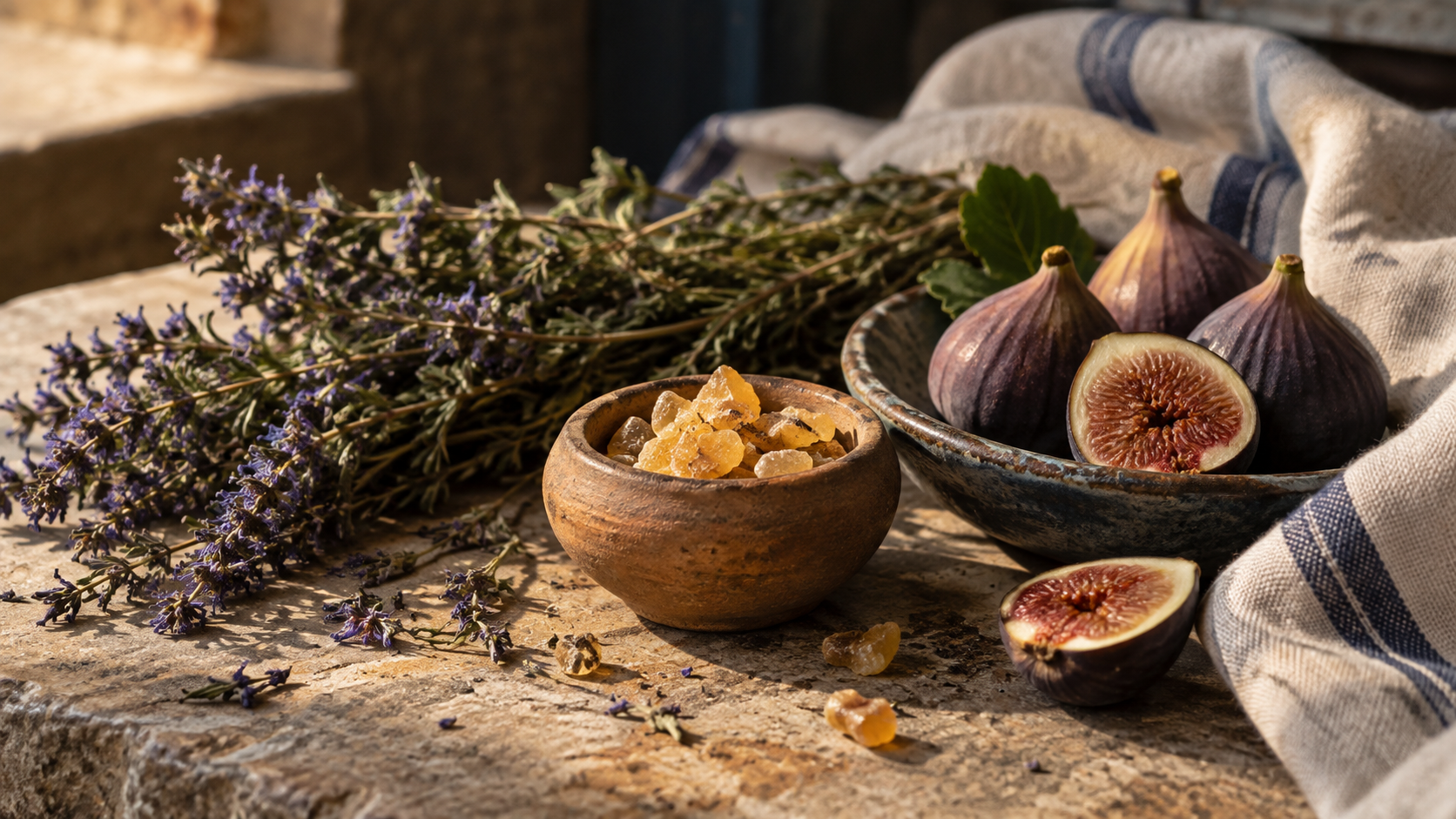
God Wrote the First Prescription
Long before the first pharmacy opened its doors, God had already stocked a medicine cabinet. He placed it in the fields of Gilead, in the rocky hillsides of ancient Israel, and in the orchards of the Middle East. Scripture does not merely mention plants in passing. It names specific healing plants with precision, assigns them to specific conditions, and records their use by prophets, kings, and priests. Modern phytochemistry has spent decades catching up to what the text already knew. Three plants stand out above the rest: the Balm of Gilead, hyssop, and the fig tree. Each one carries a scriptural mandate and a scientific mechanism. Together, they reveal something profound about the God who designed both the human body and the natural world to work in harmony.
At Genesis World Health, our Faith and Spirituality specialist and our Naturopathy specialist share a conviction that runs through every conversation they facilitate: the wisdom embedded in creation is not accidental. When Scripture names a plant for healing, it is worth asking what that plant actually does. The answers, increasingly, are remarkable.
The Balm of Gilead: Scripture's Wound Healer
The prophet Jeremiah asked one of the most haunting questions in all of Scripture:
"Is there no balm in Gilead? Is there no physician there? Why then is there no healing for the wound of my people?" — Jeremiah 8:22
Jeremiah was lamenting the spiritual condition of Judah, using the balm as a metaphor for divine provision that was available but refused. Yet the metaphor only works because the balm was real, and its healing properties were widely known throughout the ancient world. Gilead, the region east of the Jordan River, was famous for producing a prized resinous sap from the Commiphora gileadensis tree. This substance was traded across the ancient Near East as a premium medicinal commodity. Ishmaelite traders carried it toward Egypt in the account of Joseph (Genesis 37:25). It was considered among the finest gifts one could offer (Genesis 43:11).
Modern science has now characterized what ancient healers observed empirically. Research published in Pharmaceuticals (MDPI, 2022) identified that Commiphora gileadensis contains a complex array of terpenoids, phenolic compounds, ceramides, and volatile oils including alpha-pinene and caryophyllene. These compounds work together to produce measurable antimicrobial and wound-healing effects. A study published in PubMed (PMID 35630797) demonstrated that methanolic extracts of the plant significantly enhanced wound contraction in animal models, improved collagen fiber deposition, increased granulation tissue formation, and reduced bacterial colonization in wounds infected with Staphylococcus aureus. Separate research confirmed inhibitory activity against Methicillin-Resistant Staphylococcus aureus (MRSA) and Pseudomonas aeruginosa, two of the most treatment-resistant bacterial pathogens in modern medicine.
The salicylate-related compounds found in related Populus species (also historically called Balm of Gilead in North American herbalism) are precursors to aspirin, explaining the anti-inflammatory and analgesic properties that traditional healers observed for centuries before aspirin was synthesized in a laboratory. God designed the anti-inflammatory mechanism into the plant long before chemists isolated the molecule.
The theological weight of Jeremiah's question is not diminished by the science. It is deepened. The balm was real. The healing was available. The tragedy Jeremiah mourned was not a lack of provision but a refusal to receive it. The same dynamic plays out in whole-person health today: the resources for healing are often present, but the integration of body, mind, and spirit required to receive them is missing. Genesis World Health exists precisely to close that gap.
Hyssop: The Purification Plant With a Proven Immune Mechanism
No plant in Scripture carries more ritual weight than hyssop. It appears at the Passover, where a bunch of hyssop was used to apply the blood of the lamb to the doorposts of Israelite homes (Exodus 12:22). It appears in the purification rites for leprosy and contact with the dead (Leviticus 14:4, Numbers 19:18). And it appears in one of the most intimate prayers in all of Scripture:
"Purge me with hyssop, and I shall be clean; wash me, and I shall be whiter than snow." — Psalm 51:7
David was not requesting a ritual. He was using the most powerful image of purification available to him to plead for an internal cleansing that no ceremony could accomplish. The hyssop he invoked was the same plant that priests used to sprinkle blood and water on those rendered unclean. It was the instrument of restoration to community, to worship, and to wholeness. David wanted that kind of cleansing at the level of the soul.
What is remarkable is that the plant itself, Hyssopus officinalis, turns out to be a genuine immune modulator. Research published in Frontiers in Immunology (PMC9742021, 2022) demonstrated that hyssop extract significantly increases the gene expression of endosomal Toll-like receptors, specifically TLR3, TLR7, TLR8, and TLR9, in peripheral blood mononuclear cells. These receptors are the immune system's sentinels for detecting viral nucleic acids. The extract also upregulated downstream signaling molecules including MyD88 and NF-kB, and enhanced the secretion of interferon-alpha and interferon-beta while simultaneously reducing inflammatory cytokines. In plain terms: hyssop activates the body's antiviral innate immune response.
Additional research has confirmed antifungal activity against drug-resistant strains of Candida and Aspergillus, and anti-inflammatory effects in models of chronic asthma, including inhibition of eosinophil invasion and reduction of immunoglobulin E levels. The bioactive compounds responsible include pinocamphone, isopinocamphone, beta-pinene, quercetin, luteolin, apigenin, and caffeic acid.
The plant that God assigned to purification rites turns out to activate the immune system's first line of defense against viral infection. The ritual and the mechanism are not in conflict. They are two languages describing the same reality: hyssop is a plant designed for cleansing, at every level of human experience.
Genesis World Health's Naturopathy specialist frequently discusses the role of botanical medicine in supporting immune resilience. Hyssop is one of the plants that bridges the ancient and the modern most elegantly, and it is a fitting example of why the integrative approach at GWH takes both Scripture and science seriously as sources of wisdom.
The Fig Tree: From Hezekiah's Poultice to Gut Health Science
The fig tree appears throughout Scripture as a symbol of peace, prosperity, and God's provision. But one of its most striking appearances is medicinal. When King Hezekiah lay dying of a terminal illness, the prophet Isaiah delivered a word of healing from God and then gave a specific instruction:
"Let them take a cake of figs and apply it to the boil, that he may recover." — Isaiah 38:21
This was not a symbolic gesture. It was a medical prescription. The use of fig poultices for infected skin lesions was documented in ancient Near Eastern medical texts, including the Ebers Papyrus and tablets from Ugarit. Modern researchers have identified plausible mechanisms: the high sugar content of figs creates osmotic pressure that dehydrates bacterial cell walls; the proteolytic enzyme ficin softens necrotic tissue and aids drainage; and the polyphenols in figs exhibit antimicrobial activity that limits secondary infection. God worked through a natural mechanism He had already designed into the plant.
But the fig tree's healing properties extend far beyond wound care. Ficus carica is now recognized as one of the most pharmacologically rich fruits in the botanical world. Research published in Nutrients (PMC9148402, 2022) documented that fig polyphenols and flavonoids, including quercetin, luteolin, apigenin, and cyanidin-3-o-beta-D-glucoside, inhibit the production of pro-inflammatory cytokines TNF-alpha, IL-1beta, and IL-6, and modulate the NF-kB signaling pathway, a critical regulator of inflammatory gene expression. The plant also inhibits cyclooxygenase (COX-2) and lipoxygenase (LOX), the same enzymatic pathways targeted by common anti-inflammatory medications.
Perhaps most relevant to whole-person health is the fig's prebiotic profile. Research published in PMC12859789 (2025) demonstrated that fig-derived dietary fibers, including soluble pectin fractions, undergo fermentation in the colon and produce short-chain fatty acids including butyrate, propionate, and acetate. Butyrate is the primary energy source for colonocytes and is associated with protective effects against colonic inflammation and disease. The fig feeds the gut microbiome, which in turn supports immune function, mood regulation, and systemic inflammation control.
The tree that sheltered Adam and Eve, that marked the peace of Solomon's reign (1 Kings 4:25), and that healed a king's infected wound is also a prebiotic food that nourishes the gut ecosystem God designed to sustain human health. The connections are not coincidental. They are the fingerprints of a Designer who thought through every level of the system.
God's Original Pharmacy: A Unified Vision
What unites Balm of Gilead, hyssop, and the fig tree is not merely their scriptural prominence. It is the coherence of their design. Each plant addresses a different dimension of immune health: the balm works at the site of infection and wound, fighting bacteria and supporting tissue repair; hyssop activates the systemic antiviral immune response; the fig nourishes the gut microbiome that underlies immune resilience. Together, they cover the spectrum from acute wound care to innate immunity to long-term gut health.
This is not a coincidence. It is the signature of a God who designed the human body with extraordinary complexity and then placed the resources for its care in the natural world He also created. The Psalmist understood this:
"He makes grass grow for the cattle, and plants for people to cultivate, bringing forth food from the earth." — Psalm 104:14
The word translated "plants" in this verse encompasses medicinal herbs. God designed the botanical world with human flourishing in mind. Modern phytochemistry is, in a very real sense, the science of reading what God wrote into creation.
At Genesis World Health, this conviction shapes everything. Our Faith and Spirituality specialist helps members understand the theological framework for whole-person healing. Our Naturopathy specialist brings the botanical science. Our Gut Microbiome specialist connects the prebiotic properties of foods like figs to the broader ecosystem of gut health. And our Immune Optimization specialist helps members understand how plants like hyssop interact with the innate immune system. These are not separate conversations. They are one conversation, held across different disciplines, about the same God-designed body.
Honoring God's Design in Your Daily Life
The practical implications of Scripture's pharmacy are not abstract. They are actionable. Incorporating whole figs or fig-derived fiber into the diet supports the gut microbiome and reduces systemic inflammation. Hyssop tea, used for centuries in traditional medicine for respiratory and immune support, is now understood to activate Toll-like receptor pathways that prime the antiviral immune response. Topical preparations derived from Balm of Gilead resin have documented antimicrobial and wound-healing properties that make them a legitimate complement to conventional wound care.
None of this replaces the care of qualified physicians, naturopathic doctors, or other licensed health professionals. The biblical model of healing was never either/or. Isaiah prescribed the fig poultice alongside the divine word of healing. God works through secondary means, including the expertise of trained practitioners. The integrative approach honors both the natural resources God placed in creation and the human knowledge He has allowed us to develop.
What Genesis World Health offers is a space where these conversations happen together. Members can consult our Faith and Spirituality specialist to understand the theological roots of whole-person healing, our Naturopathy specialist to explore botanical medicine with scientific grounding, and our Gut Microbiome specialist to understand how prebiotic foods like figs support the foundation of immune health. The council approach means no single perspective dominates. The whole person is addressed.
"He heals the brokenhearted and binds up their wounds." — Psalm 147:3
The God who heals is also the God who designed the balm, the hyssop, and the fig. He did not leave us without resources. He wrote the first prescription in the language of creation, and He has been waiting for us to read it carefully.
Explore God's Design for Your Health
Genesis World Health brings together Faith and Spirituality, Naturopathy, Gut Microbiome, and Immune Optimization specialists in one integrative council. Discover how Scripture's wisdom and modern science work together to support the body God entrusted to you.
A Personal Note from Genesis World Health
The information shared in this article is for educational purposes and reflects our commitment to integrating faith, science, and whole-person wellness. It is not a substitute for professional medical advice, diagnosis, or treatment. Every person's health journey is unique and what works for one may not be right for another.
We encourage you to consult with naturopathic physicians, integrative medicine practitioners, licensed herbalists, and your primary care provider when making significant changes to your approach to botanical medicine and immune support. Our prayer is that this knowledge empowers you to make informed, faith-guided decisions for the body God has entrusted to you.
Sources & References
- Al-Qudah MA, et al. "Antimicrobial and wound healing activities of Commiphora gileadensis methanolic extract." PubMed. 2022. PMID 35630797. https://pubmed.ncbi.nlm.nih.gov/35630797/
- Sharifi-Rad J, et al. "Hyssopus officinalis L.: A review of its phytochemistry, pharmacology, and clinical applications." Frontiers in Pharmacology / PMC. 2022. PMC9742021. https://pmc.ncbi.nlm.nih.gov/articles/PMC9742021/
- Mawa S, et al. "Anti-inflammatory and antioxidant activities of Ficus carica polyphenols." Nutrients. 2022. PMC9148402. https://pmc.ncbi.nlm.nih.gov/articles/PMC9148402/
- Zhu Y, et al. "Prebiotic effects of Ficus carica dietary fiber fractions on gut microbiota and short-chain fatty acid production." PMC. 2025. PMC12859789. https://pmc.ncbi.nlm.nih.gov/articles/PMC12859789/
- Alhazmi HA, et al. "Medicinal properties of Commiphora gileadensis: phytochemical and pharmacological review." Pharmaceuticals (MDPI). 2022. https://www.mdpi.com/1424-8247/19/3/391
- Salehi B, et al. "Hyssop (Hyssopus officinalis L.) immune modulation and antiviral innate immunity activation." PubMed. 2022. PMID 36503515. https://pubmed.ncbi.nlm.nih.gov/36503515/