Your Body Is a Temple: The Biblical Science of Physical Stewardship and Why Fitness Is an Act of Worship
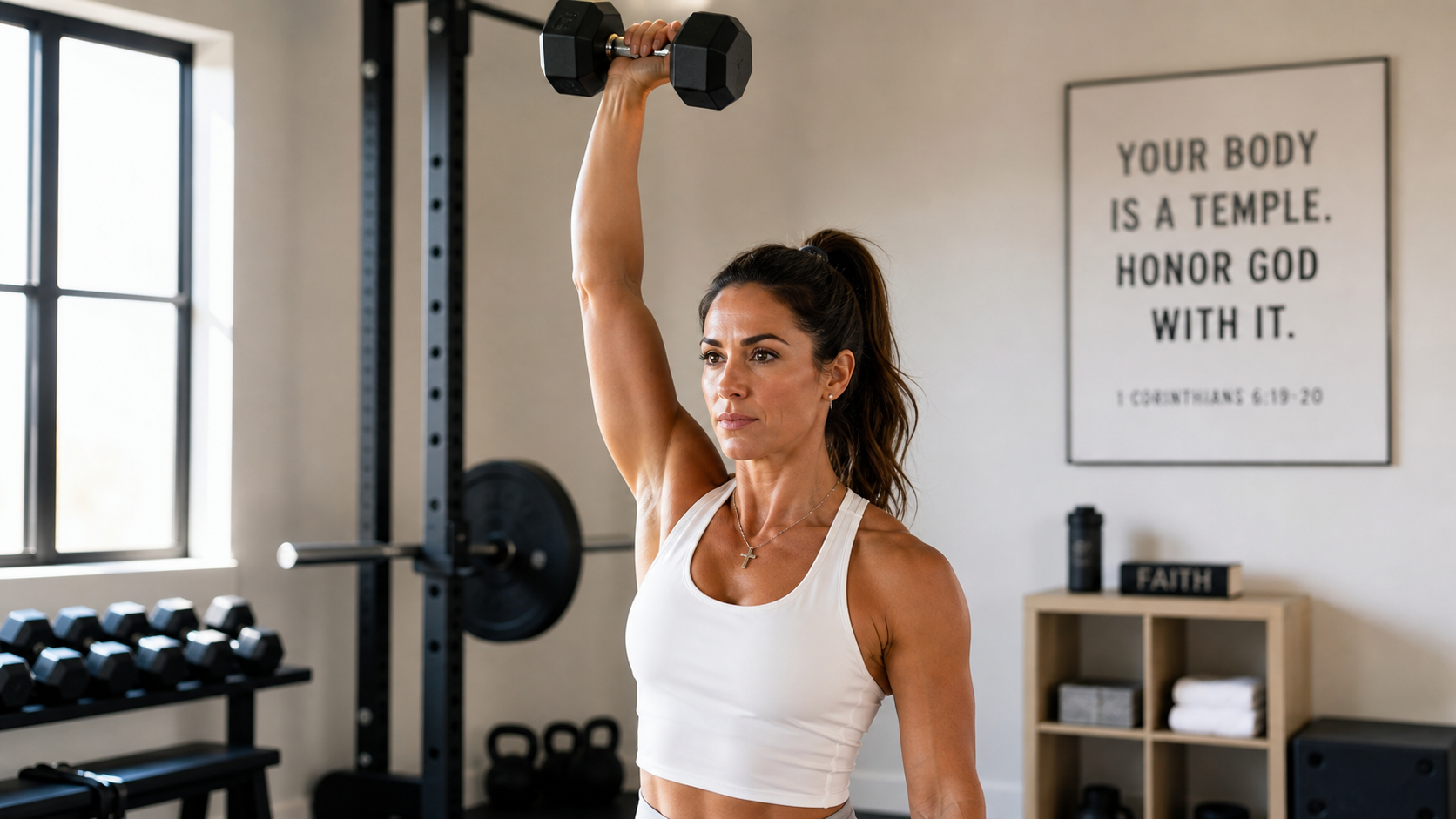
Most Christians have heard the phrase "your body is a temple" — but few have been taught what that actually means for how they live, move, eat, and care for themselves. It has become a bumper-sticker theology: quoted often, applied rarely, and almost never unpacked with the depth it deserves. Yet when you trace this idea through Scripture — from Paul's letter to Corinth, to Daniel's quiet act of conscience in Babylon, to the portrait of wisdom in Proverbs 31 — a coherent and compelling theology of physical stewardship begins to emerge. And when you pair that theology with what modern exercise science now confirms about the body's extraordinary capacity for adaptation, the result is not a guilt-driven fitness program. It is an invitation to worship.
This is not a post about achieving a certain physique or hitting a performance benchmark. It is about understanding why the body matters to God — and what faithful stewardship of that body looks like in the ordinary rhythms of daily life.
What Scripture Actually Says About the Body
The most cited passage on this subject is 1 Corinthians 6:19–20, where Paul writes:
"Do you not know that your bodies are temples of the Holy Spirit, who is in you, whom you have received from God? You are not your own; you were bought at a price. Therefore honor God with your bodies." — 1 Corinthians 6:19–20
In its original context, Paul is addressing sexual ethics — the question of what believers do with their bodies in the most intimate sense. But the theological principle he establishes reaches far beyond that single issue. The body is not a disposable container for the soul. It is the dwelling place of the Holy Spirit. It belongs to God. And because it belongs to God, what we do with it — how we nourish it, rest it, move it, and care for it — is a matter of spiritual significance.
Romans 12:1 extends this further:
"Therefore, I urge you, brothers and sisters, in view of God's mercy, to offer your bodies as a living sacrifice, holy and pleasing to God — this is your true and proper worship." — Romans 12:1
Notice the order: in view of God's mercy. Embodied stewardship is a response to grace, not a means of earning it. Presenting your body to God — through intentional movement, nourishing food, adequate rest, and wise care — is described here as an act of worship. Not performance. Not self-optimization. Worship.
Then there is Daniel. In Daniel 1, a young exile in Babylon refuses the king's food — not out of dietary perfectionism, but out of conscience and fidelity to God. He asks for vegetables and water instead of the royal delicacies. At the end of ten days, he and his companions appear healthier than those who ate the king's food. The chapter is not a universal diet prescription. It is a portrait of a man who, under enormous pressure, made choices about his body that reflected his allegiance to God. Faithfulness and physical care were not separate categories for Daniel. They were the same act.
Proverbs 31 adds another dimension. The woman described there "girds herself with strength and makes her arms strong" (v. 17). Her physical strength is not an end in itself — it is in service of her vocation: provision, generosity, diligence, and care for those around her. Strength, in the biblical imagination, is for something. It is directed outward, toward love and service.
The Science of the Temple: What Exercise Does to the Body God Made
If the body is a temple of the Holy Spirit, then understanding how that temple functions — and how to care for it well — is not vanity. It is stewardship. And the science of what intentional movement does to the human body is, frankly, remarkable.
Mitochondrial Renewal
At the cellular level, exercise triggers a process of renewal that mirrors the theological concept of restoration. A large systematic review and meta-regression synthesizing data from nearly 6,000 participants found that endurance training, high-intensity training, and sprint-interval training all produced significant increases in mitochondrial content — the energy-producing structures inside every cell. Increases ranged from 23% to 27% depending on the modality.
What is striking is that these adaptations were observed across age groups, sexes, and even in people with chronic disease. The body's capacity for renewal does not expire. It responds to the stimulus of movement with measurable regeneration — a biological echo of the spiritual truth that God is always making things new.
Inflammation Regulation
Chronic inflammation is one of the most well-documented drivers of modern disease — from cardiovascular disease and diabetes to depression and cognitive decline. Exercise is one of the most powerful anti-inflammatory interventions available without a prescription. A network meta-analysis of 75 randomized trials found that different exercise modalities each reduced specific inflammatory markers: resistance training lowered C-reactive protein, aerobic exercise reduced tumor necrosis factor-alpha, and combined training lowered interleukin-6.
The body was designed to move. When it does not, inflammation accumulates. When it does, the body's own regulatory systems engage. This is not coincidence — it is design.
Cognitive Protection
An umbrella review encompassing 133 systematic reviews, more than 2,700 randomized controlled trials, and over 258,000 participants found that exercise improved general cognition, memory, and executive function across age groups. Notably, even light-intensity movement was associated with cognitive benefit. You do not need to run a marathon to protect your mind. A walk, a gentle swim, a session of stretching — these matter.
The mind and body are not separate systems. What you do with your body affects your capacity for thought, discernment, emotional regulation, and spiritual attention. Caring for the temple supports the whole person.
Longevity and Mortality
A harmonized meta-analysis of more than 36,000 participants found that any level of physical activity — at any intensity — was associated with lower all-cause mortality. The relationship was nonlinear: the greatest benefit came from moving from sedentary to somewhat active. You do not need to be an athlete. You need to move consistently, in ways that are sustainable and appropriate for your body.
For those navigating chronic conditions, hormonal changes, or complex health histories, tools like the Genesis World Health Sports Performance Agent (available to VIP members) can help design movement strategies tailored to your specific physiology, goals, and limitations — so that stewardship is practical, not just aspirational.
Faith-Based Motivation: Does It Actually Help?
One of the most interesting questions in behavioral health research is whether spiritual framing improves exercise adherence. The evidence suggests: it can — particularly when the faith community provides genuine relational support, shared language, and accountability rooted in grace rather than shame.
Reviews of faith-based physical activity programs have found promising increases in activity levels and improvements in health measures. The mechanisms make intuitive sense: a stewardship framework connects movement to an existing moral identity. Exercise is no longer just about appearance or performance — it is an expression of gratitude, a form of worship, a way of honoring the One who made you.
But the research also offers a caution: faith-based framing can become counterproductive when it is coercive, shame-laden, or disconnected from grace. The goal is not to make people feel guilty for not exercising. It is to invite them into a richer understanding of why the body matters — and to offer practical, compassionate support for caring for it well.
The Genesis World Health AI Agent Council brings together specialists in Clinical Medicine, Faith & Spirituality, and Stress & Adrenal health to address the whole person — because sustainable health change rarely happens through information alone. It happens through integration: of body, mind, and spirit, supported by community.
What Faithful Body Stewardship Actually Looks Like
Biblical stewardship of the body is not a performance standard. It is a posture — one of gratitude, attentiveness, and faithful use of what God has given. Here is what that looks like in practice:
- Consistent, tolerable movement: Daily movement does not need to be extreme to be meaningful. Walking, cycling, swimming, resistance training, yoga, gardening — any form of movement that you can sustain consistently is an act of stewardship. The research is clear: consistency matters more than intensity.
- Strength as service: Following the Proverbs 31 model, strength is not for display — it is for capacity. Building and maintaining muscle supports your ability to work, serve, care for others, and engage fully in your vocation across every decade of life.
- Rest as worship: Recovery is not laziness. It is the phase in which the body actually adapts and renews. Treating rest as sacred — as the Sabbath principle teaches — is part of faithful stewardship, not a departure from it.
- Nourishment without moral panic: Food choices can express conscience and care, as Daniel's did. But no single diet is the Christian diet. Receive food with gratitude, make choices that support your health and conscience, and resist the temptation to assign moral purity to ingredients or body size.
- Adaptation across seasons: The form of stewardship changes with age, illness, disability, and life circumstance. For one person it may mean vigorous training; for another, gentle rehabilitation or pacing. A person who cannot exercise is not disobedient. Stewardship is always contextual.
For those who want personalized guidance on what faithful stewardship looks like for their specific body, the Genesis World Health Personalized Insights feature allows you to build a health strategy that integrates movement, nutrition, recovery, and spiritual wellness — tailored to your unique physiology and life context.
Exercise as a Spiritual Discipline
The ancient Christian tradition of spiritual disciplines — prayer, fasting, silence, service — has always included the body. The body is not an obstacle to spiritual formation; it is the medium through which formation happens. We pray with our bodies. We fast with our bodies. We serve with our bodies.
Exercise, when offered intentionally to God, can become a spiritual discipline in the same tradition. Movement can be an occasion for gratitude — for the breath in your lungs, the strength in your limbs, the extraordinary complexity of a body that heals and adapts. It can be a space for prayer, for processing emotion, for cultivating patience and humility. The repetition of physical training has a way of exposing our inner life: our impatience, our vanity, our fear of limitation. These exposures are not failures. They are invitations.
But exercise is not inherently worshipful. It can also cultivate obsession, comparison, and contempt for bodily weakness. Christian fitness theology must evaluate not only the activity but also its motives and fruit. The question is not "How hard did I train?" but "Is this practice making me more loving, more grateful, more available to God and others?"
"For physical training is of some value, but godliness has value for all things, holding promise for both the present life and the life to come." — 1 Timothy 4:8
Paul does not dismiss physical training. He contextualizes it. It has some value — real, genuine value. But it is not the highest value. Godliness — the formation of character, the cultivation of love, the deepening of union with God — holds promise for both this life and the next. Physical stewardship serves that larger goal. It does not replace it.
A Theology of Limits
One of the most important things a biblical theology of the body offers is a theology of limits. The body is finite. It ages. It gets sick. It has seasons of strength and seasons of weakness. Faithful stewardship does not mean achieving peak performance. It means caring wisely for the body you have, in the season you are in, with the resources available to you.
This is good news for the person managing chronic illness, navigating disability, recovering from injury, or simply aging. Your stewardship does not look like someone else's. It looks like yours — offered faithfully, with whatever capacity you have, to the God who made you and redeemed you.
The Genesis World Health Disorders Library and Root Cause Protocol resources are designed to support exactly this kind of contextual, whole-person stewardship — helping you understand the root causes of what your body is experiencing and navigate a path toward healing that honors both the science and the person.
The Invitation
You were bought with a price. Your body is not your own — and that is not a burden. It is a liberation. You do not have to optimize yourself for the market, conform to cultural beauty standards, or earn your worth through performance. You are already loved, already redeemed, already indwelt by the Spirit of the living God.
What remains is the daily, ordinary, grace-filled practice of caring for the temple — moving it, resting it, nourishing it, and offering it back to the One who gave it. Not to earn anything. Not to prove anything. But because this body, with all its limits and all its capacity, is the instrument through which you love God and love your neighbor.
That is what stewardship looks like. And it is enough.
Ready to Honor God With Your Whole Person?
Genesis World Health's Personalized Insights integrate movement, nutrition, recovery, and faith into a strategy built for your unique body. The Sports Performance Agent (VIP) can design a stewardship-based fitness plan tailored to your physiology, while the AI Agent Council — including Faith & Spirituality and Clinical Medicine specialists — supports the whole-person transformation Scripture calls us to.
Medical Disclaimer: As always, we encourage you to work with qualified healthcare providers — including physical therapists, registered dietitians, certified fitness trainers, and your primary care provider — when making significant changes to physical fitness and wellness. Genesis World Health is an educational platform, not a substitute for professional medical care. Our role is to equip you with knowledge, insight, and the integrative perspective you need to have more informed conversations with your healthcare team.
Sources & References
- Granata C, et al. "Principles of Exercise Prescription, and How They Influence Exercise-Induced Changes of Mitochondrial Capacity in Skeletal Muscle." Sports Medicine. 2018;48(7):1541–1559. https://doi.org/10.1007/s40279-018-0894-4
- Metsios GS, et al. "Exercise and inflammation." Best Practice & Research Clinical Rheumatology. 2020;34(2):101504. https://doi.org/10.1016/j.berh.2020.101504
- Northey JM, et al. "Exercise interventions for cognitive function in adults older than 50: a systematic review with meta-analysis." British Journal of Sports Medicine. 2018;52(3):154–160. https://doi.org/10.1136/bjsports-2016-096587
- Saint-Maurice PF, et al. "Association of Daily Step Count and Step Intensity With Mortality Among US Adults." JAMA. 2020;323(12):1151–1160. https://doi.org/10.1001/jama.2020.1382
- Duan H, et al. "The Effectiveness of Faith-Based Physical Activity Interventions: A Systematic Review." American Journal of Health Promotion. 2021;35(4):580–594. https://doi.org/10.1177/0890117120946130
- Uchino BN, et al. "Social Support and Physical Health: Models, Mechanisms, and Opportunities." In: Foundations of Health Psychology. Oxford University Press; 2012. PubMed: 22642682