Creatine for Women: Does It Support Brain Health in Perimenopause?
Fueling a Changing Brain With Wisdom
Early research suggests creatine may support some aspects of thinking in perimenopausal women, but the evidence is still small. One 2025 randomized trial of 36 women found associations with faster reaction time and higher brain creatine over eight weeks. Larger, longer studies are needed before anyone can say how strong the benefit is.
If you are in your mid-40s or early 50s and you have started losing words mid-sentence, feeling mentally foggy by afternoon, or wondering where your focus went, you are not imagining it. Perimenopause is a real neurological transition, and it deserves a calm, informed response instead of fear. Scripture reminds us that the mind can be renewed through every season of life.
"And do not be conformed to this world, but be transformed by the renewing of your mind." — Romans 12:2
Renewal of the mind is spiritual first, yet the body is part of the picture. The brain is an energy-hungry organ, and the way it makes and stores energy shifts as estrogen declines. That is where a small, well-studied molecule called creatine enters the conversation. This article looks at what the research actually shows, where it stops, and how to think about it with a steward's heart. It builds on our earlier look at creatine, brain health and cellular energy, this time through a women-specific lens.
Creatine and the Brain's Energy Buffer
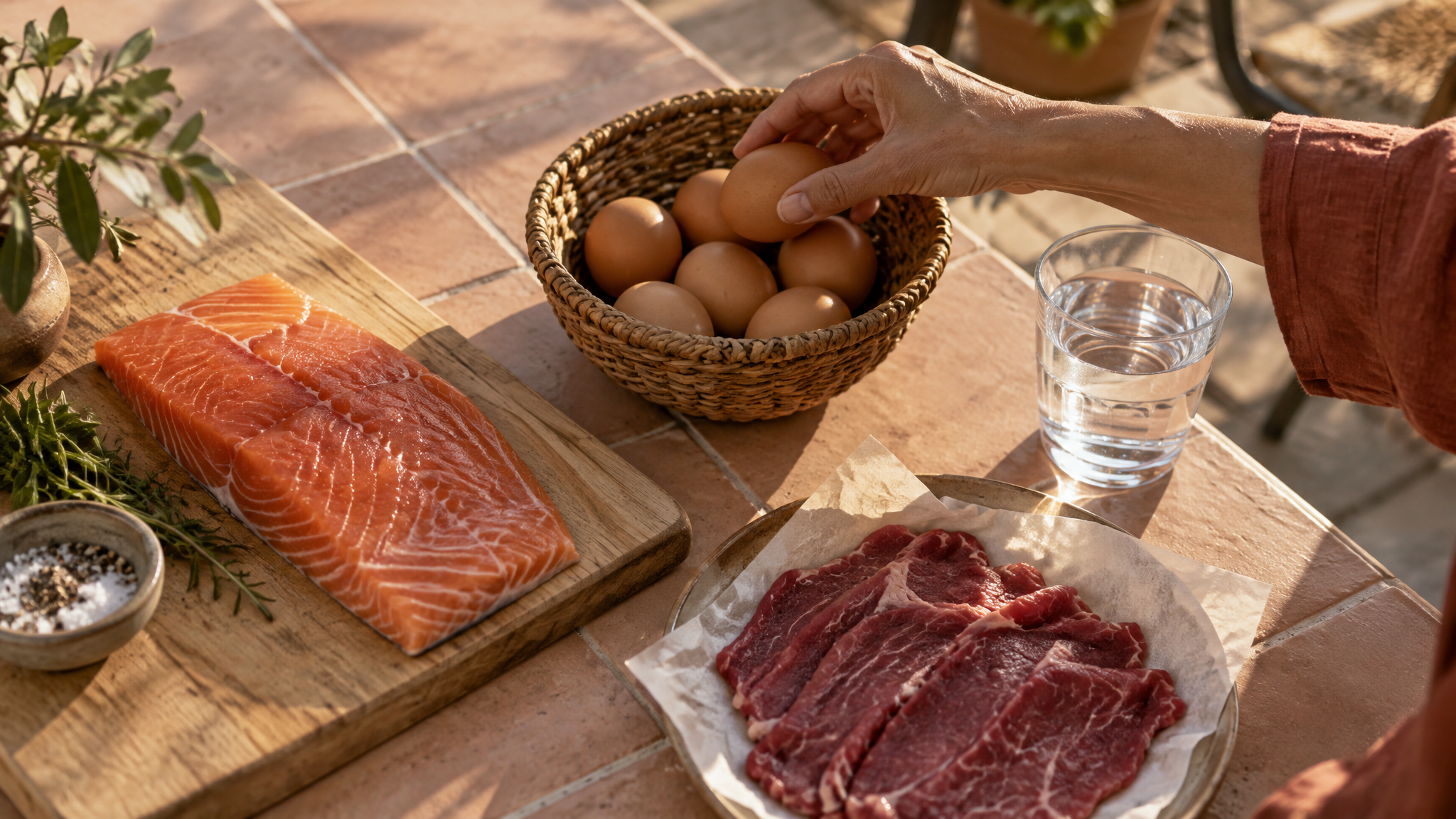
Creatine is a compound made in the body from the amino acids arginine, glycine and methionine, and also taken in through animal foods such as fish, beef and eggs. Its main job is to help recycle ATP, the energy currency of the cell. Muscle is the best-known user, but the brain is another heavy one, using roughly a fifth of the body's energy at rest.
Inside brain cells, creatine acts as a rapid energy buffer. When a demanding task such as recalling a name, switching between tasks or holding information in working memory spikes the energy need, phosphocreatine helps replenish ATP quickly. When that buffer runs low, mental performance can feel the strain. Research on stressors such as sleep loss suggests creatine's cognitive effects tend to be most visible when the brain is under metabolic pressure.
Why Does Perimenopause Change the Brain's Energy Supply?
Estrogen is one of the body's regulators of energy metabolism, including in the brain. Reviews of creatine in women's health describe estrogen as influencing the enzymes that help the body make creatine and the way creatine is moved and stored. As estrogen rises and falls unpredictably during perimenopause, the brain's energy handling appears to become less steady. Many women describe the result as fog, slower recall or low mental stamina.
Women also tend to begin adulthood with lower creatine stores than men, and many eat little meat or fish, the main dietary sources. People who eat mostly plant foods take in almost none. Taken together, researchers have proposed that midlife may be a time when the brain's creatine reserves are comparatively thin. That is a hypothesis supported by early data, not a settled fact, and it is one reason the topic has drawn attention. For a broader look at the hormonal side of this season, see our guide to what your hormones are doing during perimenopause.
What Did the CONCRET-MENOPA Trial Find?
The CONCRET-MENOPA trial, published in 2025 in the Journal of the American Nutrition Association, is the study driving much of the current interest. It was a randomized, double-blind, placebo-controlled trial in 36 apparently healthy perimenopausal and postmenopausal women with an average age of about 50. Over eight weeks, groups received creatine hydrochloride at 750 mg or 1,500 mg per day, a creatine hydrochloride and creatine ethyl ester combination, or a placebo.
- Reaction time: The 1,500 mg group improved by about 1.2 percent, while the placebo group slowed by about 6.6 percent.
- Brain creatine: Brain imaging showed increases in total brain creatine in the creatine groups, especially in frontal regions, and a slight decrease with placebo.
- Symptoms: The middle group reported less general fatigue and fewer concentration difficulties, with a possible trend toward fewer mood swings that did not reach statistical significance.
- Tolerability: No serious adverse effects were reported. Minor, short-lived issues such as heartburn occurred in some participants.
These are encouraging signals, and they deserve honest framing. The trial was small and short, it did not separate perimenopausal from postmenopausal women in a way that settles the question, and the lead investigator disclosed ties to the supplement industry. It is a promising early study, not proof.
The Wider Evidence on Creatine and Cognition
The newer study sits on top of a broader body of work. A 2024 systematic review and meta-analysis of randomized trials in adults linked creatine supplementation with better memory, attention and information processing speed. In subgroup analyses, women and adults aged 18 to 60 appeared to gain more than other groups, which is one reason midlife women are a natural population to study next.
A 2021 review of creatine across the female lifespan also described emerging support for effects on mood and brain function, alongside the better-established benefits for muscle and bone when creatine is paired with resistance exercise. Most of this research used creatine monohydrate, the most studied form. Data specifically in perimenopausal women remain limited, and results in healthy volunteers do not automatically apply to everyone.
Is Creatine Safe for Women in Midlife?
In healthy adults who take creatine at commonly studied amounts, systematic reviews have not found meaningful harm to kidney, liver or heart function, and the worry that creatine causes dramatic weight gain is less supported in women than in men. Water retention can occur in some people. Individuals with existing kidney disease and anyone taking medications that affect the kidneys are in a different category, and creatine can also raise the blood creatinine number used to estimate kidney function without reflecting actual damage.
Quality matters as much as quantity. Supplements are lightly regulated, and independent third-party testing is the most practical way to confirm that a product contains what its label says. Very large single amounts, such as those used in a sleep-deprivation experiment in 2024, were studied in a lab and are not a model for daily use.
Food-First Support for Brain Energy
Whole foods come first. Fatty fish such as salmon and herring, beef, pork and eggs all contain creatine, along with protein, B vitamins, iron and omega-3 fats that matter for midlife brain health. Because the amounts in food are modest, women who eat little animal protein often have the lowest intake. Pairing protein-rich meals with resistance training, steady sleep and blood sugar balance supports the same energy systems that creatine works in. Our post on perimenopause as a turning point explores these foundations, and the overview of hormone replacement and bioidentical hormones covers the other side of the hormonal conversation.
The Genesis World Health Digital Health Agents are built to make this kind of whole-person comparison easier. The Women's Health Digital Health Agent offers perspectives on the hormonal transition, while the Nutrition and Diet agent and the Nutraceuticals agent compare food-first and supplement-based ideas, so you can see how the pieces relate before you decide anything.
A Faith Lens on Cognitive Vitality in Every Season
Midlife can tempt a woman to read every change as loss. Scripture offers a different frame, one in which strength is renewed rather than simply spent.
"But those who wait on the LORD shall renew their strength; they shall mount up with wings like eagles, they shall run and not be weary, they shall walk and not faint." — Isaiah 40:31
Waiting on the LORD is not passive. It includes rest, prayer, good food, movement and the humility to learn what the body needs. Creatine is not a spiritual shortcut, and no molecule replaces peace. Yet understanding how the brain makes energy is one way of honoring the body entrusted to us, and approaching the research with curiosity instead of anxiety is itself a form of stewardship.
How Can I Get Personalized Insights on Creatine and Midlife Brain Health?
Genesis World Health members get personalized health insights on creatine and midlife brain health through the health assessment they complete at sign-up, which covers health status, goals and lifestyle. The Digital Health Agents in their membership, for the healing traditions they choose, use those answers to offer personalized health insights on how each tradition may relate to their health journey. For creatine and midlife brain health, relevant agents include the Women's Health (Essential), Hormone & Endocrine (Premium) and Nutrition & Diet (Essential) Digital Health Agents. Deep Dives let members explore any insight further.
Genesis World Health is a faith-centered wellness platform where 68 Digital Health Agents, drawing on clinical science, Naturopathy, Chinese Medicine, Ayurveda, nutrition and faith, turn each member's sign-up assessment into personalized health insights.
Frequently Asked Questions
Does Genesis World Health offer personalized insights on creatine and midlife brain health?
Yes. Members complete a health assessment at sign-up, and the Digital Health Agents in their membership use those answers to offer personalized health insights on creatine and midlife brain health. Each insight shows how a tradition, from clinical science to Naturopathy, Chinese Medicine, Ayurveda, nutrition and faith, may relate to the member's own health journey.
Does creatine help perimenopausal brain fog?
Early research suggests creatine may be associated with faster reaction time, less fatigue and fewer concentration difficulties in perimenopausal and postmenopausal women. The best-known trial included only 36 women over eight weeks, so creatine for perimenopausal brain fog remains a promising area of study, not an established result.
How much creatine do women take in studies?
Studies in women have used a wide range. The CONCRET-MENOPA trial used 750 mg to 1,500 mg of creatine hydrochloride per day, while many muscle and bone studies of creatine monohydrate have used several grams daily. Because forms and amounts differ, results from one study should not be applied directly to another product.
Is creatine monohydrate or creatine hydrochloride better for women?
Creatine monohydrate has by far the largest research base across sexes and ages. Creatine hydrochloride is marketed for higher solubility, and the CONCRET-MENOPA trial tested it, but head-to-head evidence in women is limited. Neither form has been shown to be clearly superior for perimenopausal brain health.
Does creatine cause weight gain in women?
Creatine can cause a small amount of water retention in some people, which shows up on the scale. Reviews describe rapid weight gain as less commonly reported in women than in men. In the CONCRET-MENOPA trial, no weight gain was observed over eight weeks.
Can food alone provide enough creatine?
Creatine occurs naturally in fish, beef, pork and eggs, so a diet rich in these foods raises intake. Plant foods contain almost none, which is why vegetarian and vegan women usually have the lowest dietary intake. Whether food alone is enough to support brain creatine during perimenopause has not been settled.
Does perimenopause affect memory and focus?
Many women report changes in memory, word finding and concentration during perimenopause, and research links the shifting estrogen levels of this transition with changes in how the brain uses energy. These changes are common, and for most women they ease over time. Sleep, stress, nutrition and thyroid health also influence mental clarity.
Explore Your Midlife Brain Health Questions
Curious how creatine and midlife brain health relate to your own health? Complete the health assessment at sign-up, and the Digital Health Agents in your plan, including Women's Health, Hormone & Endocrine and Nutrition & Diet, will offer personalized health insights drawn from clinical science, natural medicine and faith. Genesis World Health's Digital Health Agents are digital tools, not human practitioners. They use the assessment you complete at sign-up to offer personalized health insights. These insights are educational, not medical advice, and no person reviews your information.
A Personal Note from Genesis World Health
The information shared in this article is for educational purposes and reflects our commitment to integrating faith, science, and whole-person wellness. It is not a substitute for professional medical advice, diagnosis, or treatment. Every person's health journey is unique, and what works for one may not be right for another.
We encourage you to consult with menopause-trained gynecologists, registered dietitians, endocrinologists, and your primary care provider when making significant changes to your supplement routine or nutrition during perimenopause. Our prayer is that this knowledge empowers you to make informed, faith-guided decisions for the body God has entrusted to you.
Sources & References
- Smith-Ryan AE, et al. "Creatine Supplementation in Women's Health: A Lifespan Perspective." Nutrients. 2021. https://pubmed.ncbi.nlm.nih.gov/33800439/
- Ostojic SM, et al. CONCRET-MENOPA randomized controlled trial of creatine hydrochloride and creatine ethyl ester in perimenopausal and menopausal women. Journal of the American Nutrition Association. 2025. https://pubmed.ncbi.nlm.nih.gov/40854087/
- Systematic review and meta-analysis of creatine supplementation and cognitive function in adults. 2024. https://pubmed.ncbi.nlm.nih.gov/39070254/
- Gordji-Nejad A, et al. Randomized crossover trial of creatine monohydrate and cognitive performance during sleep deprivation. Scientific Reports. 2024. https://doi.org/10.1038/s41598-024-54249-9