Dinacharya: The Ayurvedic Daily Routine That Transforms Your Health From the Moment You Wake Up
Dinacharya: The Ayurvedic Daily Routine That Transforms Your Health From the Moment You Wake Up
What if the most powerful health intervention available to you costs nothing, requires no prescription, and takes less than an hour each morning? Ayurveda has known the answer for over 5,000 years. It is called dinacharya — the science of daily routine — and modern chronobiology is now confirming what ancient practitioners understood intuitively: the timing of your daily habits matters as much as the habits themselves.
This is not a general introduction to Ayurveda. If you want to understand the three doshas, the eight branches of Ayurvedic medicine, or the philosophy of Prakriti, our earlier post on Ayurveda's foundational principles covers that ground thoroughly. This article is a practical, step-by-step guide to dinacharya as a living system — the specific morning practices, the Ayurvedic reasoning behind each one, the modern science validating them, and a realistic framework for implementing a simplified dinacharya in a Western lifestyle.
The word dinacharya comes from the Sanskrit roots dina (day) and acharya (conduct or behavior). Together, they describe a comprehensive daily framework designed to align human physiology with the natural biological rhythms of the earth. In Ayurvedic philosophy, this alignment is governed by the principle of Samavaya — the law of gradual accumulation — which holds that small, consistent daily actions create a cumulative effect that stabilizes the nervous system, strengthens immunity, and prevents chronic disease over time.
The Biological Foundation: Why Timing Is Everything
Modern chronobiology — the science of biological clocks — has validated what Ayurveda mapped thousands of years ago. The human body operates on a 24-hour circadian rhythm that governs hormone secretion, metabolic function, immune activity, and cognitive performance. Disrupting these rhythms through irregular sleep, erratic meal timing, or inconsistent daily patterns is now recognized as a significant driver of metabolic dysfunction, mood disorders, and chronic inflammation.
Dinacharya divides the day into cycles governed by the three doshas — Kapha, Pitta, and Vata — each of which corresponds to a distinct physiological state. Rather than a rigid checklist, this framework functions as a timing map that aligns your activities with your body's natural readiness:
- Vata (2:00 AM – 6:00 AM): Light, mobile, and mentally clear. Ayurveda recommends waking during this window — specifically during Brahma Muhurta, the pre-dawn period approximately 90 minutes before sunrise — to capitalize on the mind's natural clarity and the environment's stillness.
- Kapha (6:00 AM – 10:00 AM): Heavy, stable, and slow. This is the ideal window for physical movement and exercise, which counteracts the natural morning heaviness and stimulates metabolism.
- Pitta (10:00 AM – 2:00 PM): Sharp, transformative, and metabolically active. Digestive fire (Agni) is at its peak. This is the optimal window for the largest, most nutrient-dense meal of the day.
- Vata (2:00 PM – 6:00 PM): Light and mobile again. Dinner should be lighter than lunch and consumed during this window to allow full digestion before sleep.
- Kapha (6:00 PM – 10:00 PM): The body begins its natural wind-down. Sleep before 10:00 PM is recommended to align with this transition into rest and cellular repair.
Research published in ResearchGate confirms that dinacharya functions as a scientifically sound model for quaternary prevention of non-communicable diseases — meaning it addresses the root conditions that precede illness rather than managing symptoms after they arise. The consistency of the routine itself is the medicine.
The Morning Sequence: Practice by Practice
1. Wake During Brahma Muhurta
Ayurveda recommends rising before 6:00 AM — ideally between 4:30 and 5:30 AM — during the Vata-dominant pre-dawn window. This is not arbitrary asceticism. The pre-dawn hours are characterized by lower cortisol reactivity, quieter environmental stimuli, and a natural alpha-brainwave state that supports meditation, intention-setting, and mental clarity. Waking during this window, before the Kapha heaviness of 6:00–10:00 AM sets in, makes rising easier and sets a calm, grounded tone for the entire day.
For those not yet ready for a 5:00 AM wake time, the principle is more important than the exact hour: wake at a consistent time each day. Circadian research consistently shows that regularity of sleep-wake timing is more protective of metabolic and cognitive health than total sleep duration alone.
2. Warm Water Upon Waking (Ushapan)
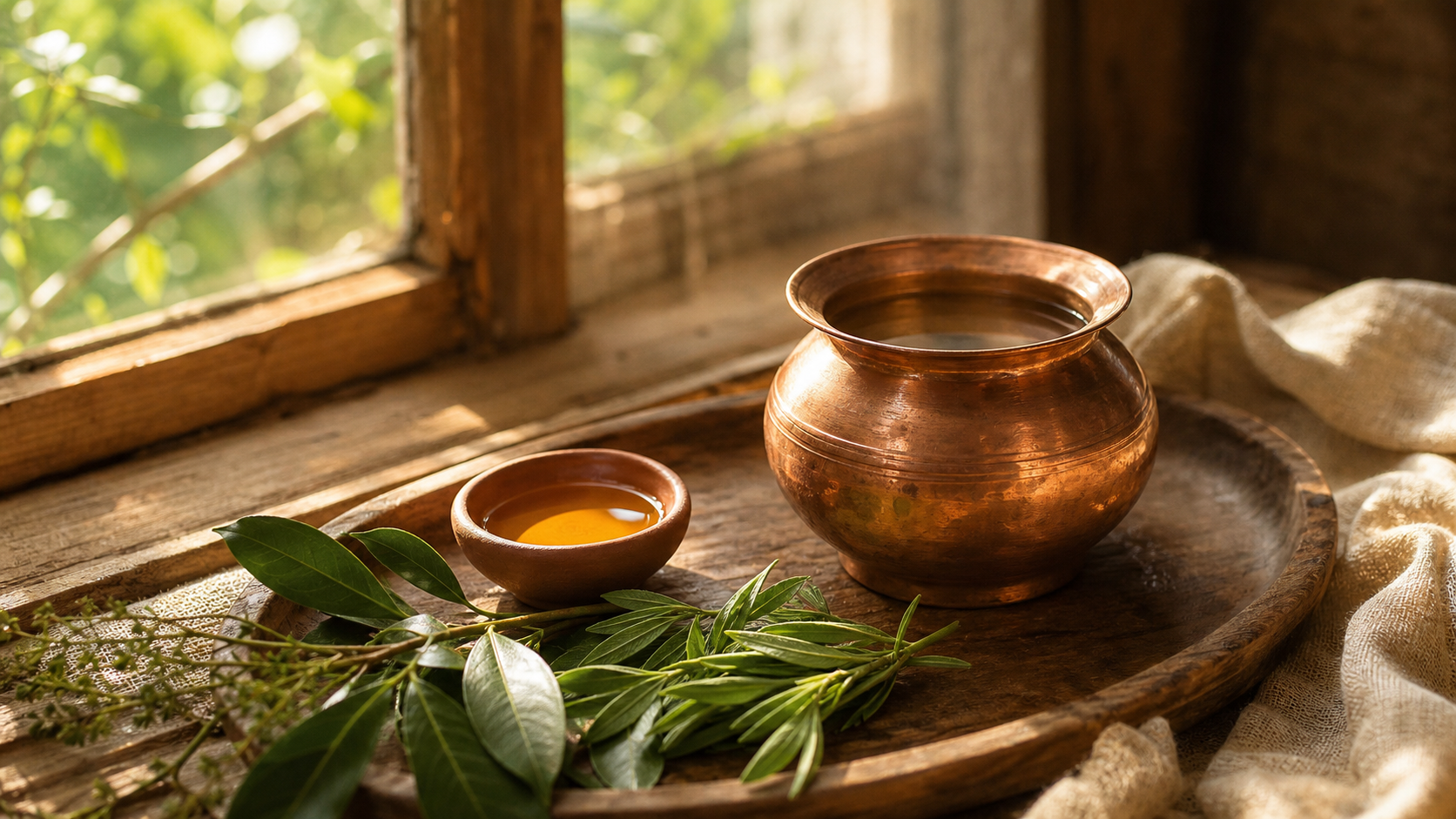
The first act of dinacharya is drinking warm water — ideally stored overnight in a copper vessel. Ayurveda calls this Ushapan, and its purpose is to stimulate the gastrocolic reflex, hydrate tissues after the overnight fast, and gently activate the digestive system before food is introduced. Modern gastroenterology confirms that warm water stimulates peristalsis more effectively than cold water, supporting healthy bowel motility and morning elimination.
The copper vessel is not merely tradition. Copper has documented antimicrobial properties, and water stored in copper overnight absorbs trace amounts of the mineral, which supports thyroid function, collagen synthesis, and immune health. This is a simple, zero-cost practice with measurable physiological benefit.
3. Tongue Scraping (Jihva Prakshalana)
Tongue scraping is one of the most evidence-supported practices in dinacharya. During sleep, the body processes metabolic waste, and a coating of Ama — undigested toxins — accumulates on the tongue's surface. Scraping this coating before eating or drinking anything else removes bacterial debris, volatile sulfur compounds (the primary cause of morning breath), and dead cells that would otherwise be reingested.
Research published in peer-reviewed journals confirms that tongue scraping significantly reduces halitosis-causing bacteria and volatile sulfur compound concentrations. A 2025 clinical trial demonstrated that tongue cleaning, as part of a comprehensive oral hygiene routine, reduces pathogenic bacterial loads including species linked to periodontal disease. The practice also activates taste buds and stimulates digestive enzyme production — a direct signal to the gut that the day's nourishment is beginning.
Use a stainless steel or copper tongue scraper. Apply gentle, steady strokes from the back of the tongue to the front, 5–7 times. Avoid aggressive pressure, which can irritate the tongue's surface.
4. Oil Pulling (Gandusha)
Oil pulling — swishing 1–2 tablespoons of sesame or coconut oil in the mouth for 10–20 minutes — is one of dinacharya's most researched practices. The mechanism is elegant: as the oil is agitated with saliva, it emulsifies and creates a viscous medium that physically traps bacteria, fungi, and debris from the oral cavity. The oil is then expelled, removing the microbial load before it can be swallowed or absorbed.
A 2025 triple-blind randomized clinical trial published in PMC demonstrated that coconut oil pulling, used as an adjunct to periodontal care, promotes a measurable shift toward a healthier oral microbial profile — specifically reducing pathogenic genera including Tannerella and Treponema. Additional research links oil pulling to decreased levels of pro-inflammatory cytokines (IL-6 and TNF-alpha) in gingival crevicular fluid, suggesting systemic anti-inflammatory effects beyond the oral cavity.
The bioactive compounds in coconut oil — particularly lauric acid — exhibit inherent antimicrobial and anti-inflammatory properties that amplify the mechanical cleaning effect. Sesame oil, the traditional Ayurvedic choice, is warming and grounding, making it particularly well-suited for Vata-dominant individuals or cooler seasons.
Oil pulling is performed after tongue scraping, before eating or drinking anything else. Swish gently — this is not vigorous exercise for the jaw — and spit into a trash can (not the sink, as oil can clog drains over time).
5. Nasya: Nasal Oil Application
Nasya is the practice of applying 1–3 drops of warm, medicated oil to each nostril. In Ayurveda, the nose is described as the "gateway to the head" — Nasa hi Shiraso Dwaram — and Nasya is used to lubricate the nasal passages, clear accumulated mucus, sharpen the senses, and support cognitive clarity.
Modern science offers a compelling rationale: the olfactory tissue is densely populated with nerve endings that connect directly to the brain via the olfactory bulb. Research suggests that stimulation of these pathways may trigger the release of neuropeptides involved in mood regulation, pain processing, and memory. The nasal passages also serve as the first line of immune defense against airborne pathogens; keeping them lubricated and healthy supports respiratory immunity.
For daily preventive use (Pratimarsha Nasya), plain sesame oil or a commercially prepared nasya oil is sufficient. Tilt the head back slightly, apply 1–2 drops per nostril, and gently sniff to draw the oil upward. This practice is particularly valuable during dry seasons, in air-conditioned environments, or for those prone to sinus congestion and seasonal allergies.
6. Abhyanga: Warm Oil Self-Massage
Abhyanga — the application of warm, dosha-appropriate oil to the entire body before bathing — is perhaps the most transformative practice in dinacharya, and the one most supported by modern stress physiology research.
The mechanism is direct: the rhythmic, intentional touch of self-massage activates the parasympathetic nervous system, shifting the body from sympathetic "fight-or-flight" dominance to the "rest-and-digest" state. Research on massage therapy demonstrates an average 31% decrease in cortisol levels, alongside average increases of 28% in serotonin and 31% in dopamine. Abhyanga also stimulates the release of oxytocin — the bonding and calming hormone — which serves as a natural antagonist to cortisol's stress response.
Beyond the neurochemical effects, abhyanga supports lymphatic circulation (the lymphatic system has no pump of its own and relies on movement and manual stimulation), nourishes the skin's microbiome, and improves peripheral circulation. The skin is densely populated with sensory neurons; when massaged with herbal oils, these sensory inputs directly influence brain chemistry, promoting deep relaxation and improved sleep quality.
Oil selection follows the dosha framework:
- Sesame oil: Warming and grounding — ideal for Vata types (anxiety, dryness, restlessness) or cooler seasons
- Coconut oil: Cooling and soothing — preferred for Pitta types (inflammation, heat, intensity) or warmer seasons
- Sunflower or safflower oil: Light and stimulating — suited for Kapha types (heaviness, sluggishness, congestion)
A full abhyanga takes 10–20 minutes. Warm the oil slightly (place the bottle in warm water for a few minutes), then apply with long strokes on the limbs and circular strokes on the joints. Allow the oil to absorb for 5–10 minutes before showering. Even a 5-minute abbreviated version — focusing on the scalp, feet, and joints — delivers meaningful benefit when time is limited.
7. Yoga and Pranayama
Following abhyanga and bathing, dinacharya calls for gentle movement and breathwork. The Ayurvedic approach to morning movement is not high-intensity exercise — that is reserved for the Kapha window of 6:00–10:00 AM. The pre-dawn movement practice is gentle, grounding, and intentional: a short yoga sequence to awaken the joints, followed by pranayama (breath regulation) to set the nervous system's tone for the day.
Pranayama research is robust. Studies published in PMC and reviewed by Healthline confirm that consistent pranayama practice decreases perceived stress and anxiety, improves lung capacity and cardiovascular efficiency, enhances cognitive function and concentration, and stimulates the vagus nerve — the primary pathway of the parasympathetic nervous system. Even 5–10 minutes of morning breathwork produces measurable shifts in heart rate variability (HRV), a key biomarker of nervous system resilience.
Accessible morning pranayama techniques include:
- Nadi Shodhana (Alternate Nostril Breathing): Balances the left and right hemispheres of the brain, reduces anxiety, and promotes mental clarity
- Bhramari (Bee Breath): Produces a humming vibration that stimulates the vagus nerve and rapidly reduces stress
- Kapalbhati (Skull-Shining Breath): Energizing and clarifying — stimulates the digestive system and clears mental fog
8. Meditation and Morning Intention
Dinacharya culminates in stillness before the day's demands begin. Even 5–10 minutes of seated meditation — whether breath-focused, mantra-based, or contemplative prayer — establishes the mental and spiritual foundation for the hours ahead. This is the moment to set intention, express gratitude, and connect with the deeper purpose that animates the day's activities.
For those who follow a faith tradition, this is a natural space for Scripture reading, prayer, and communion with God. The body has been prepared — cleansed, nourished with oil, awakened through movement and breath — and the mind is now ready to receive.
"This is the day the Lord has made; let us rejoice and be glad in it." — Psalm 118:24
The morning ritual of dinacharya is, at its heart, an act of stewardship — honoring the body as the temple it was created to be, and beginning each day with intentional care rather than reactive urgency.
Meal Timing: The Chrononutrition Connection
Dinacharya extends beyond the morning into the structure of the entire day, and nowhere is this more scientifically validated than in meal timing. The Ayurvedic principle that digestive fire (Agni) follows solar cycles has found remarkable confirmation in the modern field of chrononutrition.
Research published in LiveMint and Madhav Baug confirms that metabolic activity naturally peaks during the midday Pitta window and slows significantly in the evening. Studies show that shifting caloric intake toward the earlier part of the day improves insulin sensitivity, blood pressure, and lipid profiles. Conversely, late-night eating — consuming significant calories after 7:00 PM — is associated with increased cardiometabolic risk, disrupted sleep architecture, and impaired glucose metabolism.
The practical dinacharya meal framework:
- Breakfast (7:00–9:00 AM): Light and warm — easily digestible foods that do not overwhelm the still-awakening digestive system. Warm porridge, cooked grains, or a light egg preparation. Avoid cold, raw, or heavy foods in the morning.
- Lunch (11:00 AM – 2:00 PM): The largest, most nutrient-dense meal of the day. This is when Agni is strongest and the body is best equipped to digest complex proteins, healthy fats, and a full range of nutrients.
- Dinner (5:00–7:00 PM): Light and warm — soups, cooked vegetables, easily digestible proteins. Finish eating at least 2–3 hours before sleep to allow full digestion and support sleep quality.
- Meal spacing: Maintain 3–5 hours between meals to allow the digestive system to complete each cycle without constant insulin stimulation from grazing.
Implementing a Simplified Dinacharya for Modern Life
The full dinacharya sequence — from pre-dawn waking through abhyanga, yoga, pranayama, meditation, and structured meals — can feel overwhelming when viewed as a single commitment. The key insight from both Ayurvedic tradition and modern behavioral science is that sustainable routines are built in layers, not installed all at once.
A practical three-phase implementation:
Phase 1: The Anchors (Week 1–2)
Establish a consistent wake time. Drink warm water immediately upon rising. Add tongue scraping. These three practices take less than five minutes and create the behavioral foundation for everything that follows.
Phase 2: The Intermediate Layer (Week 3–4)
Add oil pulling (10–15 minutes while you prepare for the day — it requires no focused attention). Shift your largest meal to midday. Finish dinner by 7:00 PM. Add 5 minutes of pranayama before breakfast.
Phase 3: The Full Routine (Month 2 and Beyond)
Integrate abhyanga 3–5 times per week. Add nasya. Extend pranayama to 10–15 minutes. Add a short morning yoga sequence. Establish a consistent meditation practice.
The goal is not perfection — it is consistency. A simplified dinacharya practiced daily delivers far greater cumulative benefit than a comprehensive routine practiced sporadically. Start where you are, add one practice at a time, and allow the routine to deepen naturally over weeks and months.
Dinacharya and the Five Gates: Living in Alignment
At Genesis World Health, we recognize dinacharya as a living expression of the Five Sacred Operating Principles — particularly the principles of Authenticity and Informed Choice. Dinacharya is not a prescription imposed from outside; it is a framework for listening to your body's natural intelligence and making daily choices that honor the design you were given.
The practice of beginning each day with intentional self-care — cleansing, nourishing, moving, breathing, praying — is an act of alignment with the truth that your body is not a machine to be optimized but a sacred vessel to be stewarded. This is the integrative health vision that Genesis World Health was built to support: Ancient Wisdom. Modern Science. Divine Health.
Our AI Agent Council includes Ayurvedic specialists who can help you understand how dinacharya practices apply to your specific constitution, health history, and wellness goals. Through the Health Assessment, you can receive personalized health insights that integrate Ayurvedic principles with modern functional medicine — helping you build a morning routine that is genuinely tailored to your unique physiology rather than a generic template.
For those who want to go deeper into specific Ayurvedic practices — whether abhyanga oil selection, pranayama techniques for your dosha, or meal timing adjustments for metabolic health — our Deep Dive Sessions offer focused, one-on-one exploration with specialist AI agents who can guide you through the nuances of Ayurvedic daily living.
The Evening Counterpart: Ratricharya
Dinacharya is incomplete without its evening counterpart, Ratricharya — the Ayurvedic science of the evening routine. The morning practices prepare the body and mind for the day's engagement; the evening practices prepare them for the night's restoration.
Key Ratricharya practices include:
- Digital sunset: Avoiding screens 60–90 minutes before sleep to allow melatonin production to proceed unimpeded by blue light exposure
- Light evening meal: Finished by 7:00 PM, allowing full digestion before the body enters its repair and detoxification cycles during sleep
- Foot massage: A brief self-massage of the feet with warm oil before bed — a powerful Vata-pacifying practice that promotes deep, restorative sleep
- Sleep before 10:00 PM: Aligning with the Kapha-to-Pitta transition that occurs at 10:00 PM, after which the mind naturally becomes more active and sleep becomes harder to initiate
- Evening prayer or reflection: Closing the day with gratitude, releasing the day's concerns, and resting in the assurance that the body's healing work continues through the night
"He grants sleep to those he loves." — Psalm 127:2
Ready to Build Your Personalized Morning Routine?
Dinacharya is most powerful when it is tailored to your unique constitution, health history, and wellness goals. Genesis World Health's AI Agent Council integrates Ayurvedic wisdom with modern functional medicine to deliver personalized health insights that go far beyond a generic morning checklist. Take the Health Assessment to begin, or explore a Deep Dive Session with our Ayurvedic specialist agent to build a daily routine that truly fits your life.
Medical Disclaimer: As always, we encourage you to work with qualified healthcare providers — including licensed Ayurvedic practitioners, integrative medicine physicians, registered dietitians, and your primary care provider — when making significant changes to your daily routine and holistic health practices. Genesis World Health is an educational platform, not a substitute for professional medical care. Our role is to equip you with knowledge, insight, and the integrative perspective you need to have more informed conversations with your healthcare team.
Sources & References
- ResearchGate — Dinacharya: A Scientific System Model Approach as Quaternary Prevention for Non-Communicable Diseases
- PMC — Coconut Oil Pulling and Oral Microbiome: Triple-Blind Randomized Clinical Trial (2025)
- PMC — Oil Pulling Therapy: Plaque Index and Gingival Health Evidence (2025)
- PubMed — Cortisol Decreases and Serotonin and Dopamine Increase Following Massage Therapy (Field et al.)
- LiveMint — Chrononutrition: Meal Timings, Circadian Rhythm, and Ayurveda
- PMC — Pranayama and Its Evidence-Based Health Benefits
- Science Insights — Nasya: Ayurvedic Nasal Therapy, Mechanisms, and Clinical Benefits
- Health Spectra — Dinacharya: The Ayurvedic Daily Routine That Can Transform Your Health (2026)