Healing Foods of the Bible: Ancient Nutritional Wisdom Backed by Modern Science
Healing Foods of the Bible: Ancient Nutritional Wisdom Backed by Modern Science
Long before the age of clinical nutrition, before macronutrient ratios and supplement stacks, God provided a blueprint for nourishing the human body. Woven throughout the pages of Scripture — from Genesis to Revelation — is a rich tapestry of foods that ancient peoples relied upon not only for sustenance, but for healing, strength, and vitality. What is remarkable is that modern nutritional science is now confirming what the Bible described thousands of years ago: these foods are extraordinarily good for you.
This is not coincidence. It is design.
At Genesis World Health, we believe that ancient wisdom and modern science are not in conflict — they are complementary streams flowing toward the same truth. Our Five Sacred Operating Principles include a commitment to Absolute Truth and Informed Choice, which means we honor every healing tradition, including the nutritional wisdom embedded in Scripture. This article explores the healing foods of the Bible through both a faith lens and an evidence-based scientific lens, offering you a deeper understanding of how God's original dietary design supports whole-person health.
The Seven Species: God's Nutritional Blueprint for the Holy Land
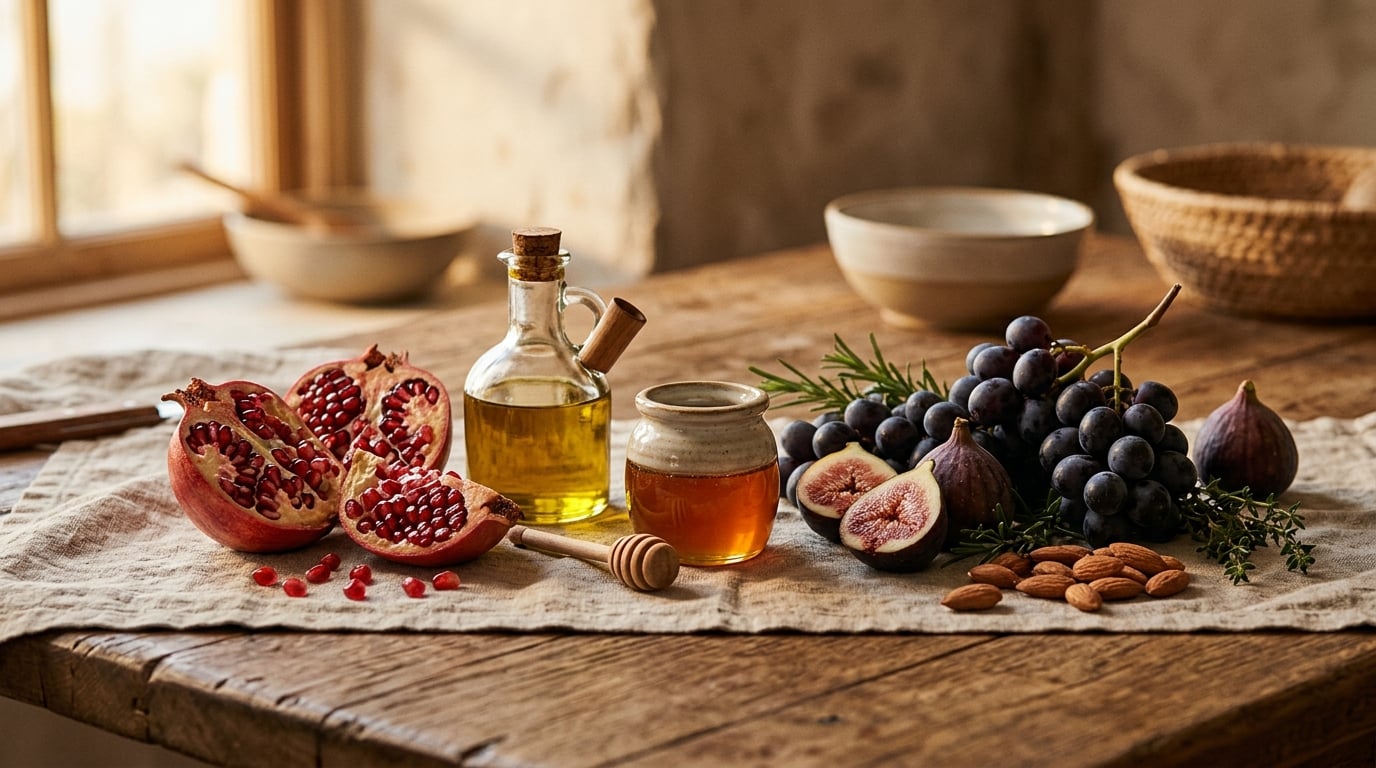
Deuteronomy 8:8 describes the Promised Land as "a land of wheat and barley, of vines and fig trees and pomegranates, a land of olive oil and honey." These seven species — wheat, barley, grapes, figs, pomegranates, olives, and honey — are not merely agricultural symbols of abundance. They represent a nutritional foundation that modern researchers have identified as the cornerstone of one of the world's healthiest dietary patterns: the Mediterranean diet.
A landmark study published in Public Health Nutrition by Cambridge University Press traced the Middle Eastern and biblical origins of the Mediterranean diet, confirming that these seven species provide a synergistic combination of polyphenols, healthy fats, fiber, and antioxidants that protect against cardiovascular disease, metabolic dysfunction, and chronic inflammation.
"A land flowing with milk and honey." — Exodus 3:8
This phrase, repeated throughout Scripture, is more than poetic imagery. It describes a land of nutritional richness — raw honey and grass-fed dairy — both of which modern science recognizes as nutrient-dense, bioactive foods with measurable health benefits.
Olive Oil: The Liquid Gold of Scripture and Science
Few foods appear more frequently in the Bible than olive oil. Used for cooking, anointing, healing, and worship, olive oil was central to ancient Israelite life. James 5:14 instructs elders to anoint the sick with oil and pray over them — a practice that intertwined the physical and spiritual dimensions of healing.
Modern science has validated olive oil's extraordinary health profile. Extra virgin olive oil is rich in monounsaturated fatty acids and a compound called oleocanthal, which research has shown to exert anti-inflammatory effects similar to ibuprofen — without the side effects. The polyphenols in olive oil, including hydroxytyrosol and oleuropein, inhibit LDL oxidation and protect against atherosclerosis, supporting heart, brain, and joint health.
The Mayo Clinic's nutrition research confirms that olive oil is a primary driver of the Mediterranean diet's well-documented ability to reduce markers of chronic inflammation, including C-reactive protein (CRP). For members exploring GWH's AI Agent Council, our Nutraceuticals Specialist and Nutrition agents frequently highlight extra virgin olive oil as a foundational whole-food support for cardiovascular and inflammatory health.
Pomegranates: The Fruit of Royalty and Restoration
The pomegranate appears throughout Scripture as a symbol of abundance, beauty, and blessing. It adorned the hem of the High Priest's robe (Exodus 28:33-34) and was among the fruits brought back by the spies from Canaan as evidence of the land's richness (Numbers 13:23).
Nutritionally, the pomegranate is one of the most antioxidant-dense fruits on earth. Its seeds and juice contain ellagic acid, flavonoids, and anthocyanins — compounds that research has linked to reduced insulin resistance, lower inflammatory markers, and potential inhibition of tumor cell growth. A study published in the Journal of Nutritional Biochemistry found that pomegranate extract significantly reduced oxidative stress and inflammation in human subjects.
The synergy between pomegranate's ellagitannins and the gut microbiome is particularly compelling: gut bacteria convert ellagitannins into urolithins, compounds that have demonstrated mitochondrial protective effects in emerging research. This connection between biblical foods and the gut-brain axis is one reason GWH's integrative approach honors these ancient nutritional traditions.
Raw Honey: Nature's Antibiotic and Immune Ally
Honey is mentioned over 60 times in the Bible. Proverbs 24:13 declares, "Eat honey, my son, for it is good; honey from the comb is sweet to your taste." Solomon's wisdom extended to nutrition: raw, unfiltered honey is now recognized by modern science as a potent antimicrobial, antifungal, and immune-supporting food.
"Pleasant words are a honeycomb, sweet to the soul and healing to the bones." — Proverbs 16:24
Raw honey contains hydrogen peroxide, methylglyoxal, and defensin-1 — natural compounds that give it broad-spectrum antibacterial properties. It has been used clinically for wound healing and has demonstrated efficacy against antibiotic-resistant bacteria in laboratory studies. Its prebiotic properties also support gut microbiome diversity, which we now understand is foundational to immune function, mood regulation, and metabolic health.
It is important to note that raw, unfiltered honey is nutritionally distinct from processed commercial honey, which loses many of its bioactive compounds through heat treatment. When Scripture speaks of honey from the comb, it is describing the whole, unprocessed form — a principle that aligns perfectly with GWH's emphasis on whole-food nutrition.
Figs: The Healing Fruit of the Ancient World
Figs hold a unique place in biblical history. When King Hezekiah was gravely ill, the prophet Isaiah instructed that a poultice of figs be applied to his wound (2 Kings 20:7) — one of the earliest recorded uses of a food-based medicinal application in Scripture. Jesus himself used the fig tree as a teaching symbol, and figs were a staple of the ancient Israelite diet.
Modern nutritional science confirms that figs are exceptionally rich in dietary fiber, particularly soluble fiber that feeds beneficial gut bacteria and supports healthy digestion. They contain significant amounts of calcium, magnesium, potassium, and vitamin K — nutrients essential for bone density, cardiovascular function, and blood pressure regulation. Their antioxidant profile, including chlorogenic acid and rutin, contributes to anti-inflammatory and cardioprotective effects.
For members working with GWH's AI Agent Council, our Nutrition Specialist agent frequently highlights figs as a whole-food source of minerals that many modern diets lack — particularly for supporting bone health and digestive regularity.
Barley and Sprouted Grains: The Bread of Life, Reimagined
Barley was the grain of the common people in ancient Israel — humble, nourishing, and deeply significant. The miracle of the loaves in John 6:9 involved barley bread. Ezekiel 4:9 describes a multi-grain bread made from wheat, barley, beans, lentils, millet, and spelt — a recipe so nutritionally sophisticated that it has inspired a modern whole-grain bread brand.
Barley contains beta-glucan, a soluble fiber that has been extensively studied for its ability to lower LDL cholesterol, stabilize blood sugar, and support a healthy gut microbiome. The process of sprouting grains — as described in the Ezekiel bread formula — increases the bioavailability of iron, zinc, and B vitamins, and makes the proteins more complete and easier to digest. Research published in the Journal of Agricultural and Food Chemistry confirmed that sprouting significantly increases antioxidant activity in grains.
This ancient wisdom about food preparation — soaking, sprouting, fermenting — is now recognized by functional medicine practitioners as essential for maximizing nutrient absorption and minimizing anti-nutrient compounds like phytic acid.
Grapes and Resveratrol: The Science Behind the Vine
The vine is one of the most prominent symbols in Scripture. Jesus declared, "I am the true vine" (John 15:1), and grapes appear throughout the Old and New Testaments as symbols of blessing, abundance, and covenant. Beyond their spiritual significance, grapes contain resveratrol — a polyphenol that has generated significant scientific interest for its potential cardiovascular and longevity-supporting properties.
Resveratrol activates sirtuins, a family of proteins associated with cellular repair and longevity. Research has linked resveratrol to improved endothelial function, reduced platelet aggregation, and anti-inflammatory effects. While the research on resveratrol supplementation is still evolving, the whole-food form — consumed as fresh grapes or in moderate amounts of red wine — provides a complex matrix of polyphenols that work synergistically in ways that isolated supplements cannot replicate.
This is a principle GWH's Nutraceuticals Specialist agent emphasizes consistently: whole foods provide phytonutrient complexity that supplements alone cannot match. The biblical diet's emphasis on whole, unprocessed foods reflects a nutritional intelligence that modern science is only beginning to fully appreciate.
Bitter Herbs and Spices: The Pharmacy of the Ancient Kitchen
The Passover Seder includes bitter herbs (maror) as a reminder of the bitterness of slavery — but these herbs also carry remarkable medicinal properties. Coriander, mentioned in Exodus 16:31 as a comparison for manna, has been studied for its anti-diabetic effects and its ability to support heavy metal detoxification. Hyssop, used in purification rituals (Psalm 51:7), contains carvacrol and thymol — compounds with potent antimicrobial properties.
Garlic, referenced in Numbers 11:5 as one of the foods the Israelites missed from Egypt, is now one of the most studied medicinal foods in the world. Allicin, garlic's primary bioactive compound, has demonstrated antibacterial, antiviral, antifungal, and cardiovascular-protective effects in hundreds of peer-reviewed studies. Turmeric, used in ancient Middle Eastern and biblical-era medicine, contains curcumin — one of the most potent natural anti-inflammatory compounds known to science.
"He makes grass grow for the cattle, and plants for people to cultivate — bringing forth food from the earth." — Psalm 104:14
Almonds and Nuts: The Brain Food of Scripture
Almonds appear in Scripture as symbols of divine favor and watchfulness. Aaron's rod budded and produced almonds (Numbers 17:8), and almonds were among the gifts Jacob sent to Egypt (Genesis 43:11). The menorah in the Tabernacle was designed to resemble almond blossoms — a sacred symbol woven into the architecture of worship.
Nutritionally, almonds are among the most nutrient-dense foods available. They are rich in vitamin E, magnesium, healthy monounsaturated fats, and fiber. Research consistently links regular nut consumption to reduced cardiovascular risk, improved blood sugar regulation, and better cognitive function. A meta-analysis published in the American Journal of Clinical Nutrition found that regular nut consumption was associated with a 29% reduction in cardiovascular disease risk.
For members exploring Deep Dive Sessions with GWH's Nutrition Specialist agent, almonds and other biblical nuts frequently appear in discussions about brain health, hormonal balance, and anti-inflammatory nutrition strategies.
Integrating Biblical Nutrition with Modern Integrative Health
What makes the biblical diet so compelling from a modern scientific perspective is not any single food, but the pattern as a whole. The seven species of Deuteronomy, combined with clean meats, bitter herbs, fermented foods, and abundant vegetables, create a dietary framework that is:
- Anti-inflammatory — rich in polyphenols, omega-3 fatty acids, and fiber that reduce systemic inflammation
- Gut-supportive — high in prebiotic fiber and fermented foods that nourish a diverse microbiome
- Cardiovascular-protective — centered on olive oil, nuts, and whole grains that support healthy lipid profiles
- Metabolically stabilizing — low in refined sugars and processed foods that drive insulin resistance
- Antioxidant-rich — packed with phytonutrients that protect cells from oxidative damage
This is not a coincidence of ancient culture. It is evidence of intentional design — a Creator who embedded nutritional intelligence into the foods He provided for His people.
At Genesis World Health, our Biblical Medicine resources explore this intersection of faith and nutrition in depth. Our AI Agent Council integrates insights from our Nutrition Specialist, Nutraceuticals Specialist, and Faith and Spiritual Wellness agents to provide members with personalized health insights that honor both the wisdom of Scripture and the rigor of modern nutritional science.
Practical Steps: Bringing Biblical Foods Into Your Daily Life
Start with the Seven Species
Make a conscious effort to incorporate the seven species of Deuteronomy 8:8 into your weekly meals. Use extra virgin olive oil as your primary cooking fat. Add pomegranate seeds to salads and yogurt. Snack on fresh or dried figs. Choose whole-grain barley or sprouted grain bread over refined flour products. Sweeten with raw honey instead of processed sugar.
Embrace Whole, Unprocessed Foods
The biblical diet is fundamentally a whole-food diet. Every food mentioned in Scripture is in its natural, unprocessed form. This aligns with the foundational principle of integrative nutrition: the closer a food is to its natural state, the more nutritional intelligence it retains. Minimize ultra-processed foods, refined sugars, and industrial seed oils — none of which appear in Scripture.
Honor the Rhythm of Eating
Scripture also speaks to the rhythm of eating — feasting and fasting, abundance and restraint. Modern research on intermittent fasting and time-restricted eating confirms that giving the digestive system periods of rest supports cellular repair, metabolic health, and longevity. The biblical practice of fasting was not merely spiritual discipline; it was physiological wisdom.
Consult Qualified Healthcare Providers
While biblical nutrition provides a powerful framework, individual health needs vary significantly. Always consult with your physician or a qualified healthcare provider before making significant dietary changes, particularly if you are managing a chronic health condition or taking medications. GWH's AI Agent Council provides educational health insights to support your conversations with your healthcare team — not to replace professional medical guidance.
Explore GWH's Learn page for additional resources on integrative nutrition, biblical medicine, and whole-person wellness. Our Health Assessment can help identify which nutritional areas may benefit most from personalized attention through our AI Agent Council.
Ready to Align with Your God-Given Design?
Genesis World Health's AI Agent Council brings together our Nutrition Specialist, Nutraceuticals Specialist, and Faith and Spiritual Wellness agents to deliver personalized health insights rooted in both ancient wisdom and modern science. Whether you are exploring biblical nutrition, anti-inflammatory eating, or whole-person wellness, our council of 55+ specialized agents works together to provide guidance tailored to your unique health story — honoring the body God designed you to have.
Medical Disclaimer: As always, we encourage you to work with qualified healthcare providers — including registered dietitians, biblical medicine experts, licensed naturopathic doctors, and your primary care provider — when making significant changes to your nutrition and biblical healing foods. Genesis World Health is an educational platform, not a substitute for professional medical care. Our role is to equip you with knowledge, insight, and the integrative perspective you need to have more informed conversations with your healthcare team.
Sources & References
- Cambridge University Press — Middle Eastern and Biblical Origins of the Mediterranean Diet, Public Health Nutrition
- Dr. Axe — Top 10 Bible Foods That Heal: Ancient Nutritional Wisdom
- Catholic Connect — From Scripture to Sustenance: The Healing Foods of the Bible That Still Nourish Us Today
- Mayo Clinic Diet — Mediterranean Diet and Inflammation: Foods That Soothe Chronic Pain
- PubMed Central — Polyphenols, Antioxidants, and the Mediterranean Diet: A Systematic Review
- Dr. Jockers — Biblical Nutrition: Ancient Dietary Wisdom for Modern Health