When Two or Three Gather: What Intercessory Prayer, Community Healing Science, and Scripture Reveal About God's Design for Collective Restoration
The Body Heals Differently When We Gather
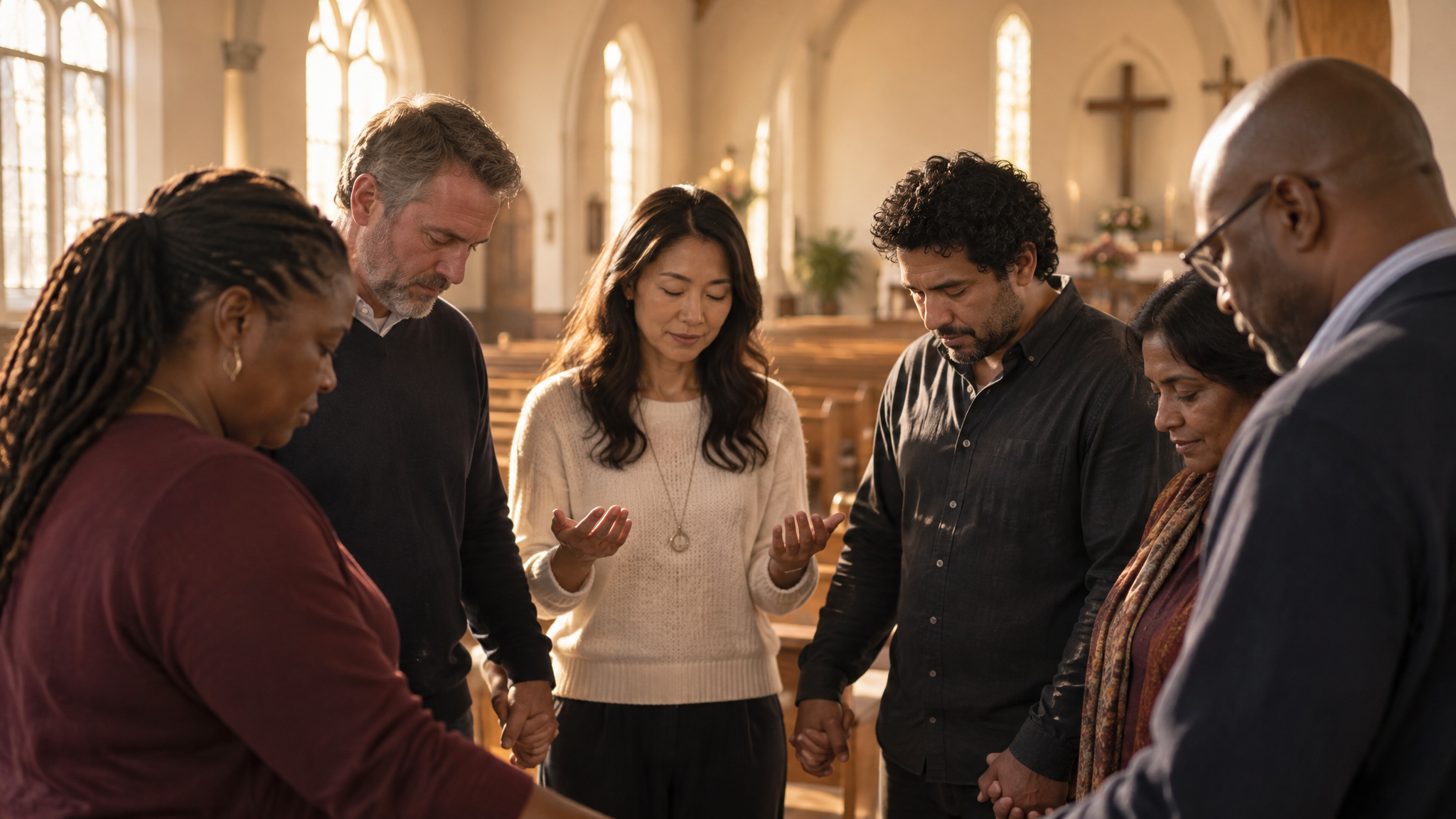
There is a promise embedded in the fabric of Christian community that modern science is only beginning to measure. When Jesus declared, "For where two or three gather in my name, there am I with them" (Matthew 18:20), He was not simply offering comfort for small congregations. He was describing a spiritual architecture of healing, one in which the gathered body of believers becomes a vessel for restoration that no individual prayer alone can fully replicate. Centuries later, peer-reviewed research is confirming what Scripture declared first: communal prayer activates measurable physiological changes in both the one who prays and the one who receives prayer. God designed us not just to pray, but to pray together.
This post is not about whether prayer "works" in a clinical sense. That question misses the point entirely. It is about what happens in the body, the nervous system, and the immune landscape when human beings gather in faith, lay hands on one another, and intercede on each other's behalf. The science is striking. The Scripture is clear. And Genesis World Health's Digital Health Agents, including the Faith and Spirituality agent, offer educational perspectives on how gathered prayer fits within a whole-person approach to health.
What Scripture Says About Gathered Prayer and Healing
The biblical case for communal intercessory prayer is not built on a single verse. It runs through the entire New Testament as a consistent thread.
James 5:14-16 is perhaps the most direct instruction in all of Scripture regarding prayer and physical healing:
"Is anyone among you sick? Let them call the elders of the church to pray over them and anoint them with oil in the name of the Lord. And the prayer offered in faith will make the sick person well; the Lord will raise them up. If they have sinned, they will be forgiven. Therefore confess your sins to each other and pray for each other so that you may be healed. The prayer of a righteous person is powerful and effective." — James 5:14-16
Notice the communal structure. The sick person does not pray alone. The elders gather. Oil is applied. Confession is shared. The healing is embedded in relationship, in the gathered body of believers acting as one. This is not incidental to the text. It is the text.
Acts 12:5 records the early church praying collectively for Peter while he was imprisoned: "So Peter was kept in prison, but the church was earnestly praying to God for him." The Greek word used is ektenōs, meaning fervently, intensely, stretched out. The church did not offer polite, individual prayers from their homes. They gathered. They interceded. And Peter walked out of prison.
Matthew 18:20 anchors all of this in the promise of Christ's presence. Where the community gathers in His name, He is there. Not as a distant observer, but as an active participant in the healing work of gathered faith.
The Physiology of Gathered Prayer: What Science Has Found
For decades, researchers struggled to design studies that could measure the effects of prayer on health outcomes. The methodological challenges are real. But a growing body of research, particularly on what scientists call proximal intercessory prayer (PIP), is producing results that deserve serious attention.
A 2026 randomized controlled trial published in the Annals of Family Medicine examined the effects of a five-minute proximal intercessory prayer intervention in a primary care setting. Participants who received prayer from an intercessor physically present with them reported significant, measurable reductions in both pain intensity (one to two points on an eleven-point scale) and anxiety levels as measured by the GAD-7 scale, compared to a music-based control group. These improvements were sustained at two-week and six-week follow-ups, with no adverse events reported. The researchers concluded that proximal intercessory prayer may function as a safe, low-cost, non-pharmacologic complement to standard medical care.
A 2025 systematic review examining intercessory prayer in intensive care settings found that when prayer was used as an adjunct to standard care, it was associated with improved mortality outcomes, better prognoses, reduced requirements for mechanical ventilation, and lower indices of multi-organ dysfunction. These are not trivial findings. They suggest that the gathered, interceding community may influence outcomes even in the most acute medical environments.
A 2024 meta-analysis of randomized controlled trials involving cancer patients found that spiritual interventions, including communal prayer and spiritual reflection, significantly reduced fatigue and pain, improved psychological outcomes including anxiety, depression, and distress, and enhanced spiritual well-being and a greater sense of meaning in life.
Oxytocin, Cortisol, and the Chemistry of Communal Worship
Beyond the clinical outcomes, researchers have begun mapping the neurochemical landscape of communal spiritual practice. The findings illuminate why God may have designed us to heal in community rather than in isolation.
Group activities characterized by synchronous behavior, including singing, chanting, and rhythmic prayer, have been shown to stimulate endogenous oxytocin production. Oxytocin, often called the bonding hormone, modulates social behavior, trust, and stress reactivity. When a congregation sings together, prays together, or joins hands in intercession, the body releases oxytocin, which reduces cortisol, lowers blood pressure, and strengthens the sense of social safety that the nervous system requires to move out of fight-or-flight and into rest-and-repair mode.
Research on rhythmic vocalization, including prayer spoken aloud in community, shows that it can induce parasympathetic activation through slowed, rhythmic breathing, approximately six respirations per minute. This breathing pattern improves heart rate variability and cardiovascular markers. The body, in other words, responds to gathered prayer as a physiological signal of safety.
Faith Community Membership and Longevity
The health benefits of gathered faith extend well beyond any single prayer session. A 2024 systematic review of thirteen high-quality cohort studies found that active participation in faith communities is associated with reduced all-cause mortality, particularly among older adults who engage in religious activities with a strong social component. A 2025 longitudinal analysis confirmed that strongly religious individuals, defined by active community participation rather than private belief alone, predict lower mortality risks over periods spanning several decades.
The mechanisms are multiple. Faith communities provide robust social networks that reduce isolation, a significant independent risk factor for mortality. They encourage health-conscious behaviors. They offer a sense of purpose and meaning that research consistently links to longer life. And they provide what researchers call "religious social support," a form of community care that has been shown to buffer the health effects of financial strain, grief, and chronic stress in ways that secular social networks often cannot replicate.
One study found that providing support to fellow congregational members, not just receiving it, was associated with better mortality outcomes. The act of interceding for another person, of carrying someone else's burden in prayer, appears to benefit the intercessor as much as the one being prayed for. This is precisely what James 5:16 describes: "pray for each other so that you may be healed." The healing flows in both directions.
The Distinction That Matters: Communal vs. Individual Prayer
It is important to note what this post is not claiming. The research on distant intercessory prayer, where a third party prays for someone in a remote location without any physical or relational contact, has produced inconsistent results in clinical trials. This is a different practice from what Scripture describes in James 5 and what the early church practiced in Acts 12.
The healing power of gathered prayer appears to operate through multiple pathways simultaneously: the neurochemical effects of synchronous community, the stress-buffering effects of social support, the physiological regulation that comes from rhythmic communal vocalization, and the spiritual reality of Christ's promised presence. These pathways work together. Separating them into a controlled trial that isolates "prayer" as a single variable misses the integrated design.
God did not design prayer as a vending machine. He designed it as a relational practice, embedded in community, sustained by love, and animated by His presence. The science is beginning to catch up to what the church has always known.
How Genesis World Health Supports Whole-Person Healing Through Community
Genesis World Health's Faith and Spirituality Digital Health Agent offers educational perspectives on the intersection of spiritual practice and physical health, drawing on both Scripture and peer-reviewed research. Members can explore how communal prayer, spiritual community, and faith-based practices fit within a whole-person approach to wellness.
The Immune Optimization Digital Health Agent offers insights on how social connection, stress regulation, and community support influence immune function, including the pathways through which gathered prayer may support the body's natural healing capacity.
For those navigating chronic illness, grief, or recovery, the Mental Health (Root Cause) Digital Health Agent provides educational context on how spiritual community and intercessory prayer function as evidence-supported complements to professional mental health care.
Genesis World Health's Digital Health Agents are digital tools, not human practitioners. They share educational insights only, and no person reviews your information. For clinical care, always work with licensed providers outside the platform.
A Closing Word: You Were Not Designed to Heal Alone
The modern world has made prayer a private affair. We pray in our cars, in our closets, in the quiet of our own hearts. And private prayer is good and right. But Scripture consistently points to something more: the gathered body, the elders who come, the community that intercedes, the church that prays earnestly while Peter sits in prison.
You were not designed to carry your health burdens alone. You were designed for a community that gathers in His name, lays hands on the sick, confesses to one another, and intercedes with fervent, stretched-out prayer. The science confirms what the church has always practiced. The body heals differently when we gather.
"Therefore confess your sins to each other and pray for each other so that you may be healed. The prayer of a righteous person is powerful and effective." — James 5:16
Explore the Faith and Science of Whole-Person Healing
Genesis World Health's 66+ Digital Health Agents bring together the wisdom of Scripture, the insights of integrative medicine, and the latest peer-reviewed research. Ask the Faith and Spirituality Digital Health Agent how communal prayer and spiritual community fit within your whole-person health journey.
A Personal Note from Genesis World Health
The information shared in this article is for educational purposes and reflects our commitment to integrating faith, science, and whole-person wellness. It is not a substitute for professional medical advice, diagnosis, or treatment. Every person's health journey is unique and what works for one may not be right for another.
We encourage you to consult with pastoral counselors, licensed mental health professionals, integrative medicine physicians, and your primary care provider when making significant changes to your spiritual health practices and overall wellness approach. Our prayer is that this knowledge empowers you to make informed, faith-guided decisions for the body God has entrusted to you.
Sources & References
- Dusek JA, et al. "Proximal Intercessory Prayer in Primary Care: A Randomized Controlled Trial." Annals of Family Medicine. 2026;24(3):192. https://www.annfammed.org/content/24/3/192
- Gonçalves JP, et al. "Spiritual interventions in patients with cancer: a systematic review and meta-analysis of randomized controlled trials." PubMed. 2024. https://pubmed.ncbi.nlm.nih.gov/38943773/
- Pearce MJ, et al. "Religious social support and health among African Americans." PMC. 2018. https://ncbi.nlm.nih.gov/pmc/articles/PMC5766361/
- Dunbar RIM, et al. "Singing, social bonding, and oxytocin: the role of communal vocalization." PMC. 2022. https://pmc.ncbi.nlm.nih.gov/articles/PMC8915780/
- Lucchetti G, et al. "Religious participation and all-cause mortality: a systematic review of cohort studies." Journal of Public Health. 2024. https://link.springer.com/article/10.1007/s10389-024-02303-1
- Vargas-Alarcon G, et al. "Effects of intercessory prayer on critically ill patients: a systematic review." Acta Colombiana de Cuidado Intensivo. 2025. https://www.elsevier.es/es-revista-acta-colombiana-cuidado-intensivo-101-articulo-efectos-oracion-intercesion-pacientes-criticos-S0122726225000059