The Mediterranean Diet's Secret Weapon: How Humanin and SHMOOSE Protect Your Heart, Brain, and God's Design for Cellular Longevity
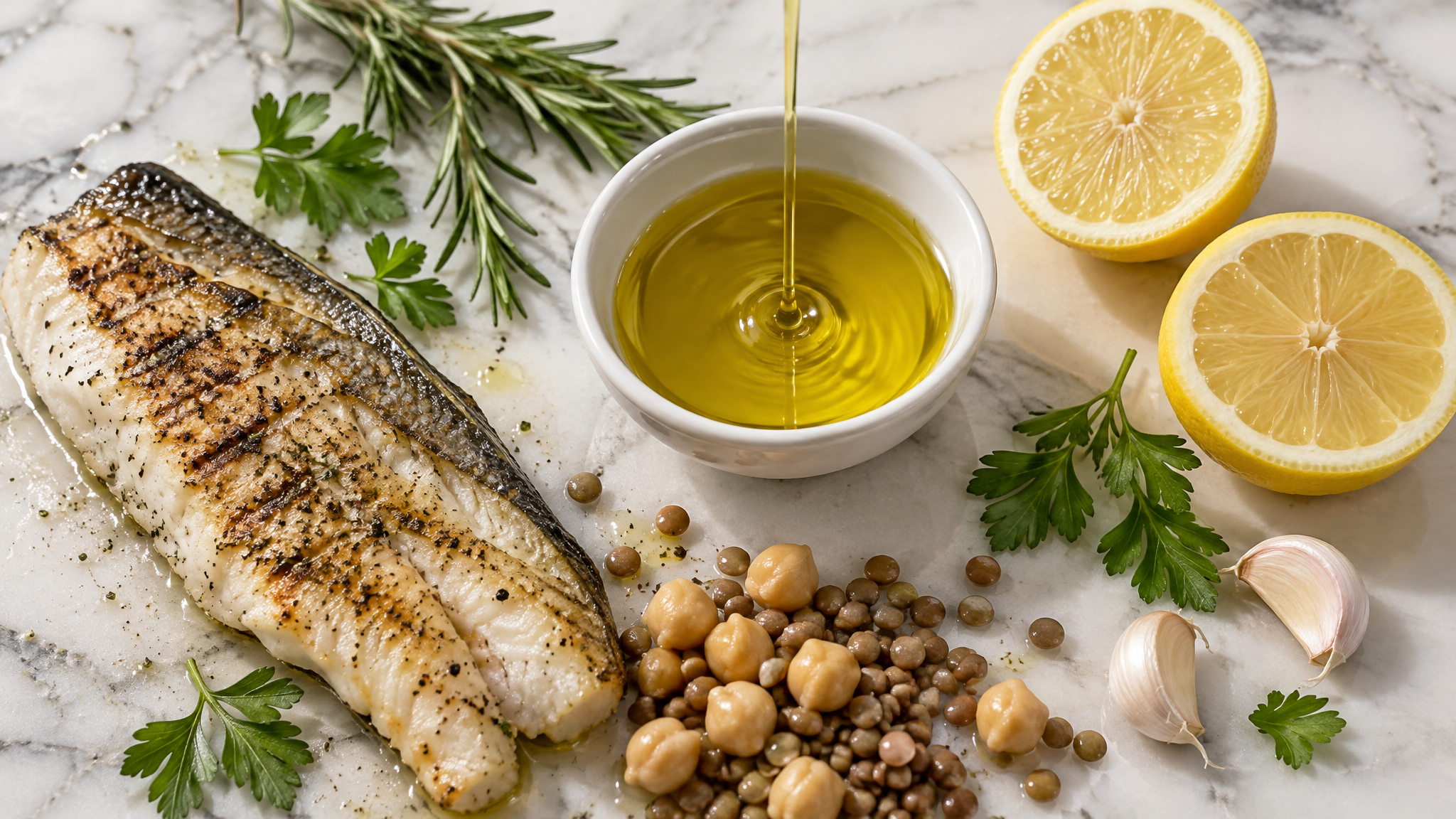
God's Original Food Design, Confirmed by Molecular Science
For thousands of years, the foods described in Scripture: olive oil, fish, legumes, fresh herbs, and whole grains. These foods formed the foundation of life in the ancient Near East. Modern nutritional science has spent decades confirming what those who lived by these foods already knew: this way of eating protects the heart, sharpens the mind, and extends healthy life. Now, a 2026 study from the University of Southern California's Leonard Davis School of Gerontology has uncovered a molecular reason why. Researchers found that people who closely follow the Mediterranean diet carry significantly higher blood levels of two mitochondrial microproteins, humanin and SHMOOSE, that appear to guard the heart and brain from the damage of aging. The discovery offers a new window into how God's original food design maps, with remarkable precision, to the body's own cellular protection system.
At Genesis World Health, our Nutrition and Diet digital specialist and Micro-medicine (Mitochondria Health) digital specialist both draw on this growing body of evidence to help members understand how food choices ripple all the way down to the mitochondrial level. This post explores what humanin and SHMOOSE are, what the 2026 USC study found, and what it means for anyone seeking to steward the body God has entrusted to them.
What Are Humanin and SHMOOSE?
Mitochondria are best known as the cell's energy producers, but they are far more than that. Embedded within mitochondrial DNA are small open reading frames that encode biologically active microproteins, sometimes called mitochondrial-derived peptides (MDPs). These tiny proteins act as molecular messengers, traveling through the bloodstream and communicating with organs, tissues, and the brain.
Humanin was first identified in 2003. It is a 24-amino acid peptide encoded within the 16S ribosomal RNA gene of the mitochondrial genome. Research has linked humanin to improved insulin sensitivity, reduced cardiovascular oxidative stress, protection against amyloid-related neuronal damage, and extended lifespan in animal models. Notably, children of centenarians carry measurably higher circulating humanin levels than age-matched controls, suggesting that humanin expression is connected to human longevity at a population level. Humanin levels decline with age in most organisms, and lower levels have been observed in people with Alzheimer's disease and other mitochondrial disorders.
SHMOOSE (Small Human Mitochondrial ORF Over SErine tRNA) is a more recently discovered microprotein, identified through the study of a mitochondrial single nucleotide polymorphism associated with Alzheimer's disease risk. SHMOOSE localizes to the inner mitochondrial membrane, where it interacts with mitofilin, a structural protein critical for mitochondrial integrity. In neuronal models, SHMOOSE has demonstrated the ability to protect neurons from amyloid-beta toxicity, the same damaging process central to Alzheimer's pathology. A genetic variant of SHMOOSE is associated with increased Alzheimer's risk, while the normal version appears to be neuroprotective.
Together, humanin and SHMOOSE represent a new frontier in understanding how the mitochondria communicate with the rest of the body to regulate aging, inflammation, and disease risk.
What the 2026 USC Study Found
The study, led by Roberto Vicinanza and Pinchas Cohen of the USC Leonard Davis School of Gerontology and published in Frontiers in Nutrition, examined 49 older adults with non-valvular atrial fibrillation. Researchers measured participants' adherence to the Mediterranean diet using a validated 9-item questionnaire and then analyzed their circulating blood levels of humanin and SHMOOSE.
The findings were clear. High adherence to the Mediterranean diet was significantly associated with higher concentrations of both microproteins. When the researchers looked at specific foods, the associations became even more precise:
- Humanin levels were most strongly associated with higher intake of olive oil, fish, and legumes.
- SHMOOSE levels were most strongly associated with olive oil consumption and lower intake of refined carbohydrates.
The study also identified a potential mechanism for the cardiovascular protection. Participants with higher humanin levels showed lower activity of Nox2, an enzyme that generates reactive oxygen species, the unstable molecules that damage blood vessels, DNA, and cellular proteins. By suppressing Nox2 activity, humanin appears to reduce oxidative stress in the cardiovascular system, offering a plausible molecular explanation for the Mediterranean diet's well-documented heart-protective effects.
The researchers propose that humanin and SHMOOSE may function as biomarkers in the emerging field of precision nutrition, helping scientists and clinicians understand how an individual's body responds to dietary choices at the molecular level. While the study was observational and cannot establish direct causality, it provides a compelling biological framework for why the Mediterranean diet protects the heart and brain over a lifetime.
God's Food Design and the Mitochondrial Connection
"For the LORD your God is bringing you into a good land, a land with wheat and barley, vines and fig trees, pomegranates, olive oil and honey." — Deuteronomy 8:7-8
The foods that most strongly elevated humanin and SHMOOSE in the 2026 study are not new discoveries. Olive oil appears throughout Scripture as a symbol of blessing, healing, and provision. Fish was a staple of daily life in Galilee, eaten by Jesus and his disciples. Legumes (lentils, beans, chickpeas) appear in the Old Testament as foundational foods of the ancient Near East. These are not coincidences. They are evidence of a design that was built into creation long before modern science had the tools to measure it.
The body's mitochondria are, in the language of Psalm 139, fearfully and wonderfully made. They do not merely burn fuel. They listen to what we eat, respond to our choices, and produce molecular signals that either protect or accelerate the aging of our hearts and brains. The 2026 USC study suggests that when we eat the foods God placed in creation, whole and unprocessed, rich in olive oil, fish, and legumes, we are, at the cellular level, activating a protection system that was designed to work with those foods.
This is not a metaphor. It is molecular biology confirming what Scripture has always pointed toward: the body was designed to thrive on the foods of creation, and departing from that design has consequences that reach all the way down to the mitochondria.
What This Means for Your Heart and Brain
The cardiovascular implications of the humanin-Nox2 connection are significant. Oxidative stress is a primary driver of atherosclerosis, the buildup of arterial plaque that underlies most heart attacks and strokes. By suppressing Nox2 and reducing reactive oxygen species, humanin may help keep blood vessels flexible, reduce inflammation in arterial walls, and slow the progression of cardiovascular disease. This aligns with decades of epidemiological research showing that Mediterranean diet adherence is associated with lower rates of heart disease, stroke, and cardiovascular mortality.
For the brain, the implications are equally important. Alzheimer's disease is now understood to involve mitochondrial dysfunction as an early and central feature, not merely a downstream consequence. SHMOOSE's ability to protect neurons from amyloid-beta toxicity, and its association with CSF tau levels and brain white matter volume in human studies, suggests that maintaining healthy SHMOOSE levels may be one of the ways the brain defends itself against neurodegeneration. The fact that diet can influence these levels is a powerful argument for treating food as a long-term investment in cognitive health.
The Genesis World Health Micro-medicine (Mitochondria Health) digital specialist helps members understand how mitochondrial function connects to energy, aging, and chronic disease risk. The Nutrition and Diet digital specialist works alongside members to build eating patterns that support mitochondrial health from the ground up, drawing on both the science of whole-food nutrition and the wisdom of God's original food design.
Practical Steps: Eating to Raise Humanin and SHMOOSE
The 2026 study's findings point to specific, actionable dietary choices. These are not exotic supplements or expensive interventions. They are the foods of the Mediterranean table, many of which appear in Scripture as gifts of the land.
Olive oil: The single food most consistently associated with both humanin and SHMOOSE elevation. Use extra-virgin olive oil as your primary cooking fat and as a finishing oil on vegetables, legumes, and fish. The polyphenols in high-quality olive oil also have independent anti-inflammatory effects.
Fish: Fatty fish (salmon, sardines, mackerel, sea bass) provide omega-3 fatty acids that reduce systemic inflammation and support mitochondrial membrane integrity. Aim for two to three servings per week. The biblical dietary laws that permitted fish with fins and scales align well with the fish most studied for cardiovascular benefit.
Legumes: Lentils, chickpeas, black beans, and other legumes provide plant protein, soluble fiber, and a low glycemic load that supports stable blood sugar and reduces the metabolic stress that accelerates mitochondrial aging. They were a staple of the ancient Near Eastern diet for good reason.
Reduce refined carbohydrates: The SHMOOSE association with lower refined carbohydrate intake is consistent with a broader body of evidence showing that blood sugar spikes and insulin resistance accelerate mitochondrial dysfunction. Replacing refined grains and added sugars with whole grains, legumes, and vegetables is one of the most impactful dietary shifts available.
Fresh herbs and vegetables: The Mediterranean diet's abundance of fresh herbs, leafy greens, tomatoes, and seasonal vegetables provides antioxidants and phytonutrients that support the mitochondria's own antioxidant defenses.
The Genesis World Health Digital Nutrition and Diet specialist can help members build a personalized eating framework around these principles, taking into account individual health history, metabolic patterns, and goals. The Digital Cardiovascular Health specialist and Longevity and Aging specialist (available to VIP members) can provide deeper guidance on how mitochondrial nutrition intersects with long-term heart and brain health.
A Note on Precision Nutrition and the Future of This Research
The USC researchers describe humanin and SHMOOSE as potential biomarkers for precision nutrition, a field that aims to tailor dietary strategies to an individual's unique biological profile. This is an exciting direction, and it aligns with Genesis World Health's whole-person approach to health: the recognition that each person is uniquely made, and that the most effective health guidance accounts for individual variation rather than applying one-size-fits-all recommendations.
The 2026 study was observational, meaning it identified associations rather than proving that eating more olive oil directly causes humanin levels to rise. Longitudinal and interventional trials are needed to confirm causality. But the biological plausibility is strong, the associations are consistent with decades of Mediterranean diet research, and the practical recommendations (eat more olive oil, fish, and legumes; eat fewer refined carbohydrates) carry no meaningful risk and substantial potential benefit.
This is the kind of evidence-informed, whole-person guidance that Genesis World Health is built to provide: grounded in real science, aligned with God's design for the body, and practical enough to act on today.
"Whether you eat or drink or whatever you do, do it all for the glory of God." — 1 Corinthians 10:31
Eating well is an act of stewardship. When we choose the foods that God placed in creation, the olive oil, the fish, the legumes, the fresh herbs, we are honoring the body he entrusted to us and activating the cellular protection systems he designed to keep it well. The 2026 USC study is one more piece of evidence that this ancient wisdom was never outdated. It was simply waiting for science to catch up.
Explore Your Mitochondrial Health at Genesis World Health
Our Nutrition and Diet specialist and Micro-medicine (Mitochondria Health) specialist are ready to help you understand how your food choices shape your cellular health, heart, and brain. Consult both digital specialists inside Genesis World Health and build an eating approach grounded in science and God's original food design.
A Personal Note from Genesis World Health
The information shared in this article is for educational purposes and reflects our commitment to integrating faith, science, and whole-person wellness. It is not a substitute for professional medical advice, diagnosis, or treatment. Every person's health journey is unique — fearfully and wonderfully made — and what works for one may not be right for another.
We encourage you to consult with cardiologists, neurologists, registered dietitians, and your primary care provider when making significant changes to your diet and nutritional approach. Our prayer is that this knowledge empowers you to make informed, faith-guided decisions for the body God has entrusted to you.
Sources & References
- Vicinanza R, Cohen P, et al. (2026). Mediterranean diet adherence and circulating mitochondrial microproteins humanin and SHMOOSE in older adults. Frontiers in Nutrition. https://www.frontiersin.org/journals/nutrition/articles/10.3389/fnut.2025.1727012/full
- Lee C, Yen K, Cohen P. (2013). Humanin: a harbinger of mitochondrial-derived peptides? Trends in Endocrinology and Metabolism. https://pmc.ncbi.nlm.nih.gov/articles/PMC7343442/
- Miller B, et al. (2023). Mitochondrial DNA variation in Alzheimer's disease reveals a unique microprotein called SHMOOSE. Molecular Psychiatry. https://pubmed.ncbi.nlm.nih.gov/36658336/
- Muzumdar RH, et al. (2009). Humanin: a novel central regulator of peripheral insulin action. PLoS ONE. https://pmc.ncbi.nlm.nih.gov/articles/PMC2709436/
- USC Leonard Davis School of Gerontology. (2026, March). Mediterranean diet linked to higher levels of protective mitochondrial microproteins. https://gero.usc.edu/2026/03/23/mediterranean-diet-mitochondria-health/
- ScienceDaily. (2026, October). Mediterranean diet raises protective proteins for heart and brain. https://www.sciencedaily.com/releases/2026/10/261023003337.htm