Men's Sleep Optimization: The Science, the Spirit, and the Path to Restorative Rest
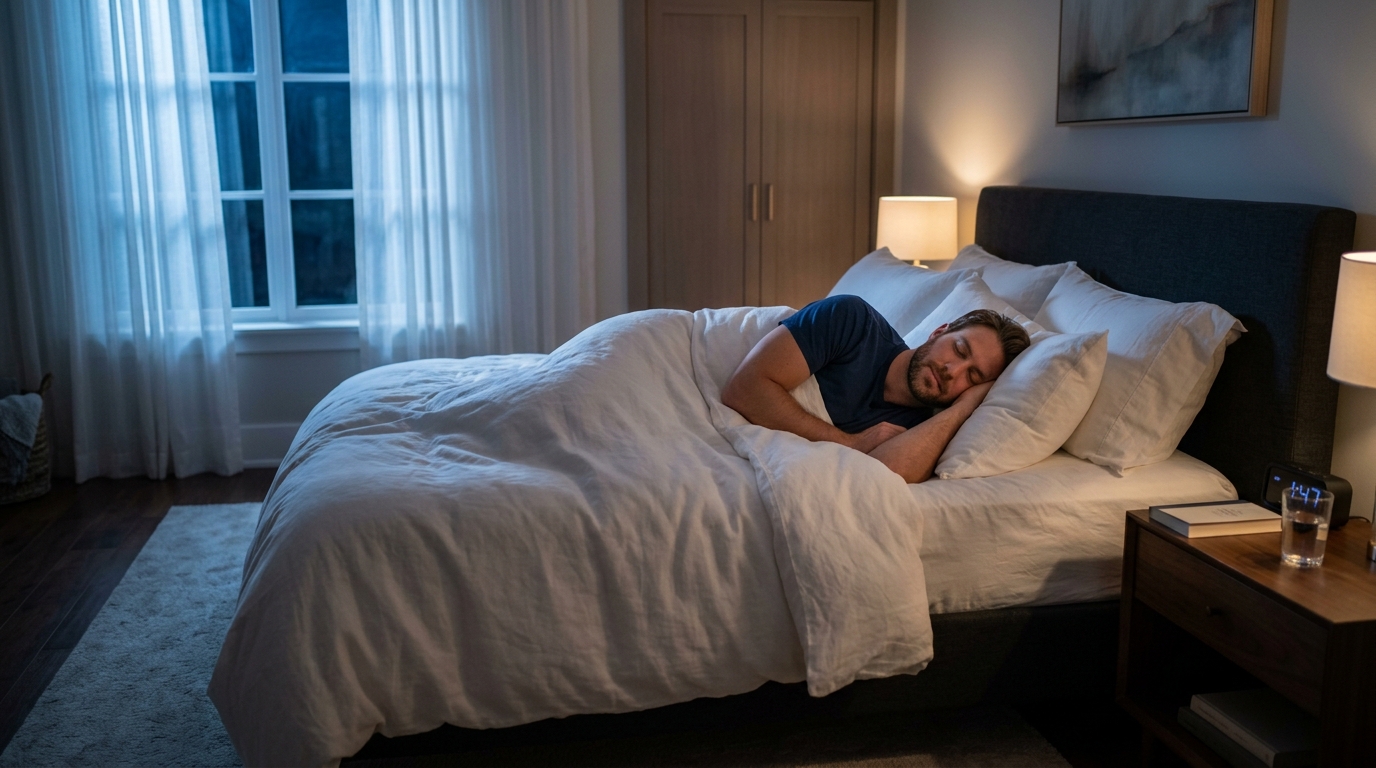
Men's Sleep Optimization: The Science, the Spirit, and the Path to Restorative Rest
There is a quiet epidemic stealing strength from men across America — and most of them don't even know it's happening while they sleep. Or rather, while they fail to sleep well. Poor sleep quality in men is not merely a matter of feeling groggy in the morning. It is a cascading hormonal, neurological, and metabolic crisis that silently erodes testosterone, sharpens cortisol, clouds cognition, and accelerates aging. And yet, it remains one of the most underaddressed pillars of men's health.
This article is your comprehensive, faith-centered, science-backed guide to understanding why sleep is the single most powerful recovery tool available to men — and how to reclaim it through integrative strategies that honor both the body God designed and the evidence modern science has confirmed.
"He grants sleep to those he loves." — Psalm 127:2
Sleep is not a passive state. It is an active, divinely engineered process of restoration — and optimizing it may be the most important health decision a man can make.
Why Sleep Is a Men's Health Crisis
The statistics are sobering. According to the Centers for Disease Control and Prevention, more than one-third of American adults regularly fail to get the recommended seven or more hours of sleep per night — and men are disproportionately affected by the consequences. Men are more likely to suffer from obstructive sleep apnea, more likely to dismiss sleep problems as weakness, and more likely to sacrifice sleep for work, screens, or social obligations.
The biological cost of this cultural pattern is enormous. Sleep deprivation in men is directly linked to:
- Testosterone suppression: Healthy young men sleeping fewer than five hours per night for just one week experienced a 10–15% decrease in daytime testosterone — a decline equivalent to aging 10–15 years in a single week.
- Elevated cortisol: Poor sleep prevents cortisol from naturally declining in the evening, creating a hormonal imbalance that promotes muscle breakdown, fat storage, and insulin resistance.
- Cognitive impairment: Sleep deprivation reduces emotional intelligence, impairs decision-making, and accelerates beta-amyloid accumulation — a hallmark of Alzheimer's disease.
- Cardiovascular risk: Chronic sleep restriction is independently associated with increased risk of heart attack, stroke, and hypertension.
- Immune suppression: Men who sleep fewer than six hours are four times more likely to catch a cold when exposed to a virus compared to those sleeping seven or more hours.
This is not a lifestyle inconvenience. This is a physiological emergency — and it demands a serious, integrative response.
The Testosterone-Sleep Connection: A Bidirectional Relationship
Perhaps no relationship in men's health is more consequential — or more overlooked — than the bidirectional link between sleep and testosterone. Understanding this connection is foundational to any serious sleep optimization strategy.
How Sleep Produces Testosterone
Testosterone production follows a precise circadian rhythm. The body releases testosterone in pulses approximately every 90 minutes throughout the night, with levels rising during sleep and peaking around 8:00 a.m. — regardless of whether sleep occurs at night or during the day. The critical insight here is that testosterone production is not simply time-dependent; it is sleep-dependent.
Deep slow-wave sleep (Stage 3 NREM) is particularly critical. This stage is responsible for 75–80% of growth hormone secretion and plays a central role in testosterone synthesis. As men age, sleep architecture naturally shifts — deep sleep decreases, sleep fragmentation increases — and this architectural change is a primary driver of the age-related testosterone decline that begins in a man's 30s.
How Low Testosterone Disrupts Sleep
The relationship runs in both directions. Low testosterone levels contribute to insomnia, increased sleep fragmentation, and reduced sleep efficiency. Men with clinically low testosterone frequently report difficulty falling asleep, frequent nighttime awakenings, and non-restorative sleep — creating a vicious cycle where poor sleep suppresses testosterone, and low testosterone further degrades sleep quality.
The Cortisol Factor
Sleep deprivation disrupts the testosterone-cortisol balance in a particularly damaging way. Testosterone is an anabolic hormone — it builds muscle, supports bone density, and drives vitality. Cortisol is catabolic — it breaks down tissue, promotes fat storage, and suppresses immune function. When sleep is poor, cortisol remains elevated into the evening hours, directly suppressing testosterone production and creating a hormonal environment that accelerates aging and metabolic dysfunction.
Sleep Architecture: What Men Need to Know
Not all sleep is created equal. Understanding the architecture of a healthy night's sleep empowers men to optimize not just duration but quality — the dimension that matters most for hormonal health and recovery.
The Four Stages of Sleep
- Stage 1 (Light NREM): The transition between wakefulness and sleep. Brief, easily disrupted. Lasts 1–5 minutes per cycle.
- Stage 2 (Core NREM): Heart rate slows, body temperature drops, sleep spindles appear. Critical for memory consolidation. Comprises roughly 50% of total sleep time.
- Stage 3 (Deep NREM / Slow-Wave Sleep): The most physically restorative stage. Growth hormone and testosterone are primarily secreted here. Tissue repair, immune function, and metabolic regulation occur during this stage.
- REM Sleep: Rapid Eye Movement sleep — the stage of vivid dreaming. Critical for emotional regulation, cognitive processing, and the first REM cycle is when testosterone peaks. REM cycles lengthen as the night progresses, which is why cutting sleep short disproportionately reduces REM.
A complete sleep cycle lasts approximately 90 minutes. Men need 4–6 complete cycles per night — meaning 6–9 hours of total sleep — to fully experience all stages and their associated hormonal benefits.
The Two Biological Processes That Govern Sleep
Sleep science identifies two primary biological processes that regulate sleep quality and timing:
- Process S (Homeostatic Sleep Drive): The pressure to sleep that accumulates during wakefulness. The longer you are awake, the stronger the drive to sleep. This is regulated by adenosine — a chemical that builds up in the brain during wakefulness and is cleared during sleep. Caffeine works by blocking adenosine receptors, which is why it temporarily suppresses sleepiness.
- Process C (Circadian Alerting Signal): The internal 24-hour clock regulated by the suprachiasmatic nucleus in the hypothalamus. This clock is primarily set by light exposure and governs the timing of melatonin release, cortisol awakening response, and body temperature rhythms.
Optimal sleep occurs when these two processes are aligned — when the homeostatic drive is strong and the circadian clock signals that it is time to sleep. Disrupting either process — through irregular sleep schedules, artificial light exposure, or caffeine — degrades sleep quality even when total sleep time appears adequate.
The Faith Dimension: Sleep as Sacred Rest
In the integrative, faith-centered framework of Genesis World Health, sleep is not merely a biological necessity — it is a spiritual discipline. Scripture speaks to rest with remarkable specificity and depth.
"Come to me, all you who are weary and burdened, and I will give you rest." — Matthew 11:28
The Hebrew concept of shabbat — Sabbath rest — was not simply a cultural tradition. It was a divine prescription for the rhythm of human life. God designed the human body to require regular, deep rest — and the failure to honor that design has consequences that are both physical and spiritual.
"In peace I will lie down and sleep, for you alone, Lord, make me dwell in safety." — Psalm 4:8
Anxiety, rumination, and unresolved stress are among the most common causes of insomnia in men. The faith-centered approach to sleep optimization recognizes that true rest requires not just physical preparation but spiritual surrender — releasing the burdens of the day into God's hands and trusting in His provision through the night.
Practices such as evening prayer, Scripture meditation, and gratitude journaling before bed are not merely spiritual disciplines — they are evidence-based interventions that activate the parasympathetic nervous system, reduce cortisol, and prepare the mind and body for deep, restorative sleep.
The Integrative Protocol: Evidence-Based Strategies for Men's Sleep Optimization
The following protocol integrates the best of modern sleep science with time-honored natural and faith-based approaches. It is organized into four domains: environment, behavior, nutrition, and supplementation.
1. Environmental Optimization
Temperature: The body requires a core temperature drop of 1–3°F to initiate sleep. The optimal bedroom temperature for most men is 65–68°F. Cooling mattress pads, breathable bedding, and proper ventilation all support this thermal requirement.
Darkness: Light is the primary regulator of the circadian rhythm. The bedroom should be dark enough that you cannot see your hand at arm's length. Blackout curtains, eye masks, and eliminating all LED indicator lights are essential. Even small amounts of light exposure during sleep can suppress melatonin and fragment sleep architecture.
Sound: Consistent background noise (white noise, brown noise, or nature sounds) can mask disruptive environmental sounds and improve sleep continuity. Silence is ideal, but consistent low-level sound is preferable to intermittent noise.
2. Behavioral Optimization
Consistency: Sleep experts identify schedule consistency as the single most important behavioral factor in sleep quality. Varying bedtime and wake time by more than 30 minutes creates "social jetlag" — a state of chronic circadian misalignment that mimics the cognitive and metabolic impairments of actual jet lag. Men should aim for the same sleep and wake times seven days a week.
Light management: Morning sunlight exposure (10–30 minutes within one hour of waking) anchors the circadian clock and improves nighttime sleep quality. Evening light exposure should be minimized — blue light from screens suppresses melatonin production and delays sleep onset. Implement a "digital sunset" 60–90 minutes before bed.
Exercise timing: Regular physical activity significantly improves sleep quality, but vigorous exercise should be completed at least 3–4 hours before bedtime to allow core body temperature to return to baseline. Morning or early afternoon exercise is optimal for sleep.
Caffeine cutoff: Caffeine has a half-life of 5–7 hours in most adults. A cup of coffee consumed at 2:00 p.m. still has 50% of its caffeine active at 7:00–9:00 p.m. Men who struggle with sleep quality should eliminate caffeine after noon.
3. Nutritional Optimization
What men eat — and when they eat it — significantly impacts sleep quality. Key nutritional strategies include:
- Tryptophan-rich foods: Turkey, eggs, dairy, nuts, and seeds provide tryptophan, the amino acid precursor to serotonin and melatonin. Consuming these foods in the evening supports natural melatonin production.
- Magnesium: Magnesium deficiency is extremely common in men and is strongly associated with insomnia, restless legs syndrome, and poor sleep quality. Magnesium-rich foods include dark leafy greens, pumpkin seeds, almonds, and dark chocolate. Magnesium glycinate supplementation (200–400 mg before bed) is one of the most evidence-supported natural sleep interventions.
- Avoid large meals before bed: Eating within 2–3 hours of sleep elevates core body temperature and can trigger acid reflux, both of which disrupt sleep architecture.
- Limit alcohol: While alcohol may help men fall asleep faster, it significantly fragments sleep architecture — particularly REM sleep — in the second half of the night, resulting in non-restorative sleep and morning fatigue.
4. Supplementation Strategies
Several evidence-supported supplements can meaningfully improve men's sleep quality when used appropriately:
- Magnesium Glycinate (200–400 mg): The most bioavailable form of magnesium, with strong evidence for improving sleep onset, sleep quality, and reducing nighttime cortisol.
- Melatonin (0.5–3 mg): Most effective for circadian rhythm disruption (jet lag, shift work) rather than primary insomnia. Lower doses (0.5–1 mg) are often more effective than higher doses for sleep onset.
- Glycine (3 g): An amino acid that lowers core body temperature and improves subjective sleep quality and daytime alertness. Well-tolerated with minimal side effects.
- Ashwagandha (300–600 mg KSM-66 extract): An adaptogenic herb with strong evidence for reducing cortisol, improving stress resilience, and enhancing sleep quality — particularly in men with stress-related insomnia.
- L-Theanine (200 mg): An amino acid found in green tea that promotes relaxation without sedation by increasing alpha brain wave activity. Often combined with magnesium for synergistic effect.
- Passionflower: Contains GABA-modulating compounds that promote relaxation and reduce anxiety-driven insomnia. Available as tea, tincture, or capsule.
Always consult with a qualified healthcare provider before beginning any supplementation protocol, particularly if you are taking prescription medications.
Sleep Apnea: The Hidden Testosterone Thief
Obstructive sleep apnea (OSA) is one of the most underdiagnosed conditions in men — and one of the most damaging to hormonal health. OSA is characterized by repeated episodes of partial or complete airway obstruction during sleep, causing oxygen desaturation and sleep fragmentation that can occur hundreds of times per night without the man ever fully awakening.
The consequences for testosterone are severe. The repeated oxygen fluctuations and sleep architecture disruption caused by OSA directly suppress testosterone production. Studies consistently show that men with untreated OSA have significantly lower testosterone levels than men without the condition — and that treating OSA with CPAP therapy can meaningfully improve testosterone levels in many cases.
Warning signs of OSA include loud snoring, witnessed breathing pauses during sleep, morning headaches, excessive daytime sleepiness, and difficulty concentrating. Men who experience these symptoms should seek evaluation from a sleep medicine specialist. A home sleep test or in-lab polysomnography can confirm the diagnosis and guide treatment.
Integrative Approaches: Ancient Wisdom for Modern Sleep
Beyond the evidence-based behavioral and nutritional strategies, several integrative healing traditions offer powerful tools for men's sleep optimization:
Traditional Chinese Medicine
In TCM, insomnia is understood as a disruption of the body's Qi (vital energy) flow — often involving imbalances in the Heart, Liver, or Kidney meridians. Acupuncture has demonstrated measurable effects on sleep quality in clinical research, with studies showing improvements in sleep onset, duration, and architecture. Chinese herbal formulas such as Suan Zao Ren Tang (Sour Jujube Decoction) have been used for centuries to calm the mind and promote deep sleep.
Ayurvedic Medicine
Ayurveda identifies sleep (nidra) as one of the three pillars of health, alongside diet and sexual vitality. The Ayurvedic approach to sleep optimization emphasizes aligning daily rhythms with natural cycles, using warming herbs such as ashwagandha and brahmi, and practicing abhyanga (self-massage with warm sesame oil) before bed to calm the nervous system and promote deep rest.
Mindfulness and Breathwork
Mindfulness-based stress reduction (MBSR) has strong evidence for improving sleep quality in men with stress-related insomnia. Specific breathwork techniques — including the 4-7-8 breathing method and box breathing — activate the parasympathetic nervous system within minutes, reducing heart rate, lowering cortisol, and preparing the body for sleep.
How Genesis World Health Supports Men's Sleep Optimization
At Genesis World Health's AI Agent Council, men's sleep optimization is approached as the multi-system, multi-disciplinary challenge it truly is. Rather than receiving a single perspective from a single provider, GWH members benefit from a council of specialized AI agents — each contributing their unique expertise to create a comprehensive, personalized sleep optimization plan.
Your sleep consultation at GWH might involve:
- The Men's Health Agent — assessing the testosterone-sleep connection and identifying hormonal contributors to poor sleep
- The Nutraceuticals Specialist — recommending evidence-based supplements tailored to your specific sleep challenges
- The Exercise Physiology Agent — optimizing your training schedule and intensity to support rather than disrupt sleep architecture
- The Nutrition Specialist — identifying dietary patterns and timing strategies that support melatonin production and cortisol regulation
- The Faith & Spiritual Wellness Agent — integrating prayer, Scripture meditation, and spiritual practices that address the anxiety and rumination driving sleep disruption
- The Traditional Chinese Medicine Agent — exploring acupuncture protocols and herbal formulas aligned with your specific TCM pattern
For men who want to go deeper on a specific aspect of sleep — whether that's the hormonal connection, the nutritional protocol, or the spiritual dimension — Deep Dive Sessions offer intensive one-on-one exploration with a single specialist agent, providing the depth and nuance that a comprehensive sleep transformation requires.
The GWH Health Assessment is the ideal starting point — a personalized evaluation that identifies your specific sleep challenges, hormonal patterns, and lifestyle factors, and routes you to the agents and resources most relevant to your situation.
All of this is grounded in GWH's Five Sacred Operating Principles — Honor, Integrity, Authenticity, Informed Choice, and Absolute Truth — ensuring that every recommendation is transparent, evidence-based, and aligned with your God-given design.
Explore GWH subscription tiers to find the level of access that fits your needs, and visit the Learn page for additional resources on men's health, sleep science, and integrative wellness.
🌿 Ready to Align with Your God-Given Design?
Your body was designed for deep, restorative rest — and reclaiming it requires a comprehensive, multi-specialist approach. GWH's AI Agent Council brings together your Men's Health Agent, Nutraceuticals Specialist, Exercise Physiology Agent, and Faith & Spiritual Wellness Agent to create a personalized sleep optimization plan that addresses every dimension of your health. Start with the Health Assessment and let the council guide your transformation.
Medical Disclaimer: As always, we encourage you to work with qualified healthcare providers — including sleep medicine specialists, mental health professionals, integrative medicine physicians, and your primary care provider — when making significant changes to your sleep optimization and restorative rest. Genesis World Health is an educational platform, not a substitute for professional medical care. Our role is to equip you with knowledge, insight, and the integrative perspective you need to have more informed conversations with your healthcare team.
Sources & References
- Sleep Health for Men: Foundational Habits for a Better Life — NA Dallas, 2026
- Sleep and Testosterone: The Bidirectional Relationship — Goldman Laboratories
- Hormones and Sleep in Men — Game Day Men's Health
- Sleep Optimization Protocol — Maxxing Army, 2026
- Natural Sleep Aids and Home Remedies — Johns Hopkins Medicine
- Evidence-Based Sleep Aids and Supplements — Healthline
- Effect of 1 Week of Sleep Restriction on Testosterone Levels in Young Healthy Men — JAMA, PubMed