Sacred Rest as Medicine: The 2026 Heart Study That Reveals What Your Bedroom Light Is Doing to Your Heart
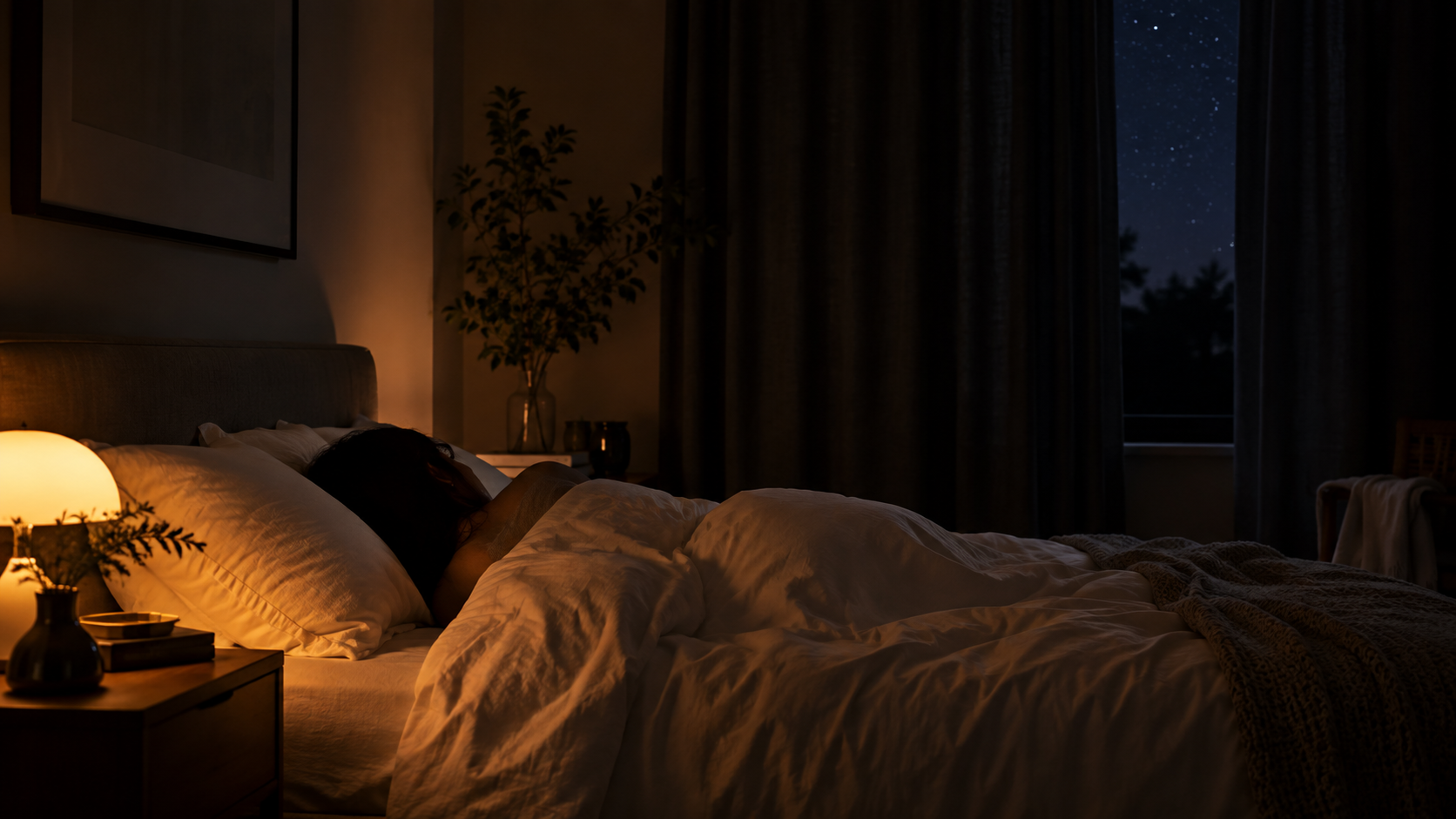
Your Bedroom Light May Be Harming Your Heart
Most people know that poor sleep is bad for the heart. But a landmark study published in the European Heart Journal in September 2026 reveals something far more specific and far more actionable: the light in your bedroom while you sleep is independently reshaping your heart's structure and raising your risk of heart failure, stroke, and cardiovascular death. Not the quality of your sleep alone. The light itself.
Led by Professor Lu Qi of Tulane University and drawing on data from 11,071 participants in the UK Biobank, the study used wrist-mounted light sensors and cardiac MRI imaging to document what happens to the human heart when it is exposed to even low levels of artificial light during sleep. The findings are striking. And for those who hold a biblical worldview, they are not surprising at all. God designed the night for darkness. He designed the body for rest. And the science is finally catching up to what Scripture has always known.
"He grants sleep to those he loves." — Psalm 127:2
What the 2026 European Heart Journal Study Found
The research team measured nighttime light exposure using wrist sensors worn for seven consecutive days. Three years later, participants underwent detailed cardiac MRI scans. The threshold that triggered measurable harm was remarkably low: just three lux, roughly the brightness of a dim nightlight, a standby LED on a television, or streetlight filtering through curtains.
Participants exposed to higher levels of nighttime light showed clear signs of cardiac remodeling, a process in which the heart physically changes its structure in response to chronic stress or injury. Specifically, researchers documented:
- Thickening of the left ventricular wall and increased left ventricular mass
- Reduced chamber volume and impaired contraction efficiency
- Measurable changes in the right ventricle and left atrium
- Reduced myocardial flexibility, an early marker of heart failure risk
The longitudinal data, tracking participants for up to ten years, revealed that those sleeping in the brightest environments faced significantly elevated cardiovascular risk compared to those sleeping in near-total darkness:
- 29% higher risk of heart failure
- 33% higher risk of stroke
- 24% higher risk of heart attack
- 15% higher risk of atrial fibrillation
- 26% higher risk of cardiovascular death
These associations held even after researchers adjusted for traditional cardiovascular risk factors including smoking, blood pressure, body mass index, and sleep duration. The light itself, independent of how long or how well participants slept, was driving measurable harm to the heart.
The Biological Mechanisms: How Light at Night Harms the Heart
The body's internal clock, the circadian system, governs nearly every physiological process: blood pressure rhythms, heart rate variability, hormone production, immune function, and cellular repair. Light is the primary signal that sets and resets this clock. When light enters the eye at night, even through closed eyelids, it signals the brain that it is still daytime. The consequences cascade through the entire body.
Melatonin Suppression
The pineal gland produces melatonin in response to darkness. Melatonin is not simply a sleep hormone. It is a potent antioxidant, an anti-inflammatory agent, and a cardiovascular protector. It reduces oxidative stress in the heart muscle, supports nocturnal blood pressure dipping (the healthy drop in blood pressure during sleep), and promotes parasympathetic nervous system activity that allows the heart to recover from the demands of the day.
Even three lux of light is sufficient to suppress melatonin secretion. When melatonin is chronically suppressed night after night, the heart loses a critical layer of protection. Oxidative stress accumulates. Blood pressure fails to dip appropriately. Inflammatory markers rise. Over months and years, these subtle shifts produce the structural changes the 2026 study documented.
Circadian Disruption Beyond Sleep
The study found that shortened sleep duration accounted for only 24 to 49 percent of the observed cardiac changes. The majority of the harm was not explained by sleep disruption alone. This points to direct circadian misalignment as an independent mechanism. When the body's internal clock is confused by nighttime light, the timing of blood pressure regulation, cortisol release, immune activity, and cellular repair all shift out of their optimal windows. The heart, which has its own peripheral circadian clock, is particularly vulnerable to this misalignment.
Research published in the Polish Heart Journal and other cardiovascular journals has linked chronic circadian disruption to hypertension, atherosclerosis, insulin resistance, and obesity, all of which compound cardiovascular risk over time. Nighttime light is not a minor inconvenience. It is an environmental stressor with measurable physiological consequences.
The Autonomic Nervous System Connection
Darkness activates the parasympathetic nervous system, the "rest and digest" branch that allows the heart to slow, recover, and repair. Light at night maintains sympathetic tone, keeping the body in a low-grade state of alertness. Over time, this chronic sympathetic activation contributes to elevated resting heart rate, impaired heart rate variability, and the kind of structural remodeling the 2026 study documented. The heart was designed to rest at night. When light prevents that rest, the consequences accumulate silently over years.
God's Design for Night Rest: What Scripture Reveals
The biblical account of creation establishes a rhythm that modern chronobiology is only beginning to fully appreciate. God separated light from darkness on the first day. He called the darkness "good." He built the seven-day week with a Sabbath rest woven into its structure. The Hebrew concept of shabbat is not merely the absence of work. It is the active restoration of the whole person, body, soul, and spirit, through intentional rest in the presence of God.
"By day the Lord directs his love, at night his song is with me." — Psalm 42:8
The night was designed as a sanctuary. A time when the body performs its most critical repair work: clearing metabolic waste through the glymphatic system, consolidating memory, repairing cellular damage, and restoring the heart. When we flood that sanctuary with artificial light, we are not simply disrupting sleep. We are working against the biological architecture God built into us.
The 2026 study's lead researcher noted that bedroom darkness should be considered a "vital sign" for cardiovascular health. From a biblical stewardship perspective, this is simply the science confirming what faithful rest has always embodied: honoring the body God entrusted to us means honoring the rhythms He designed for it.
Practical Steps: Creating a Heart-Protective Sleep Environment
The good news embedded in this research is that nighttime light exposure is one of the most modifiable cardiovascular risk factors available. Unlike genetics or age, you can change your bedroom environment tonight. Researchers and clinicians recommend the following evidence-based steps:
Eliminate Light Sources in the Bedroom
- Blackout curtains or blinds: Streetlights, car headlights, and ambient urban light can easily exceed three lux through standard curtains. Blackout curtains are the single most effective intervention.
- Cover standby LEDs: Television standby lights, phone chargers, smoke detectors, and clock radios all emit light. Cover them with electrical tape or remove them from the bedroom.
- Remove screens from the bedroom: Televisions, tablets, and phones emit blue-spectrum light that is particularly potent at suppressing melatonin. The bedroom should be a screen-free sanctuary.
- Use an eye mask: For those who cannot fully control their environment (shift workers, travelers, those sharing a bedroom), a well-fitted sleep mask provides meaningful protection.
Manage Evening Light Exposure
- Dim lights two hours before bed: Transitioning to warm, dim lighting in the evening hours signals the brain that night is approaching and allows melatonin to rise naturally.
- Use warm-spectrum bulbs: Blue-spectrum light (5000-6500K) is the most potent circadian disruptor. Warm amber bulbs (2700-3000K) have far less impact on melatonin production.
- Limit screen use after sunset: If screens are unavoidable, blue-light-blocking glasses or screen filters reduce the circadian impact significantly.
Maximize Daytime Light Exposure
The circadian system is calibrated by the contrast between bright daytime light and dark nighttime conditions. Getting bright natural light exposure in the morning, ideally within an hour of waking, strengthens the circadian signal and makes the body more resilient to evening light disruption. A 20-minute morning walk outdoors provides more light than most indoor environments can deliver.
What This Means for Cardiovascular Health Assessment
The accompanying editorial in the European Heart Journal, authored by Professor Thomas Munzel and colleagues from the University Medical Center Mainz, called on clinicians to incorporate sleep environment assessments into routine cardiovascular care. Patients with heart failure, atrial fibrillation, or elevated cardiovascular risk should be asked about their bedroom light environment, night-shift work history, and evening screen habits as standard components of their health history.
This is precisely the kind of whole-person, root-cause assessment that integrative health has long championed. Conventional cardiology has focused on lipids, blood pressure, and glucose. The 2026 study adds a new dimension: the light environment. And it is a dimension that is entirely within the patient's control.
Genesis World Health's Environmental Medicine and Cardiovascular Health specialists can help members evaluate their full environmental cardiovascular risk profile, including light exposure, air quality, toxin burden, and circadian alignment, as part of a comprehensive whole-person health strategy. The Genesis Council's integrative approach means that no single risk factor is assessed in isolation. Every system speaks to every other system, and the heart is no exception.
The Stewardship Imperative
There is a quiet revolution happening in cardiovascular medicine. For decades, the conversation has centered on what we eat, how much we exercise, and whether we take our medications. The 2026 European Heart Journal study adds a new and urgent dimension: the environment in which we sleep.
Light pollution is now a public health issue. Municipalities are being encouraged to adopt shielded streetlight fixtures, warm-spectrum bulbs, and motion-activated lighting to reduce population-wide cardiovascular risk. At the individual level, the interventions are simple, inexpensive, and immediately actionable.
For those who follow Christ, this is a stewardship issue. The body is not ours to neglect. It is a temple, entrusted to us for a purpose. Honoring the rhythms God built into that temple, including the rhythm of darkness and rest, is an act of faithfulness. The science is now confirming what the Psalms have always declared: the night is not empty. It is full of God's provision for the body He designed.
"I will lie down and sleep in peace, for you alone, Lord, make me dwell in safety." — Psalm 4:8
Make your bedroom dark. Let your heart rest. Trust the design.
Explore Your Whole-Person Heart Health
Your heart health is shaped by far more than cholesterol and blood pressure. Genesis World Health's Environmental Medicine and Cardiovascular Health specialists can help you explore how your light environment, circadian alignment, and lifestyle choices shape your heart health. The Genesis Council brings every dimension of your health into one integrated conversation.
A Personal Note from Genesis World Health
The information shared in this article is for educational purposes and reflects our commitment to integrating faith, science, and whole-person wellness. It is not a substitute for professional medical advice, diagnosis, or treatment. Every person's health journey is unique — fearfully and wonderfully made — and what works for one may not be right for another.
We encourage you to consult with cardiologists, sleep medicine specialists, environmental medicine physicians, and your primary care provider when making significant changes to your sleep environment and cardiovascular health approach. Our prayer is that this knowledge empowers you to make informed, faith-guided decisions for the body God has entrusted to you.
Sources & References
- Qi L, et al. "Nighttime light exposure and cardiac remodeling: a prospective study from the UK Biobank." European Heart Journal. 2026. https://academic.oup.com/eurheartj/advance-article/doi/10.1093/eurheartj/ehag563/8770409
- Touitou Y, et al. "Melatonin and the cardiovascular system: chronobiological and clinical aspects." Chronobiology International. 2024. https://www.mdpi.com/1467-3045/47/8/664
- Munzel T, et al. "Environmental risk factors and cardiovascular disease: a comprehensive review." Polish Heart Journal. 2025. https://pubmed.ncbi.nlm.nih.gov/40464453/
- Obayashi K, et al. "Bedroom light exposure at night and cardiovascular disease risk." PubMed Central. 2025. https://pubmed.ncbi.nlm.nih.gov/41129148/
- Smolensky MH, et al. "Circadian disruption and cardiovascular disease: mechanisms and clinical implications." Chronobiology International. 2023. https://www.tandfonline.com/doi/full/10.1080/07420528.2023.2188091
- Patel SR, et al. "Melatonin, sleep, and cardiovascular health: a review of mechanisms and clinical evidence." Nature Cardiovascular Research. 2024. https://www.nature.com/articles/s44323-024-00007-z