Beyond Probiotics: The Science of Postbiotics, Butyrate, and God's Design for Gut Healing
Your Gut Was Designed to Heal Itself
For years, the conversation about gut health has centered on probiotics: live bacteria in capsules and fermented foods that colonize the intestinal tract and, in theory, restore microbial balance. Probiotics have earned their place in integrative medicine. But the science has moved further downstream, and what researchers are finding there is remarkable.
The real healing agents in your gut are not the bacteria themselves. They are what the bacteria produce: a class of bioactive compounds now called postbiotics. Butyrate, short-chain fatty acids, bacteriocins, exopolysaccharides, and heat-inactivated microbial structures are proving to be more stable, more targeted, and in many clinical contexts more effective than the live organisms that generate them.
This is not a niche supplement trend. The International Scientific Association for Probiotics and Prebiotics (ISAPP) formalized the definition of postbiotics in 2021, describing them as "preparations of inanimate microorganisms and/or their components that confer a health benefit on the host." Since then, clinical research has accelerated rapidly, with trials published in journals including Nature Aging, Frontiers in Nutrition, and Gut confirming their role in gut barrier repair, immune modulation, metabolic health, and inflammation reduction.
For those who view the body through a faith lens, this science carries a deeper resonance. The gut is not a passive digestive tube. It is a living ecosystem of extraordinary complexity, one that God designed to regulate immunity, produce neurotransmitters, metabolize hormones, and communicate with the brain. When that ecosystem is healthy, it generates its own healing compounds. When it is disrupted, the downstream consequences reach every organ system in the body. Understanding postbiotics is, in part, understanding how God built self-repair into the very fabric of your biology.
What Are Postbiotics, and How Do They Differ From Probiotics?
The distinction between prebiotics, probiotics, and postbiotics is worth clarifying, because the terms are often used interchangeably in popular health media.
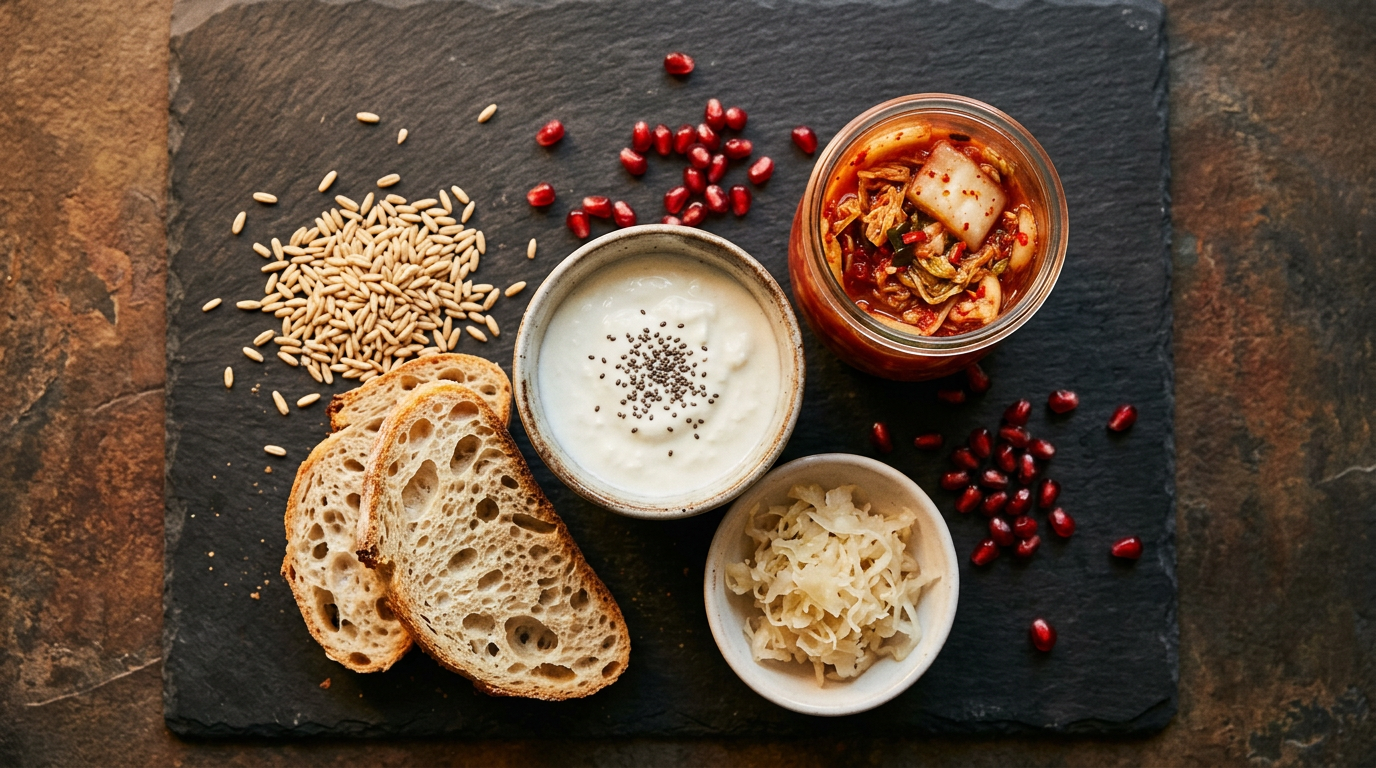
Prebiotics are the dietary fibers and resistant starches that feed beneficial gut bacteria. Think of them as the food supply for your microbial ecosystem: oats, garlic, onions, green bananas, and legumes are rich prebiotic sources.
Probiotics are live microorganisms, primarily strains of Lactobacillus and Bifidobacterium, that are consumed with the intent of colonizing the gut and shifting the microbial balance toward health. They are found in fermented foods like yogurt, kefir, kimchi, and sauerkraut, as well as in supplement form.
Postbiotics are what happens after the bacteria do their work. They are the metabolic byproducts, structural components, and signaling molecules that beneficial bacteria produce when they ferment prebiotic substrates. Unlike live probiotics, postbiotics do not need to survive the harsh journey through stomach acid and bile. They are already in their active form. They are stable at room temperature, safer for immunocompromised individuals, and increasingly available in standardized clinical formulations.
The most studied postbiotic is butyrate, a short-chain fatty acid (SCFA) produced when gut bacteria ferment dietary fiber. Butyrate is the primary energy source for colonocytes, the cells lining your colon. Without adequate butyrate, the intestinal epithelium weakens, tight junction proteins loosen, and the gut becomes permeable, allowing bacterial fragments and inflammatory triggers to enter the bloodstream. This is the mechanism behind what is commonly called "leaky gut," and it is a root driver of systemic inflammation, autoimmune conditions, and metabolic dysfunction.
The Science of Butyrate: Healing From the Inside Out
Butyrate's role in human health extends far beyond the colon wall. Research published across multiple peer-reviewed journals has identified at least four major mechanisms through which butyrate supports whole-person health.
Intestinal Barrier Integrity
Butyrate serves as the primary fuel for enterocytes and is essential for maintaining the tight junction proteins that keep the intestinal lining sealed. When butyrate levels are adequate, the gut wall functions as a selective barrier: nutrients pass through, pathogens and inflammatory molecules do not. A 2026 randomized, double-blind, placebo-controlled trial involving 140 individuals with inflammatory bowel disease found that microencapsulated butyrate supplementation significantly improved clinical disease activity and quality of life scores, with measurable reductions in fecal calprotectin, a validated marker of intestinal inflammation, in the Crohn's disease subgroup.
Immune Modulation
Butyrate exerts powerful immunomodulatory effects by inhibiting the NF-kB signaling pathway, one of the master switches of systemic inflammation. It downregulates pro-inflammatory cytokines including IL-1 beta and IL-18 while simultaneously promoting the differentiation of regulatory T cells (Tregs), the immune cells responsible for preventing autoimmune overreaction. This dual action, reducing inflammatory signaling while strengthening immune self-regulation, makes butyrate one of the most clinically relevant compounds in integrative immunology.
Metabolic Regulation
Beyond the gut, butyrate improves insulin sensitivity and has been shown to reduce fat accumulation in preclinical models. It activates AMPK, the cellular energy sensor that promotes metabolic efficiency, and inhibits overactive mTOR signaling, shifting cells from a growth-oriented state toward a maintenance and repair orientation. These are the same pathways targeted by caloric restriction and intermittent fasting, suggesting that adequate butyrate production may be one of the mechanisms through which dietary patterns like time-restricted eating confer metabolic benefit.
Anti-Cancer Properties
Butyrate exhibits anti-proliferative effects against colorectal cancer cells through a mechanism called the "butyrate paradox": while it serves as an energy source for healthy colonocytes, it acts as a histone deacetylase (HDAC) inhibitor in cancer cells, triggering apoptosis and slowing tumor growth. Propionate, another SCFA postbiotic, has been shown to induce apoptosis in gastric cancer cells. These findings have positioned postbiotics as a promising area of research in integrative oncology support.
Akkermansia Muciniphila: The Postbiotic Frontier
One of the most exciting developments in postbiotic science involves Akkermansia muciniphila, a gut bacterium that thrives in the mucus layer of the intestinal wall. Healthy individuals typically carry abundant Akkermansia, but its levels are significantly reduced in people with obesity, insulin resistance, and metabolic syndrome.
What makes Akkermansia particularly relevant to the postbiotic conversation is that its pasteurized, heat-inactivated form, a true postbiotic, has been shown to be as effective as, and in some contexts superior to, live cultures in improving metabolic health. A 2026 systematic study published in Frontiers in Nutrition evaluated 42 pasteurized Akkermansia strains and identified significant functional heterogeneity among them. The strain AKK2645 demonstrated superior efficacy in attenuating diet-induced obesity, restoring glucose homeostasis, and reducing hepatic steatosis in preclinical models.
The mechanism involves multiple pathways: pasteurized Akkermansia reinforces the intestinal mucus layer, reduces pro-inflammatory cytokines, and stimulates GLP-1 secretion through a specific outer membrane protein. GLP-1 is the same hormone targeted by the widely discussed class of metabolic medications, suggesting that supporting Akkermansia through diet and targeted postbiotic supplementation may offer a natural pathway to some of the same metabolic benefits.
The Genesis World Health Gut Microbiome specialist can help you understand your current microbial landscape and identify which dietary and supplemental strategies are most likely to support Akkermansia and butyrate-producing bacteria in your specific gut ecosystem.
The Prebiotic-Postbiotic Connection: You Have to Feed the Factory
Postbiotics do not appear from nowhere. They are produced by gut bacteria when those bacteria have adequate prebiotic substrates to ferment. This means that the most foundational strategy for increasing postbiotic production is not supplementation but diet.
The primary dietary drivers of butyrate production are resistant starches and fermentable fibers. Foods that consistently support butyrate-producing bacteria include:
- Cooked and cooled potatoes and rice (the cooling process converts digestible starch to resistant starch)
- Green bananas and plantains (high in resistant starch)
- Oats (rich in beta-glucan, a fermentable fiber)
- Legumes (lentils, chickpeas, black beans)
- Jerusalem artichokes and chicory root (high in inulin, a potent prebiotic)
- Garlic, onions, and leeks (fructooligosaccharides)
Fermented foods contribute directly to the postbiotic pool. Kefir, kimchi, sauerkraut, miso, and traditionally fermented sourdough bread contain not only live bacteria but also the metabolic byproducts those bacteria have already produced during fermentation. When you eat a bowl of kimchi, you are consuming both probiotics and postbiotics simultaneously.
The Genesis World Health Nutrition and Diet specialist can help you build a dietary framework that consistently supports postbiotic production, tailored to your health goals, food sensitivities, and metabolic profile.
Postbiotics and the Immune System: A Faith-Centered Perspective
Approximately 70 percent of the immune system resides in and around the gut. This is not an accident of anatomy. It reflects a design principle: the body's primary interface with the external world, the digestive tract, is also its primary site of immune surveillance and response. God placed the immune system's headquarters at the border.
"Do you not know that your bodies are temples of the Holy Spirit, who is in you, whom you have received from God? You are not your own; you were bought at a price. Therefore honor God with your bodies." — 1 Corinthians 6:19-20
Honoring the body as a temple includes stewarding the gut ecosystem that God designed to protect it. Postbiotics are not a pharmaceutical intervention imposed on the body from outside. They are the natural output of a well-functioning microbial community doing exactly what it was designed to do. When we eat the foods that support that community, we are participating in the biological stewardship God built into creation.
The immune modulation that postbiotics provide, reducing inflammatory cytokines, strengthening the gut barrier, promoting regulatory T cells, is the body's own healing intelligence at work. Research published in 2026 in Nature Aging found that urolithin A, a postbiotic metabolite produced from pomegranate ellagitannins by gut bacteria, promoted immune rejuvenation in healthy adults aged 45 to 70 by shifting CD8+ T cells toward a more youthful, less exhausted phenotype and enhancing mitochondrial function. The body, given the right inputs, moves toward restoration.
Who Benefits Most From Postbiotic Support?
While postbiotic support is relevant for virtually anyone seeking to optimize gut health, certain populations show the most pronounced clinical benefit:
Individuals with inflammatory bowel conditions (Crohn's disease, ulcerative colitis, IBS) have consistently shown improvement in clinical trials of butyrate supplementation, particularly in microencapsulated forms that deliver butyrate to the lower intestine rather than being absorbed in the upper digestive tract.
People with metabolic dysfunction (insulin resistance, prediabetes, fatty liver disease) benefit from the insulin-sensitizing and anti-inflammatory effects of SCFAs and pasteurized Akkermansia.
Older adults experience a natural decline in butyrate-producing bacteria with age, contributing to increased intestinal permeability, systemic inflammation, and immune senescence. Targeted postbiotic support may help counteract this age-related decline.
Individuals who have taken antibiotics often experience significant disruption to butyrate-producing bacterial populations. Postbiotic supplementation during and after antibiotic courses may help maintain gut barrier integrity while the microbiome recovers.
Anyone with chronic systemic inflammation, including autoimmune conditions, cardiovascular risk, and neuroinflammatory patterns, may benefit from the downstream anti-inflammatory effects of a well-supported postbiotic ecosystem.
The Genesis World Health Immune Optimization specialist can help you assess your immune health patterns and identify whether postbiotic support is a priority for your specific situation. For those dealing with complex chronic conditions, the Root Cause Protocol specialist, available through the VIP tier, offers a deeper investigation into the upstream drivers of gut dysfunction, including mineral imbalances, oxidative stress, and mitochondrial factors that affect microbial health.
Practical Steps: Building Your Postbiotic Foundation
The most effective postbiotic strategy is not a single supplement. It is a layered approach that supports the entire prebiotic-probiotic-postbiotic cascade.
Step one: Diversify dietary fiber. Aim for 30 or more different plant foods per week. Research consistently shows that dietary diversity is the strongest predictor of microbial diversity, and microbial diversity is the strongest predictor of robust postbiotic production. Each plant food feeds a slightly different bacterial community.
Step two: Include fermented foods daily. Even small amounts of kefir, kimchi, sauerkraut, or miso contribute both live bacteria and preformed postbiotic compounds. A 2021 Stanford study found that a diet high in fermented foods increased microbial diversity and reduced inflammatory markers more effectively than a high-fiber diet alone.
Step three: Reduce ultra-processed food intake. Emulsifiers, artificial sweeteners, and refined carbohydrates disrupt butyrate-producing bacterial populations and damage the intestinal barrier. Reducing these inputs is as important as adding beneficial ones.
Step four: Consider targeted supplementation when indicated. Microencapsulated butyrate, postbiotic Akkermansia preparations, and urolithin A supplements are increasingly available in clinically validated forms. These are most appropriate when dietary strategies alone are insufficient, particularly in the context of active gut inflammation, post-antibiotic recovery, or significant metabolic dysfunction.
Step five: Address the upstream drivers. Chronic stress, poor sleep, and environmental toxin exposure all negatively affect the gut microbiome and reduce postbiotic production. A whole-person approach to gut health includes nervous system regulation, sleep optimization, and toxin reduction alongside dietary strategy.
Explore Your Gut Health With the Genesis Council
The Genesis World Health AI Agent Council includes specialists in Gut Microbiome, Nutrition and Diet, Immune Optimization, and Detoxification, each ready to help you build a personalized gut health strategy grounded in the latest science and whole-person principles. VIP members can also access the Root Cause Protocol specialist for a deeper investigation into the upstream drivers of gut dysfunction.
A Personal Note from Genesis World Health
The information shared in this article is for educational purposes and reflects our commitment to integrating faith, science, and whole-person wellness. It is not a substitute for professional medical advice, diagnosis, or treatment. Every person's health journey is unique — fearfully and wonderfully made — and what works for one may not be right for another.
We encourage you to consult with gastroenterologists, registered dietitians, functional medicine physicians, and your primary care provider when making significant changes to your approach to gut health and microbiome support. Our prayer is that this knowledge empowers you to make informed, faith-guided decisions for the body God has entrusted to you.
Sources & References
- Salminen S, et al. The International Scientific Association of Probiotics and Prebiotics (ISAPP) consensus statement on the definition and scope of postbiotics. Nature Reviews Gastroenterology & Hepatology. 2021;18(9):649-667. https://www.nature.com/articles/s41575-021-00440-6
- Canani RB, et al. Potential beneficial effects of butyrate in intestinal and extraintestinal diseases. World Journal of Gastroenterology. 2011;17(12):1519-1528. https://pmc.ncbi.nlm.nih.gov/articles/PMC3070119/
- Microencapsulated butyrate supplementation in IBD: randomized, double-blind, placebo-controlled trial. PubMed. 2026. https://pubmed.ncbi.nlm.nih.gov/41354580/
- Plovier H, et al. Pasteurized Akkermansia muciniphila improves metabolic syndrome markers. Frontiers in Nutrition. 2026. https://www.frontiersin.org/journals/nutrition/articles/10.3389/fnut.2026.1908600/full
- Ryu D, et al. Urolithin A induces mitophagy and prolongs lifespan in C. elegans and increases muscle function in rodents. Nature Medicine. 2016;22(8):879-888. https://pmc.ncbi.nlm.nih.gov/articles/PMC9959343/
- Wastyk HC, et al. Gut-microbiota-targeted diets modulate human immune status. Cell. 2021;184(16):4137-4153. https://doi.org/10.1016/j.cell.2021.06.019