Rasayana: The Ayurvedic Science of Rejuvenation, Longevity Herbs, and God's Design for Cellular Renewal
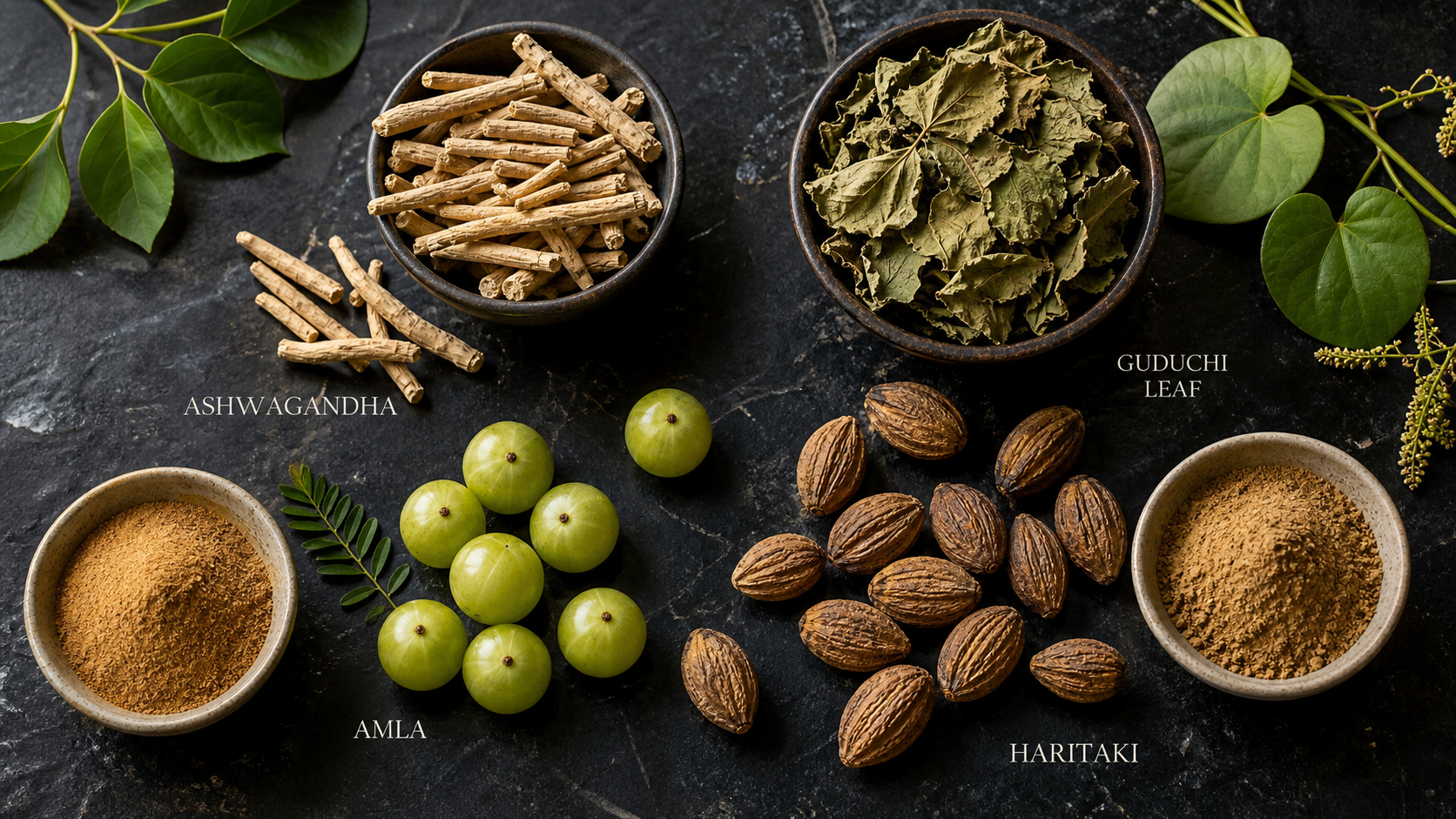
Long before modern pharmacology catalogued antioxidants and adaptogens, Ayurvedic physicians were prescribing a sophisticated system of cellular renewal called Rasayana. Derived from the Sanskrit roots rasa (nourishing essence) and ayana (pathway), Rasayana is Ayurveda's ancient science of rejuvenation — a comprehensive approach to preserving vitality, sharpening the mind, strengthening immunity, and gracefully slowing the aging process. Today, modern researchers are discovering that many of the herbs at the heart of this 5,000-year-old tradition carry measurable biological activity that aligns with contemporary longevity science.
This is not a story about magic potions or immortality claims. It is a story about the remarkable convergence of ancient wisdom and modern cellular biology — and what it reveals about God's extraordinary provision for human flourishing across every stage of life.
The Charaka Samhita: Ayurveda's Foundational Longevity Text
The Charaka Samhita, one of Ayurveda's most authoritative classical texts, presents Rasayana as one of eight specialized branches of the healing tradition. Its stated goals are ambitious: preservation of life, delayed aging, improved memory and intellect, physical strength, disease resistance, and the enhancement of the bodily constituents called dhatus.
Rasayana is also associated with promoting ojas — the vital essence of health and resilience that Ayurveda considers the foundation of immunity, mental clarity, and spiritual receptivity. While ojas does not map directly onto any single modern biomarker, the concept anticipates what integrative medicine now calls "whole-person vitality": the integrated state in which body, mind, and spirit function at their highest capacity.
The Charaka Samhita describes multiple modes of Rasayana practice. Kutipraveshika is an intensive indoor regimen requiring complete seclusion and supervision. Vatatapika is a gentler, lifestyle-integrated approach compatible with ordinary daily life. This breadth is important: Ayurvedic rejuvenation was never conceived as simply swallowing a supplement. It was a whole-person practice encompassing diet, conduct, spiritual discipline, and herbal medicine together.
"He gives strength to the weary and increases the power of the weak." — Isaiah 40:29
The Seven Dhatus: How Rasayana Nourishes the Body's Foundational Tissues
Ayurveda describes seven dhatus — foundational structural and functional constituents of the body that must be progressively nourished for health to be maintained:
- Rasa: The primary nourishing fluid or nutrient essence derived from digestion
- Rakta: The blood-related constituent responsible for vitality and oxygenation
- Mamsa: The flesh and muscle-related constituent governing strength and form
- Meda: The fat-related constituent supporting lubrication and energy reserves
- Asthi: The bone-related constituent providing structural integrity
- Majja: The marrow- and nerve-related constituent governing neurological function
- Shukra: The reproductive constituent associated with creative vitality and ojas
In the Ayurvedic model, digestion first produces ahara rasa — the nutritive essence of food. Tissue-specific transformative processes called dhatvagni then progressively support each dhatu in sequence, with one stage contributing to the next. Rasayana is designed to optimize this entire cascade: digestion, transformation, circulation, and assimilation. When any link in this chain is impaired, the downstream tissues suffer — a concept that resonates deeply with modern systems biology's understanding of metabolic cascades.
Panchakarma: Preparing the Body to Receive Renewal
Classical Rasayana practice often begins with Panchakarma — Ayurveda's system of therapeutic purification. Its traditional purpose is to remove disturbed bodily factors and restore agni (digestive fire), creating optimal conditions for the assimilation of rejuvenating preparations. Think of it as clearing the channels before introducing nourishment.
Panchakarma is not a casual consumer cleanse. It involves physically demanding procedures and dietary restriction, and it requires qualified supervision. The classical texts prescribe Samsarjana Krama — a graduated return to food following purification, beginning with liquid preparations and advancing slowly to normal diet. This careful protocol reflects the sophistication of Ayurvedic clinical thinking and should not be confused with modern commercial "detox" products.
For those exploring Rasayana through the Genesis World Health platform, the Detoxification Agent and Environmental Medicine Agent can help assess your body's current toxic burden and design a personalized, evidence-informed preparation strategy before beginning any intensive herbal regimen.
The Three Rasayana Categories: Medhya, Balya, and Vaya Sthapana
Ayurvedic physicians classified Rasayana herbs into three functional categories based on their primary therapeutic emphasis:
- Medhya Rasayana: Herbs that support medha — intellect, memory acquisition, retention, and recall. Classical examples include Gotu Kola (Centella asiatica) and Guduchi. These are the brain-protective, cognitive-enhancing herbs of the tradition.
- Balya Rasayana: Herbs that promote strength, endurance, and immune resilience. Ashwagandha is the leading example, prized for its ability to build physical and psychological robustness under stress.
- Vaya Sthapana: Herbs associated with preserving youthfulness and stabilizing age-related decline. Haritaki, Amla, and Guduchi appear prominently in this category — the closest Ayurvedic equivalent to what modern longevity science calls "geroprotective" agents.
These are functional Ayurvedic classifications, not regulatory indications. But they provide a remarkably coherent framework that modern researchers are now beginning to validate at the cellular level.
Seven Major Rasayana Herbs: Ancient Wisdom Meets Modern Science
The following herbs form the core of classical Rasayana practice. Each carries a distinct pharmacological profile that modern research is actively investigating:
Haritaki (Terminalia chebula) — The King of Medicines
Haritaki holds a revered place in Ayurvedic tradition, classified as a systemic Rasayana and Vaya Sthapana herb associated with longevity, immunity, metabolic efficiency, and resilience. It is one of the three fruits in Triphala, Ayurveda's most celebrated compound formula. Modern research has identified tannins, chebulic acid, and gallic acid as key bioactive constituents with antioxidant and anti-inflammatory properties. While robust human clinical trials remain limited, its traditional classification as a whole-body rejuvenator reflects centuries of empirical observation.
Guduchi (Tinospora cordifolia) — The Divine Nectar
Guduchi contains alkaloids, diterpenoid lactones, glycosides, steroids, and polysaccharides. Laboratory and preclinical work suggests immunomodulatory, anti-inflammatory, antioxidant, and mitochondrial effects — including improved mitochondrial electron-transport activity in experimental models. It is classified as both Medhya and Vaya Sthapana, reflecting its dual cognitive and anti-aging emphasis.
Important safety note: More than 50 cases of clinically apparent acute liver injury have been documented with Guduchi use. People with liver disease or autoimmune conditions should not self-prescribe it, and any symptoms arising during use require discontinuation and clinical evaluation. This is a reminder that "natural" does not mean risk-free — and that qualified guidance matters.
Amla / Amalaki (Emblica officinalis) — The Fruit of Immortality
Amla is arguably the most scientifically studied Rasayana herb. It provides flavonoids, tannins including ellagic and gallic acids, and ascorbic acid in a highly bioavailable form. Human and experimental research suggests antioxidant and anti-inflammatory activity, with promising effects on lipid profiles and endothelial function. In one human study, healthy male volunteers aged 45–60 who received Amalaki Rasayana for 45 days showed increased telomerase activity in peripheral blood mononuclear cells — a finding that, while preliminary, points toward cellular-level rejuvenation mechanisms.
Aloe Vera — The Plant of Immortality
Known across cultures as a healing plant, Aloe vera's polysaccharides — particularly acemannan — have been studied for anti-inflammatory activity, collagen synthesis support, and hyaluronic acid production. Its evidence base is strongest for topical skin and wound applications. Oral use requires careful product selection: aloe gel preparations differ significantly from aloe latex, and the latter carries safety concerns that preclude casual use.
Gotu Kola / Mandukaparni (Centella asiatica) — The Herb of Enlightenment
Gotu Kola contains triterpenoids — asiaticoside, asiatic acid, madecassoside, and madecassic acid — that have demonstrated anti-inflammatory and wound-healing actions involving collagen synthesis and angiogenesis. Animal and cell studies suggest neuroprotection, autophagy modulation, and mitochondrial biogenesis. Water extracts have increased expression of mitochondrial bioenergetic and antioxidant-response genes in aged mice, and normalized respiratory activity in experimental models. As a Medhya Rasayana herb, its cognitive-protective potential is among the most actively researched in the tradition.
Note: Gotu Kola is sometimes called Brahmi, but it is botanically distinct from Bacopa monnieri, another plant also commonly called Brahmi. Always identify products by scientific name.
Ashwagandha (Withania somnifera) — The Strength of the Stallion
Ashwagandha is the most widely studied Rasayana herb in Western research. Its withanolides and related compounds have been investigated for adaptogenic, anti-inflammatory, antioxidant, neuropsychiatric, and immunomodulatory actions. Proposed mechanisms include HPA-axis modulation, GABAergic activity, and serotonergic effects. Human evidence is most promising for stress reduction, anxiety, and sleep quality — making it a natural fit for the Balya (strength-building) category.
In a 2016 laboratory study, Ashwagandha root extract increased telomerase activity by approximately 45% in cell cultures — a finding that generated significant interest in longevity research circles. While this was a laboratory finding rather than a human clinical trial, it points toward mechanisms worth continued investigation. The Genesis World Health AI Nutrition Specialist can help you evaluate whether Ashwagandha or other Rasayana herbs are appropriate for your specific health profile and goals.
Guggulu (Commiphora mukul) — The Purifier
Guggulu is a resinous exudate used extensively in Ayurvedic formulations for its purifying and metabolic-supporting properties. It appears in classical Rasayana preparations and is associated with supporting healthy lipid metabolism and joint function. Its interaction profile with modern medications warrants pharmacist or physician review before use, particularly for those on thyroid medications or anticoagulants.
Cellular Longevity Science: What the Research Actually Shows
Modern longevity researchers have identified several cellular mechanisms that Rasayana herbs appear to engage. Understanding what these findings mean — and what they don't — is essential for honest evaluation.
Telomeres and Telomerase
Telomeres are the protective caps at the ends of chromosomes. Their progressive shortening with each cell division is one of the hallmarks of cellular aging. Telomerase is the enzyme that can add repeated sequences to chromosome ends, potentially slowing this attrition. Several Rasayana herbs — particularly Amla and Ashwagandha — have shown telomerase-activating effects in laboratory and limited human studies. These findings are biologically plausible and scientifically interesting, but they do not yet demonstrate extended human lifespan. They represent promising mechanisms, not proven outcomes.
Mitochondrial Biogenesis
Mitochondria are the energy-producing organelles of every cell, and mitochondrial dysfunction is increasingly recognized as a central driver of aging and chronic disease. Mitochondrial biogenesis — the production of new, healthy mitochondria — is a key target of longevity research. Gotu Kola and Guduchi have both shown mitochondrial-supportive effects in experimental models, including improved respiratory activity and reduced oxidative stress markers. These findings align with Ayurveda's traditional emphasis on restoring agni — the body's transformative fire — at every level of biological organization.
Cellular Senescence and Autophagy
Cellular senescence — the state in which cells cease normal division and accumulate in tissues — is now understood as a major driver of age-related inflammation and organ dysfunction. Autophagy, the cellular "self-cleaning" process that removes damaged components, is a key defense against senescence. Experimental research on Gotu Kola suggests activation of autophagy-related pathways including TFEB and SIRT1. Broader Rasayana research discusses AMPK and mTOR pathway modulation — the same pathways targeted by leading longevity interventions like rapamycin and metformin.
The responsible conclusion is measured but meaningful: some Rasayana herbs engage mechanisms that are genuinely relevant to aging biology. The tradition's 5,000-year empirical record and modern mechanistic research are pointing in the same direction, even as definitive human clinical trials remain an ongoing need.
God's Design for Cellular Renewal: A Faith Perspective
For those who see creation through the lens of faith, the body's capacity for cellular renewal is a profound testimony to God's intentional design. The fact that our chromosomes are equipped with telomere-protecting mechanisms, that our cells can generate new mitochondria in response to the right inputs, and that autophagy continuously clears cellular debris — these are not accidents of evolution. They are evidence of a Creator who built renewal into the very architecture of life.
"Do you not know that your bodies are temples of the Holy Spirit, who is in you, whom you have received from God? You are not your own; you were bought at a price. Therefore honor God with your bodies." — 1 Corinthians 6:19-20
Rasayana, at its deepest level, is not about escaping mortality. It is about stewarding the extraordinary gift of the body with wisdom, gratitude, and care. The Achara Rasayana — the behavioral dimension of Ayurvedic rejuvenation — emphasizes truthfulness, calmness, and disciplined conduct as essential components of longevity. This resonates profoundly with the biblical call to renew the mind, guard the heart, and live with integrity.
The Genesis World Health platform's Christ Consciousness Council Leader and Biblical Medicine resources can help you explore the intersection of faith and whole-person health — including how ancient healing traditions from around the world reflect the wisdom of a God who provided abundantly for human flourishing in every culture and era.
Integrating Rasayana Into a Modern Wellness Practice
How does one practically engage with Rasayana in a contemporary integrative health context? Several principles guide a wise approach:
- Start with food: Many Rasayana principles are expressed through diet — emphasizing fresh, whole, seasonal foods that support digestive fire and tissue nourishment. This is the most accessible and safest entry point.
- Choose quality products: Standardized research extracts differ significantly from bulk powders or multi-herb supplements. Look for products with third-party testing, clear botanical identification by scientific name, and transparent sourcing.
- Seek qualified guidance: Concentrated herbal preparations are not casual supplements. Interactions with medications, contraindications in pregnancy or liver disease, and individual variation all require personalized assessment.
- Embrace the whole system: Rasayana was never just about herbs. Sleep, stress management, meaningful relationships, spiritual practice, and purposeful living are all part of the rejuvenation equation — a truth that integrative medicine is rediscovering.
- Hold outcomes with humility: Rasayana supports the body's own renewal processes; it does not override them. Faithful stewardship means receiving traditional knowledge respectfully, testing health claims carefully, and avoiding exaggerated promises.
For personalized insights on incorporating Rasayana herbs into your health protocol, Genesis World Health's AI Agent Council — including the Integrative Medicine, Nutraceuticals Specialist, and Faith & Spirituality agents — can work together to create comprehensive, individualized insights that honor both the wisdom of tradition and the standards of modern evidence.
Ready to Explore Your Personalized Rejuvenation Path?
Genesis World Health's AI Nutrition Specialist and Nutraceuticals Specialist can help you evaluate which Rasayana herbs may assist your unique health profile, design a personalized supplement strategy, and integrate ancient Ayurvedic wisdom with modern evidence-based studies. The Biblical Medicine resources add a faith-centered lens to your whole-person healing journey.
A Personal Note from Genesis World Health
We created Genesis World Health because we believe you deserve access to the full spectrum of healing knowledge — ancient wisdom and modern science — without the gatekeeping. Every article we publish is carefully researched and Christ-centered, but it is not a substitute for professional medical advice. Please consult with an Ayurvedic medicine practitioner, a licensed herbalist, a registered dietitian, and your primary care provider before making significant changes to your supplement regimen or incorporating Rasayana herbs.
Your body is a temple of the Holy Spirit, and caring for it is an act of worship. We are honored to walk alongside you on this journey — but always with your qualified healthcare team leading the way.
Sources & References
- Pole, S. (2013). Ayurvedic Medicine: The Principles of Traditional Practice. Singing Dragon. Publisher page
- Bhatt, J. K., et al. (2012). Resveratrol supplementation improves glycemic control in type 2 diabetes mellitus. Nutrition Research, 32(7), 537–541. PubMed
- Raguraman, V., & Subramaniam, J. R. (2016). Withania somnifera Root Extract Enhances Telomerase Activity in the Human HeLa Cell Line. Advances in Bioscience and Biotechnology, 7(4), 199–204. DOI: 10.4236/abb.2016.74018
- Bhatt, A., et al. (2012). Effect of Amalaki Rasayana on telomerase activity and telomere length in human peripheral blood mononuclear cells. Journal of Ayurveda and Integrative Medicine, 3(4), 182–186. PubMed
- Bhattacharyya, S., et al. (2013). Tinospora cordifolia: One plant, many roles. Ancient Science of Life, 32(3), 151–159. PubMed
- Dhanasekaran, M., et al. (2009). Centella asiatica extract selectively decreases amyloid beta levels in hippocampus of Alzheimer's disease animal model. Phytotherapy Research, 23(1), 14–19. PubMed