The Science of Detoxification: How Your Liver Actually Works and How to Support It Naturally
The Science of Detoxification: How Your Liver Actually Works and How to Support It Naturally
Every day, your body is exposed to thousands of chemical compounds — from the pesticide residues on conventionally grown produce, to the volatile organic compounds off-gassing from furniture and paint, to the metabolic byproducts your own cells generate simply by being alive. Your liver is the master architect of your body's response to all of it. And it does not need a juice cleanse to do its job.
The word "detox" has been so thoroughly colonized by wellness marketing that it has nearly lost its scientific meaning. Thirty-day cleanses, activated charcoal shots, and expensive supplement bundles promise to "flush toxins" — but they rarely explain what those toxins are, how the body actually processes them, or what the evidence says about supporting that process. At Genesis World Health, we believe you deserve the real science.
This article is about that real science: the liver's sophisticated three-phase detoxification system, the nutritional and lifestyle factors that support or impair it, and the integrative strategies — grounded in both ancient wisdom and modern research — that genuinely help your body do what it was designed to do.
"Do you not know that your bodies are temples of the Holy Spirit, who is in you, whom you have received from God? You are not your own; you were bought at a price. Therefore honor God with your bodies." — 1 Corinthians 6:19-20
Caring for the body God gave you is not vanity — it is stewardship. And understanding how your liver works is one of the most practical acts of stewardship you can undertake.
What "Detoxification" Actually Means
In clinical medicine, "detoxification" refers to a specific, life-saving intervention for acute poisoning or substance withdrawal. In integrative and functional medicine, it refers to the body's continuous, sophisticated process of identifying, transforming, and eliminating potentially harmful compounds — a process your liver performs around the clock, whether you are doing a cleanse or not.
The liver is the body's primary detoxification organ, processing everything that enters the bloodstream from the digestive tract before it reaches systemic circulation. But the liver does not simply "filter" toxins the way a water filter traps particles. It chemically transforms them — a far more complex and elegant process — through a coordinated series of enzymatic reactions organized into three distinct phases.
Phase I: Bioactivation — The First Transformation
Phase I detoxification is handled primarily by the cytochrome P450 (CYP450) enzyme family — a group of over 50 enzymes encoded by genes that vary significantly from person to person. These enzymes perform oxidation, reduction, and hydrolysis reactions on fat-soluble toxins, making them more chemically reactive and more water-soluble in preparation for Phase II.
Here is the critical insight that most "detox" marketing misses: Phase I does not neutralize toxins. It often makes them temporarily more reactive and potentially more harmful than the original compound. The reactive intermediates produced in Phase I — called "Phase I metabolites" — must be rapidly captured and processed by Phase II enzymes before they can damage DNA, proteins, or cell membranes.
This is why the balance between Phase I and Phase II activity matters so much. If Phase I is overactive (stimulated by alcohol, certain medications, or heavy toxic load) while Phase II is sluggish (due to nutrient deficiencies or genetic variants), reactive intermediates accumulate — driving oxidative stress, inflammation, and cellular damage.
What Influences Phase I Activity?
- Inducers (speed it up): Alcohol, cigarette smoke, certain medications (rifampin, carbamazepine), cruciferous vegetables (in moderate amounts), and high toxic load
- Inhibitors (slow it down): Grapefruit juice (naringenin inhibits CYP3A4), some herbal compounds, aging, and certain genetic variants
- Genetic variation: Variants in CYP1A2, CYP2D6, CYP3A4, and other genes determine whether you are a "fast" or "slow" metabolizer — affecting everything from caffeine sensitivity to medication dosing
Phase II: Conjugation — Neutralizing the Reactive Intermediates
Phase II is where the real neutralization happens. In this stage, liver enzymes attach (conjugate) specific molecules to the reactive Phase I metabolites, rendering them water-soluble, non-toxic, and ready for excretion. The major Phase II conjugation pathways include:
- Glutathione conjugation (via glutathione S-transferases, or GSTs) — the most important pathway for neutralizing reactive intermediates and environmental carcinogens
- Sulfation (via sulfotransferases) — critical for processing hormones, neurotransmitters, and many drugs
- Glucuronidation (via UDP-glucuronosyltransferases, or UGTs) — the highest-capacity Phase II pathway, handling bilirubin, steroid hormones, and many medications
- Methylation (via methyltransferases, dependent on the MTHFR pathway) — essential for processing estrogens, heavy metals, and neurotransmitter metabolites
- Acetylation and amino acid conjugation — additional pathways for specific compound classes
Glutathione deserves special attention. Often called the body's "master antioxidant," glutathione is a tripeptide (glutamate + cysteine + glycine) produced in the liver and found in virtually every cell. It is the primary molecule your body uses to neutralize reactive oxygen species, bind heavy metals, and escort Phase I metabolites safely out of the body. When glutathione stores are depleted — by alcohol, acetaminophen overdose, chronic illness, or nutritional deficiency — the entire Phase II system becomes compromised.
Genetic Variants That Matter
Significant genetic variation exists in Phase II enzyme genes. The GSTM1 "null" polymorphism — present in approximately 50% of the population — means those individuals completely lack the GSTM1 enzyme, reducing their capacity to conjugate certain carcinogens and environmental pollutants. Variants in GSTP1, GSTT1, NQO1, and MTHFR similarly affect detoxification capacity. This is why two people with identical exposures can have dramatically different health outcomes — their biochemical individuality determines how efficiently they process the same toxic load.
Phase III: Transport and Elimination — Getting It Out
Phase III is the final step: moving the conjugated, water-soluble compounds out of liver cells and into bile or blood for excretion. This is accomplished by specialized efflux transporter proteins — including P-glycoprotein (P-gp) and the multidrug resistance-associated proteins (MRPs) — that actively pump conjugated toxins across cell membranes.
From the liver, these compounds travel one of two routes:
- Via bile into the small intestine, then out through the stool — which is why bowel regularity is a genuine detoxification concern, not just a digestive one. If stool transit is slow, conjugated toxins can be reabsorbed in the colon (a process called enterohepatic recirculation).
- Via blood to the kidneys, then out through urine — which is why hydration and kidney health matter for overall detoxification capacity.
The skin (through sweat) and the lungs (through exhalation of volatile compounds) serve as secondary elimination routes, which is why practices like sauna use and exercise have genuine — if modest — roles in supporting overall elimination.
The Liver-Gut Axis: Why Your Microbiome Is Part of the Detox System
Modern research has revealed that the gut microbiome is not a passive bystander in detoxification — it is an active participant. Certain gut bacteria produce enzymes (like beta-glucuronidase) that can deconjugate Phase II metabolites in the colon, releasing toxins back into circulation. A healthy, diverse microbiome keeps these bacterial populations in check. Dysbiosis — an imbalanced microbiome — can significantly impair the body's ability to complete the elimination phase of detoxification.
This is why the integrative approach to detoxification support always includes gut health: adequate dietary fiber (which binds bile acids and conjugated toxins in the colon, preventing reabsorption), probiotic-rich foods, and strategies to reduce intestinal permeability. The liver and gut are partners in the detoxification process, not independent systems.
Evidence-Based Nutritional Support for Detoxification
With the biochemistry established, we can now evaluate which nutritional strategies genuinely support the liver's detoxification capacity — and which are marketing without mechanism.
Cruciferous Vegetables: The Phase II Powerhouses
Broccoli, Brussels sprouts, cauliflower, kale, and cabbage contain glucosinolates — compounds that, when broken down during chewing and digestion, produce sulforaphane and indole-3-carbinol (I3C). These compounds are among the most potent natural inducers of Phase II detoxification enzymes, particularly the glutathione S-transferases and NQO1. Multiple human studies have demonstrated that regular cruciferous vegetable consumption upregulates Phase II enzyme activity and reduces markers of oxidative stress.
N-Acetylcysteine (NAC): The Glutathione Precursor
Oral glutathione is largely degraded in the digestive tract before it reaches the liver. NAC — a stable, bioavailable form of the amino acid L-cysteine — is the most effective way to replenish glutathione stores. NAC is the gold-standard medical antidote for acetaminophen overdose precisely because it rapidly restores the glutathione depleted by toxic metabolites. Clinical research also supports NAC's role in supporting liver function in non-alcoholic fatty liver disease (NAFLD) and chronic liver conditions.
Milk Thistle (Silymarin): The Hepatoprotective Botanical
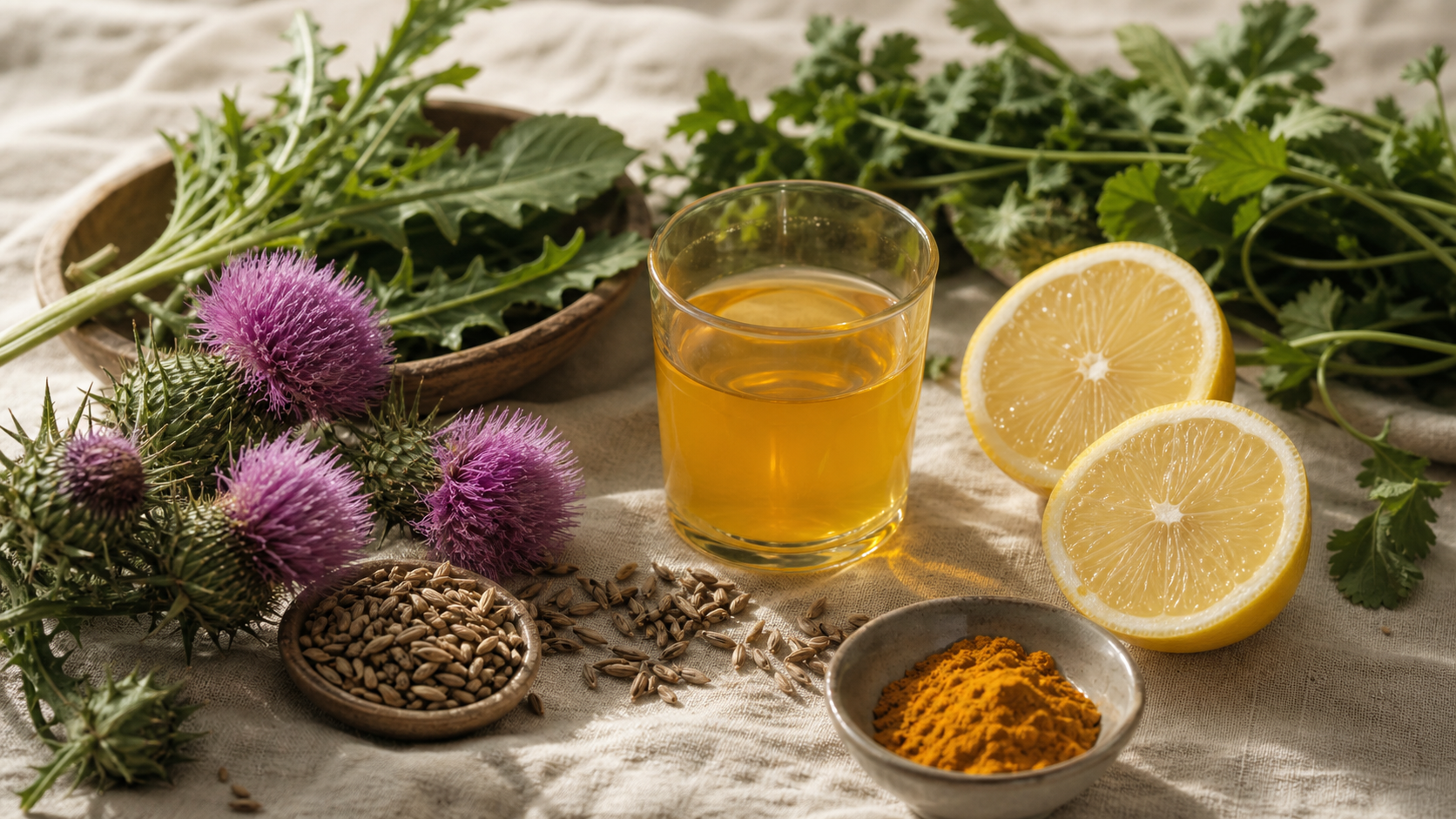
Milk thistle has been used medicinally for over 2,000 years — and modern research has validated much of its traditional use. Its active complex, silymarin (with silybin as the most potent component), acts through multiple mechanisms: stabilizing hepatocyte membranes to prevent toxin entry, acting as a direct antioxidant, exhibiting anti-inflammatory and anti-fibrotic properties, and supporting liver cell regeneration. Clinical trials have demonstrated that silymarin supplementation can reduce liver enzymes (ALT/AST) and improve markers of liver health in NAFLD. Its primary limitation is bioavailability — standard milk thistle extracts have 20-50% intestinal absorption, which is why phospholipid-complexed forms (like silybin-phosphatidylcholine) show superior clinical results.
Sulfur-Rich Foods: The Phase II Cofactors
Phase II sulfation requires adequate sulfur — found in eggs, garlic, onions, leeks, and cruciferous vegetables. Methylation requires methyl donors: folate (leafy greens, legumes), B12 (animal proteins, nutritional yeast), and B6 (poultry, fish, potatoes). Glucuronidation requires adequate magnesium and B-vitamins. A nutrient-dense, whole-food diet is not a cliche — it is the literal biochemical substrate for functional detoxification.
Dandelion Root and Artichoke Leaf
Both dandelion root and artichoke leaf extract have traditional and emerging evidence for supporting bile production and flow (choleretic activity), which facilitates the elimination of conjugated toxins through the biliary route. Dandelion root also provides prebiotic inulin, supporting the gut microbiome's role in the elimination phase.
Lifestyle Practices That Support Detoxification
Beyond targeted nutrition, several lifestyle practices have genuine mechanistic support for enhancing the body's detoxification capacity:
- Adequate hydration: The kidneys require sufficient water to excrete water-soluble conjugated toxins. Chronic mild dehydration impairs renal elimination.
- Regular bowel movements: Preventing enterohepatic recirculation of conjugated toxins requires regular, complete bowel elimination — supported by adequate fiber (25-38g/day), hydration, and movement.
- Sleep: The glymphatic system — the brain's waste-clearance network — is primarily active during deep sleep. Chronic sleep deprivation impairs both neurological and hepatic detoxification processes.
- Exercise: Physical activity stimulates lymphatic circulation (the lymphatic system has no pump of its own), increases sweating, and improves hepatic blood flow — all supporting elimination.
- Sauna use: Infrared and traditional saunas promote sweating, which provides a secondary elimination route for certain fat-soluble compounds. While not a replacement for hepatic detoxification, regular sauna use has emerging evidence for reducing body burden of certain persistent organic pollutants.
- Reducing toxic load: The most evidence-based "detox" strategy is reducing input — choosing organic produce for the highest-pesticide crops (the Environmental Working Group's "Dirty Dozen"), filtering drinking water, using phthalate-free and paraben-free personal care products, and minimizing alcohol consumption.
What the Integrative Traditions Say
The wisdom of integrative healing traditions anticipated much of what modern biochemistry has confirmed about detoxification support.
Traditional Chinese Medicine associates the liver with the smooth flow of Qi and blood, and emphasizes liver support through bitter greens, dandelion, and practices that reduce "stagnation" — a concept that maps remarkably well to the modern understanding of bile flow and lymphatic circulation. Spring is considered the season of liver renewal in TCM, a tradition that aligns with the body's natural seasonal rhythms.
Naturopathy (Naturopathic Approaches) has long emphasized the "therapeutic order" — first, remove the obstacle to healing (reduce toxic load), then support the body's innate healing capacity (optimize elimination pathways). This framework predates the molecular understanding of Phase I and Phase II enzymes by decades, yet it maps precisely onto what we now know biochemically.
Ayurveda describes the concept of "ama" — undigested metabolic waste that accumulates when digestion and elimination are impaired — and recommends bitter herbs, warm water, and movement to support its clearance. The Ayurvedic emphasis on digestive fire (agni) as the foundation of health reflects an intuitive understanding of the gut-liver axis.
Biblical medicine offers the principle of stewardship — caring for the body as a temple — alongside specific wisdom about clean eating, fasting, and the restorative power of rest. Fasting, in particular, has emerging evidence as a natural cellular cleanup mechanism: periods of caloric restriction activate autophagy (cellular self-cleaning) and have been shown to reduce markers of oxidative stress and support liver health.
"He heals the brokenhearted and binds up their wounds." — Psalm 147:3
The body's capacity for healing — including its remarkable detoxification architecture — is itself a reflection of divine design. Supporting that capacity is not about fear of toxins; it is about honoring the extraordinary biological gift we have been given.
What Detoxification Is NOT
It is worth being direct about what the evidence does not support. Commercial "detox cleanses" — whether juice-based, supplement-based, or foot-pad-based — have no clinical evidence demonstrating that they meaningfully enhance the liver's Phase I, II, or III pathways beyond what a nutrient-dense diet and healthy lifestyle already provide. The liver does not accumulate toxins that require periodic "flushing." It processes them continuously, in real time.
The most evidence-based approach to supporting detoxification is not a 30-day cleanse — it is a sustained lifestyle that provides the nutritional cofactors the liver needs, reduces unnecessary toxic input, supports gut health and regular elimination, and prioritizes sleep and movement. These are not glamorous interventions. But they are the ones that work.
"So whether you eat or drink or whatever you do, do it all for the glory of God." — 1 Corinthians 10:31
Ready to Support Your Body's God-Given Detox Design?
Genesis World Health's AI Agent Council brings together Naturopathy (Naturopathic Approaches), Functional Medicine, Nutrition, and Nutraceuticals specialists to deliver personalized health insights on supporting your liver's detoxification pathways. Whether you want to understand your genetic detox capacity, optimize your nutrition for Phase II support, or build a sustainable whole-person approach to reducing your toxic load, our council of 55+ AI agents works in consensus to give you integrative, evidence-based guidance tailored to your unique biology. Explore our Health Assessment to begin, or go deeper with a Deep Dive Session with our Nutraceuticals or Functional Medicine specialist.
Medical Disclaimer: As always, we encourage you to work with qualified healthcare providers — including hepatologists, licensed naturopathic doctors, registered dietitians, and your primary care provider — when making significant changes to your liver function and natural detoxification support. Genesis World Health is an educational platform, not a substitute for professional medical care. Our role is to equip you with knowledge, insight, and the integrative perspective you need to have more informed conversations with your healthcare team.
Sources & References
- SelfDecode — Phase 1 and Phase 2 Detox Pathways: Genetic Influences and Nutritional Support
- Genetic Lifehacks — Liver Detox Genes: CYP450, GST, and Phase II Enzyme Variants
- Salvo Health — The Three Phases of Detoxification Explained
- Rupa Health — The Role of the Liver and Gut in Detoxification: An Integrative Medicine Perspective
- Life Extension — NAC vs. Milk Thistle for Liver Support: Mechanisms and Evidence
- HLBenefits — Liver Support: Milk Thistle, NAC, and Detox Supplements — Clinical Evidence Review
- NatureMed — What Naturopathic Physicians Do to Address Toxic Exposure
- Johns Hopkins Medicine — Detoxing Your Liver: Fact Versus Fiction