Strength Training for Women's Longevity: The Science of Muscle, Bone, and Hormonal Health Across Every Life Stage
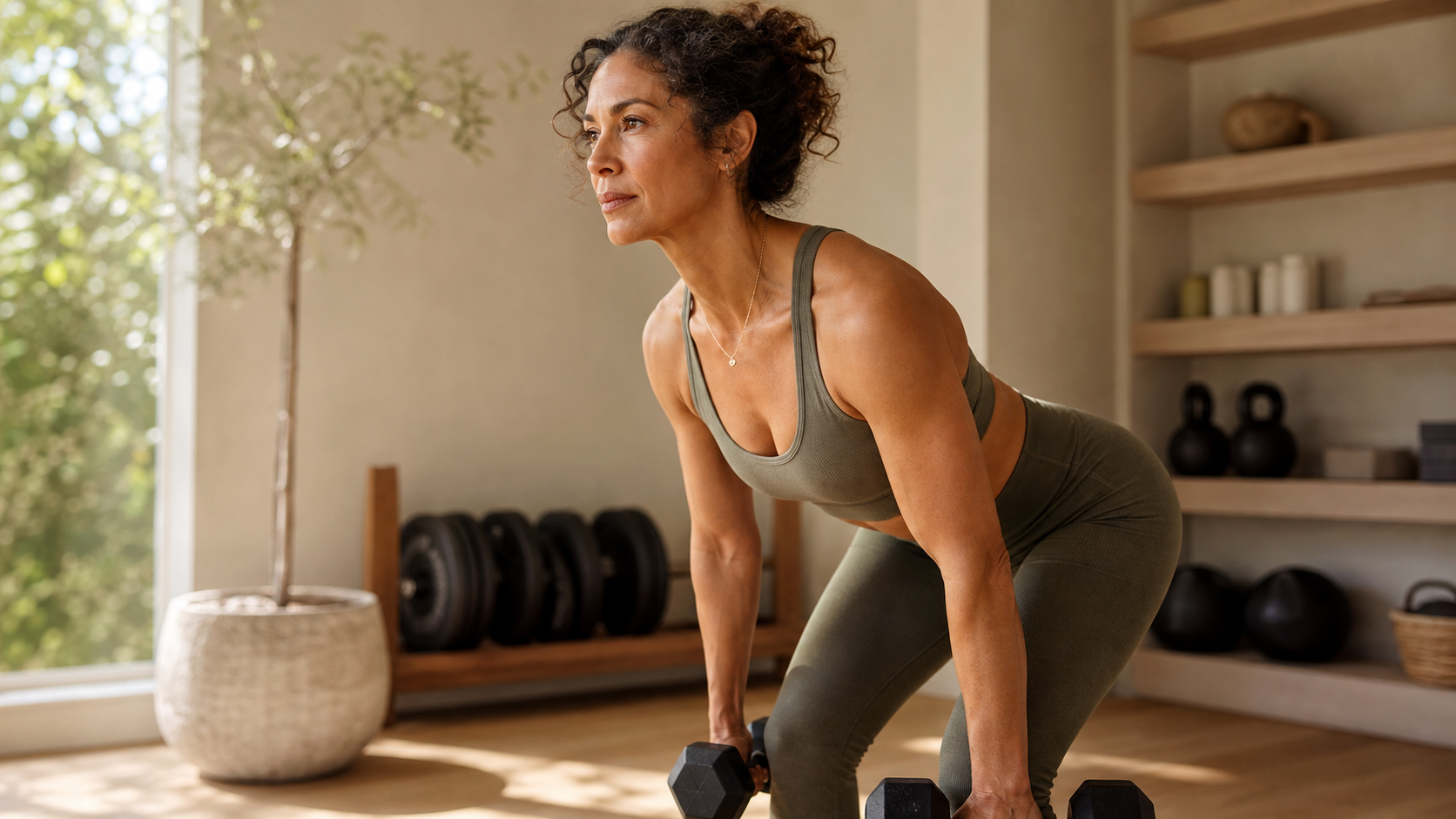
Strength Training for Women's Longevity: The Science of Muscle, Bone, and Hormonal Health Across Every Life Stage
There is a quiet revolution happening in women's health — and it is happening in weight rooms, home gyms, and sunlit studios across the country. For decades, resistance training was marketed almost exclusively to men or to women seeking a smaller body. But the science of the last decade has rewritten that story entirely. Strength training is now recognized as one of the most powerful longevity interventions available to women — not because of how it changes the way a body looks, but because of what it does at the cellular, hormonal, and skeletal level to extend healthy, independent life.
This is not about aesthetics. This is about building the biological reserves that allow a woman to carry her grandchildren, hike a mountain at 70, maintain sharp cognition into her 80s, and live with the vitality that reflects the fearfully and wonderfully made design she was given.
"She girds herself with strength and makes her arms strong." — Proverbs 31:17
At Genesis World Health, we believe that caring for the body is an act of stewardship — honoring the temple God entrusted to us. And the science is clear: for women, that stewardship increasingly means picking up the weights.
The Sarcopenia Crisis: Why Women Lose Muscle Faster Than They Realize
Sarcopenia — the progressive, age-related loss of skeletal muscle mass and function — is one of the most underappreciated threats to women's long-term health. Beginning as early as age 30, women lose approximately 3–8% of muscle mass per decade in the absence of resistance training. After age 50, that rate accelerates significantly, compounded by the hormonal shifts of perimenopause and menopause.
The consequences extend far beyond physical appearance. Muscle is metabolically active tissue. When it declines, so does resting metabolic rate — which is why many women notice unexplained weight gain and increased visceral fat accumulation during midlife even without changes in diet. Reduced muscle mass also impairs insulin sensitivity, increasing the risk of type 2 diabetes and metabolic syndrome. And perhaps most critically for longevity, sarcopenia is one of the strongest predictors of falls, fractures, loss of independence, and all-cause mortality in older women.
A landmark finding from recent research: women who engage in regular resistance training demonstrate a 47% reduction in all-cause mortality risk compared to sedentary peers. That is not a marginal benefit — it is a transformative one.
The good news is that the body's capacity to build and maintain muscle does not disappear with age. Meta-analyses involving thousands of postmenopausal women confirm that resistance training effectively increases muscle mass, volume, and fiber cross-sectional area — and that the magnitude of these gains is comparable to what premenopausal women achieve. The window for building strength never fully closes.
Bone Density: The Silent Benefit Most Women Don't Know About
Osteoporosis and low bone mineral density (BMD) affect millions of women, with the most rapid bone loss occurring in the first five to seven years following menopause — a period during which women can lose up to 20% of their bone density. This is not a minor inconvenience; hip fractures in older women carry a one-year mortality rate comparable to many cancers.
Resistance training provides the mechanical loading stimulus that bones require to maintain and build density. When muscles contract against resistance, they pull on the bones they attach to, stimulating osteoblasts — the bone-building cells — to lay down new bone matrix. This is a stimulus that cardiovascular exercise alone cannot fully replicate.
The research is consistent: progressive resistance training, particularly exercises that load the spine and hips (squats, deadlifts, lunges, loaded carries), is among the most effective non-pharmacological interventions for preserving and improving bone mineral density in women across all life stages. The American College of Sports Medicine recommends strength training for major muscle groups at least two to three days per week, with progressive overload — gradually increasing resistance over time — as the key driver of skeletal adaptation.
Muscle as an Endocrine Organ: The Hormonal Intelligence of Strength
One of the most remarkable discoveries in exercise science over the past two decades is that skeletal muscle is not merely a mechanical tissue — it is a sophisticated endocrine organ. When muscles contract during resistance exercise, they secrete bioactive signaling molecules called myokines that communicate with virtually every organ system in the body.
Irisin and Brain Health
Irisin, a myokine released during exercise, crosses the blood-brain barrier and stimulates the production of brain-derived neurotrophic factor (BDNF) — often called "Miracle-Gro for the brain." BDNF supports the growth and maintenance of neurons, enhances learning and memory, and has been shown to reduce the risk of cognitive decline and depression. For women navigating the cognitive changes that can accompany hormonal transitions, this muscle-brain connection is profoundly significant.
Insulin Sensitivity and Metabolic Regulation
Resistance training triggers an increase in GLUT4 glucose transporters within muscle cells, dramatically improving the body's ability to clear glucose from the bloodstream. This effect is independent of weight loss — meaning that even without changes in body composition, strength training improves insulin sensitivity and glycemic control. For women at risk of metabolic syndrome or type 2 diabetes, this is one of the most powerful lifestyle interventions available.
Testosterone, Growth Hormone, and IGF-1
While women produce far less testosterone than men, this hormone plays a critical role in muscle maintenance, bone density, libido, and mood. Resistance training — particularly higher-volume, periodized programs — has been shown to elevate resting testosterone and insulin-like growth factor-1 (IGF-1) levels while reducing cortisol over time. A six-month study of women following a periodized high-volume resistance program demonstrated significantly more favorable hormonal profiles compared to women following low-volume circuit training.
Growth hormone, released in pulses during and after resistance exercise, supports tissue repair, fat metabolism, and immune function. The acute growth hormone response to strength training is robust in women and remains meaningful even after menopause.
Training Across the Female Life Stages
One of the most important insights from recent women's-specific exercise research is that training recommendations should be tailored to the hormonal and physiological context of each life stage — not simply scaled down from male-centric guidelines.
Young Adult Women (20s–30s)
This is the prime window for building peak bone density and establishing the muscle mass reserves that will serve as a buffer against age-related decline. Young women who build strong foundations in their 20s and 30s enter midlife with significantly greater physiological reserves. Compound movements — squats, deadlifts, rows, presses — that load multiple muscle groups simultaneously are particularly valuable for building functional strength and skeletal density.
Women in Their 40s
The 40s often bring the first signs of hormonal fluctuation, with estrogen levels beginning to shift. This is a critical decade for maintaining and building muscle mass, as the hormonal environment that supports muscle protein synthesis begins to change. Women in their 40s benefit from prioritizing progressive overload, adequate protein intake (0.7–1.0 grams per pound of body weight), and recovery — including quality sleep, which is when the majority of muscle repair and growth hormone secretion occurs.
Postmenopausal Women (50s and Beyond)
The postmenopausal period is when the benefits of resistance training become most urgent and most measurable. Estrogen's protective effects on muscle and bone are reduced, making the mechanical stimulus of strength training the primary driver of skeletal and muscular maintenance. Research confirms that postmenopausal women respond to resistance training with gains in muscle mass and strength comparable to younger women — the biology of adaptation remains intact.
For postmenopausal women, the American College of Sports Medicine recommends training major muscle groups two to four times per week, using moderate to high resistance (60–80% of one-rep maximum), with 8–12 repetitions per set. Compound movements that load the spine and hips are prioritized for bone density. Recovery support — protein, sleep, and stress management — becomes increasingly important as the hormonal environment shifts.
The Practical Framework: What Effective Strength Training Looks Like
The science points to several consistent principles for women seeking to build strength for longevity:
- Progressive Overload: The body adapts to the demands placed on it. To continue building strength and bone density, resistance must be gradually increased over time — more weight, more repetitions, or more challenging movement variations.
- Compound Movements First: Exercises that engage multiple muscle groups simultaneously (squats, deadlifts, lunges, rows, presses) provide the greatest hormonal stimulus, the most efficient use of training time, and the most functional carryover to daily life.
- Frequency: Two to four sessions per week targeting major muscle groups is the evidence-based sweet spot for most women. More is not always better — recovery is where adaptation happens.
- Protein Adequacy: Muscle protein synthesis requires adequate dietary protein. Research consistently supports 0.7–1.0 grams per pound of body weight daily, with particular attention to leucine-rich sources (eggs, fish, poultry, legumes) that trigger the muscle-building response.
- Consistency Over Intensity: The most effective strength training program is the one a woman will actually do consistently over years and decades. Starting with bodyweight movements, resistance bands, or light dumbbells and progressing gradually is far more valuable than sporadic high-intensity efforts.
The Faith-Centered Perspective: Strength as Stewardship
In the Genesis World Health framework, physical health is never separated from spiritual purpose. The body is not a project to be optimized for vanity — it is a temple entrusted to us by God, and caring for it is an act of worship and stewardship.
"Do you not know that your bodies are temples of the Holy Spirit, who is in you, whom you have received from God? You are not your own; you were bought at a price. Therefore honor God with your bodies." — 1 Corinthians 6:19-20
Strength training, viewed through this lens, is not about achieving a certain appearance or competing with others. It is about building the physical capacity to serve — to carry children and grandchildren, to show up fully for family and community, to maintain the independence and vitality that allows a woman to fulfill her calling across every decade of her life. The Proverbs 31 woman "girds herself with strength" not as an end in itself, but as a foundation for purposeful, generous living.
This perspective also guards against the twin dangers of obsession and neglect. Exercise becomes unhealthy when it shifts from stewardship to idolatry — when the pursuit of a certain body becomes more important than relationships, rest, or spiritual life. The goal is not perfection; it is faithful, sustainable care for the body God gave you.
How Genesis World Health Supports Women's Strength and Longevity
Genesis World Health's AI Agent Council brings together specialists across exercise physiology, nutrition, women's health, functional medicine, and faith-centered wellness to provide personalized health insights tailored to each woman's unique physiology, life stage, and goals. Rather than generic advice, the Council synthesizes perspectives from multiple specialist agents — including the Exercise Physiology agent, the Women's Health agent, and the Nutraceuticals specialist — to deliver unified, evidence-based guidance.
For women who want to go deeper on specific questions — optimal training frequency for their life stage, protein strategies for muscle building, or the intersection of hormonal health and exercise — Deep Dive Sessions offer focused one-on-one exploration with a specialist agent. The Health Assessment provides the personalized foundation that makes all of this guidance relevant to your specific situation rather than generic population averages.
Explore the AI Agent Council to see how multiple specialist perspectives come together for truly integrative women's health support. Learn more about GWH's Five Foundational Principles — the values of Honor, Integrity, Authenticity, Do No Harm, and Absolute Truth that guide every insight the platform provides. And visit the Learn page for additional resources on women's health, longevity, and whole-person wellness.
"I praise you because I am fearfully and wonderfully made; your works are wonderful, I know that full well." — Psalm 139:14
Ready to Build Strength That Lasts a Lifetime?
Genesis World Health's AI Agent Council brings together the Exercise Physiology agent, Women's Health specialist, and Nutraceuticals expert to deliver personalized health insights tailored to your life stage, hormonal health, and longevity goals. Whether you are building your foundation in your 30s or reclaiming vitality in your 60s, our multi-specialist Council provides the integrative guidance your body deserves. Start with the Health Assessment to receive insights grounded in your unique physiology.
Medical Disclaimer: As always, we encourage you to work with qualified healthcare providers — including endocrinologists, physical therapists, women's health nurse practitioners, and your primary care provider — when making significant changes to your strength training and hormonal health. Genesis World Health is an educational platform, not a substitute for professional medical care. Our role is to equip you with knowledge, insight, and the integrative perspective you need to have more informed conversations with your healthcare team.
Sources & References
- Why Women Should Strength Train for Longevity and Health Benefits — OkonFit
- Resistance Training and Bone Mineral Density in Women — PMC/NCBI
- Resistance Training and Body Composition in Postmenopausal Women — Frontiers in Endocrinology
- The Science Behind Strength Training for Postmenopausal Women — Princeton Medicine
- Irisin, BDNF, and the Muscle-Brain Connection — Endocrine Reviews, Oxford Academic
- Hormonal Responses to Resistance Exercise Variables — IDEA Fit