Traditional Chinese Medicine in 2026: Ancient Wisdom Meets Modern Healing
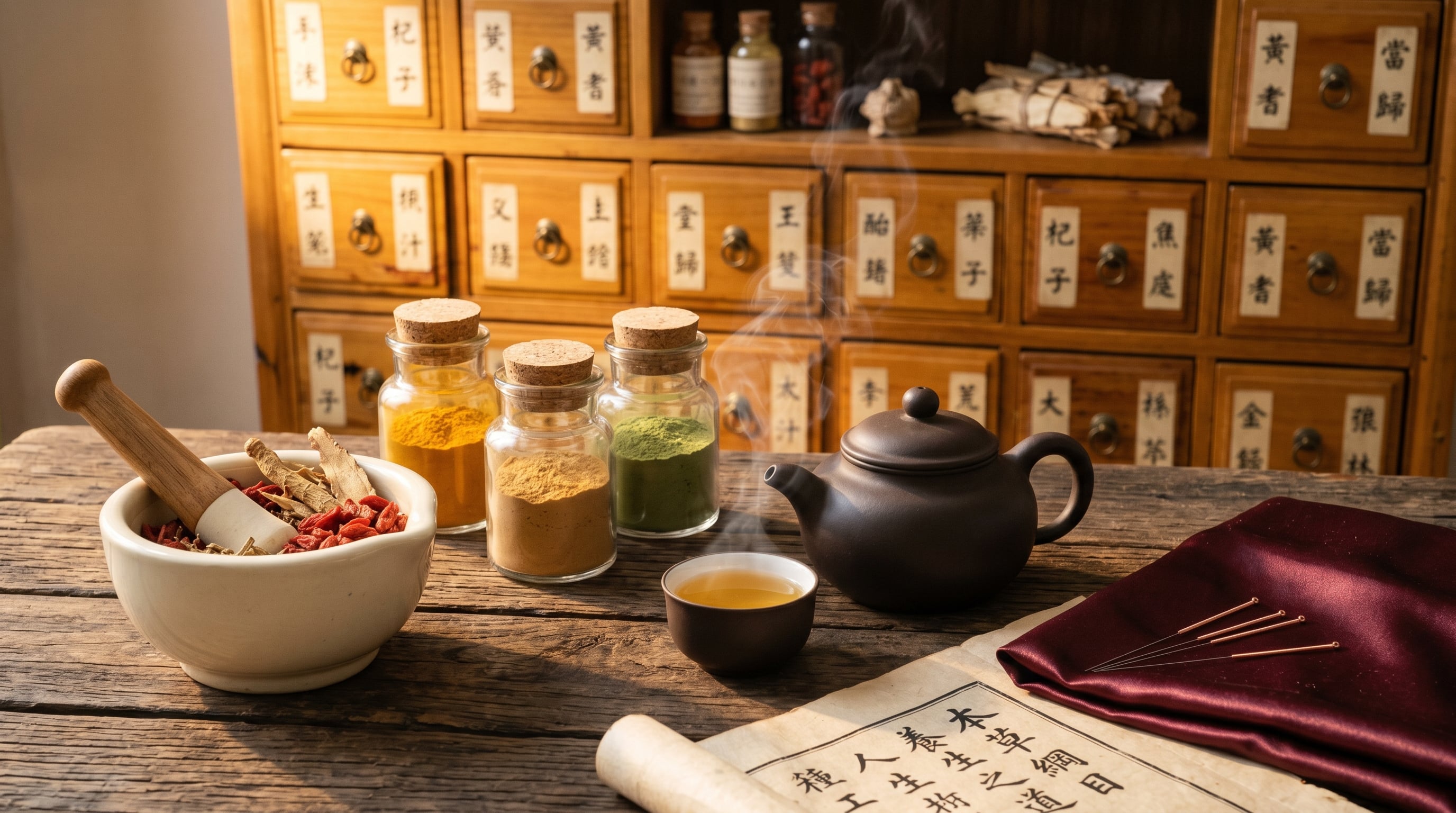
Traditional Chinese Medicine in 2026: Ancient Wisdom Meets Modern Healing
Across the globe, millions of people are rediscovering a healing tradition that has endured for more than 3,000 years. Traditional Chinese Medicine — known as TCM — is no longer confined to specialty clinics or cultural enclaves. In 2026, it has become one of the fastest-growing segments of the global wellness industry, with a market valued at nearly $289 billion and projected to exceed $500 billion by 2035. From acupuncture studios in Manhattan to herbal tea bars in Beijing, TCM is reshaping how humanity thinks about health, disease, and the body's innate capacity to heal.
At Genesis World Health, we believe that all paths of healing have value. Our platform was built on the conviction that no single tradition holds a monopoly on truth — and TCM is a powerful example of why. Whether you are exploring acupuncture for chronic pain, considering herbal formulas for immune support, or simply curious about the philosophy of Qi and meridians, this guide will walk you through what TCM is, what the science says, and how it fits into a comprehensive, integrative approach to your health.
What Is Traditional Chinese Medicine?
Traditional Chinese Medicine is a complete medical system — not merely a collection of alternative therapies. It encompasses a philosophy of the body, a diagnostic framework, and a rich toolkit of therapeutic interventions that have been refined over millennia. At its philosophical core, TCM rests on several foundational concepts:
- Qi (氣) — Vital Energy: TCM holds that a vital life force called Qi flows through the body along invisible pathways called meridians. Health is the harmonious, unobstructed flow of Qi; disease arises when this flow is blocked, deficient, or excessive.
- Yin and Yang: All phenomena in the universe — including the body — are understood through the interplay of opposing yet complementary forces. Yin represents coolness, rest, and nourishment; Yang represents warmth, activity, and transformation. Optimal health requires dynamic balance between the two.
- The Five Elements: Wood, Fire, Earth, Metal, and Water correspond to organ systems, emotions, seasons, and physiological processes. TCM practitioners use this framework to identify patterns of imbalance and guide treatment.
- Zang-Fu Organ Theory: TCM recognizes twelve primary organ systems — each with physical and energetic functions that extend beyond Western anatomical definitions. The Liver, for instance, governs the smooth flow of Qi and is associated with emotional regulation as well as physical detoxification.
This philosophical framework is not merely poetic metaphor. It is a sophisticated clinical language that has guided practitioners in diagnosing and treating patients for thousands of years — and it is increasingly being studied through the lens of modern neuroscience, immunology, and systems biology.
The Core Modalities of TCM
Acupuncture
Acupuncture is perhaps the most widely recognized TCM modality in the Western world. It involves the insertion of fine, sterile needles into specific points along the body's meridian pathways to regulate the flow of Qi, reduce pain, and restore physiological balance. The National Center for Complementary and Integrative Health (NCCIH) at the National Institutes of Health recognizes acupuncture as having the strongest evidence base among TCM modalities, particularly for chronic pain conditions including low back pain, neck pain, knee osteoarthritis, and migraine prevention.
Modern research has begun to illuminate the biological mechanisms behind acupuncture's effects. Studies using high-field fMRI have demonstrated that acupuncture stimulation alters activity in brain regions responsible for pain processing and emotional regulation. Other research suggests that needle insertion triggers mechanotransduction — a biochemical cascade in connective tissue that releases compounds including adenosine, serotonin, and histamine. Some evidence also points to the activation of endogenous opioid pathways, providing a neurobiological basis for acupuncture's analgesic effects.
Chinese Herbal Medicine
Chinese herbal medicine is the largest segment of the TCM market, accounting for approximately 48–60% of global TCM utilization. Practitioners prescribe complex formulas — often combining 5 to 15 individual herbs — tailored to the patient's specific pattern of imbalance rather than a single diagnosed disease. This individualized approach is one of TCM's most distinctive features and one of the reasons it is difficult to evaluate using standard randomized controlled trial designs.
Key herbs that have attracted significant scientific attention include:
- Astragalus (Huang Qi): Extensively studied for immune modulation and adaptogenic properties.
- Ginseng (Ren Shen): One of the most researched herbs globally, with evidence supporting cognitive function, energy, and stress resilience.
- Turmeric/Curcumin: Widely used in both TCM and Ayurveda, with robust evidence for anti-inflammatory effects.
- Reishi Mushroom (Ling Zhi): Studied for immune support, anti-tumor properties, and nervous system regulation.
- Schisandra (Wu Wei Zi): A five-flavor berry used for liver protection, stress adaptation, and cognitive clarity.
Tai Chi and Qigong
These mind-body practices combine slow, deliberate movement with breath regulation and meditative awareness to cultivate and harmonize Qi. Tai Chi has one of the strongest evidence bases of any TCM modality, with clinical research supporting its benefits for balance and fall prevention in older adults, pain reduction in knee osteoarthritis and fibromyalgia, improved outcomes in heart failure patients, and reduced symptoms of Parkinson's disease. Qigong, a broader category of energy cultivation exercises, is increasingly being studied for its effects on stress hormones, immune function, and cardiovascular health.
Tui Na Massage and Cupping
Tui Na is a therapeutic massage system that works along meridian pathways to release blockages and restore flow. Cupping therapy — which gained widespread public attention during the 2016 Olympics — uses suction cups to increase local circulation, release myofascial tension, and draw stagnant Qi to the surface. Both modalities are commonly used alongside acupuncture in clinical TCM practice.
Dietary Therapy and Lifestyle Medicine
TCM dietary therapy is one of its most practical and accessible modalities. Foods are classified by their energetic properties — warming, cooling, drying, moistening — and prescribed according to the patient's constitutional type and current imbalance. This is not a one-size-fits-all diet plan; it is a personalized nutritional philosophy that aligns remarkably well with modern functional medicine's emphasis on individualized, food-as-medicine approaches.
What Does the Science Say?
The scientific evaluation of TCM is an evolving and nuanced field. The World Health Organization launched its Global Traditional Medicine Strategy (2025–2034) with the explicit goal of integrating evidence-based traditional practices into modern healthcare systems worldwide. This represents a significant institutional endorsement of TCM's potential role in global health.
The NCCIH has funded extensive research into TCM modalities and summarizes the current evidence as follows: acupuncture has the strongest evidence base, particularly for pain; Tai Chi shows consistent benefits for physical function and balance; herbal medicine shows promise but requires more rigorous study; and the overall safety profile of TCM, when practiced by qualified professionals, is generally favorable.
It is important to approach TCM with both openness and discernment. Some herbal preparations have been found to contain heavy metal contaminants or undeclared pharmaceutical compounds — making sourcing from reputable, certified manufacturers essential. Acupuncture, when performed by a licensed practitioner using sterile equipment, carries minimal risk. As with all health interventions, informed choice — one of Genesis World Health's Five Sacred Operating Principles — is paramount.
"Do you not know that your bodies are temples of the Holy Spirit, who is in you, whom you have received from God? You are not your own; you were bought at a price. Therefore honor God with your bodies." — 1 Corinthians 6:19-20
This Scripture reminds us that caring for the body is a sacred act. TCM, with its reverence for the body's innate intelligence and its emphasis on prevention and harmony, resonates deeply with a faith-centered approach to health. The body is not merely a machine to be repaired — it is a temple to be honored, nourished, and understood.
TCM and the Genesis World Health Platform
At Genesis World Health, our platform's AI Agent Council includes specialized agents trained in TCM principles, capable of analyzing your health concerns through the lens of Qi, meridian theory, constitutional types, and herbal medicine. When you submit a health question to the Council, our TCM specialist agent contributes its unique perspective alongside agents representing functional medicine, naturopathy, Ayurveda, biblical medicine, and conventional Western medicine — producing personalized insights that honor the full spectrum of healing wisdom.
For those who want to go deeper into TCM specifically, our Deep Dive sessions allow you to engage in an intensive 1-on-1 conversation with a dedicated TCM specialist agent. Whether you want to understand your constitutional type, explore herbal formulas for a specific condition, or learn how acupuncture might support your health goals, Deep Dive provides the focused, expert-level exploration you need.
How TCM Integrates with Your GWH Health Assessment
When you complete the Genesis World Health Health Assessment, your responses are analyzed through multiple frameworks simultaneously — including TCM pattern differentiation, if you choose. This means your insights may include TCM-informed recommendations alongside conventional and functional medicine insights. You might receive guidance on warming foods to support Yang deficiency, specific acupressure points for stress relief, or herbal supplements available through our GWH supplement recommendations — all grounded in both traditional wisdom and modern evidence.
The Five Sacred Operating Principles and TCM
TCM aligns beautifully with Genesis World Health's Five Sacred Operating Principles:
- Honor (Kavod): TCM honors the body's innate intelligence and the wisdom of ancestral healing traditions.
- Integrity (Tamim): We present TCM honestly — acknowledging both its strengths and the areas where more research is needed.
- Authenticity: We do not dilute or distort TCM to make it more palatable. We present it as it is — a complete, sophisticated medical system.
- Informed Choice: We equip you with the knowledge to make your own decisions about whether and how to incorporate TCM into your health journey.
- Absolute Truth: We follow the evidence wherever it leads, integrating TCM insights that are supported by research while being transparent about areas of uncertainty.
Is TCM Right for You? Common Questions Answered
Can TCM be used alongside conventional medicine?
Yes — and this is increasingly the standard of care in integrative medicine settings. Many hospitals and medical centers now offer integrative oncology programs that combine acupuncture and herbal medicine with conventional cancer treatment. The key is transparency: always inform all of your healthcare providers about every modality you are using, as some herbal compounds can interact with pharmaceutical medications.
How do I find a qualified TCM practitioner?
In the United States, licensed acupuncturists (L.Ac.) and Doctors of Oriental Medicine (DOM) are credentialed through the National Certification Commission for Acupuncture and Oriental Medicine (NCCAOM). Look for practitioners with NCCAOM certification and state licensure. Many states also require continuing education in clean needle technique and safety protocols.
What conditions does TCM treat most effectively?
TCM has the strongest evidence base for chronic pain (back pain, neck pain, osteoarthritis, headaches), stress and anxiety, insomnia, digestive disorders, and immune support. It is also widely used for fertility support, menopausal symptoms, and post-surgical recovery. For acute or emergency conditions, conventional Western medicine remains the appropriate first-line intervention.
How does TCM view mental health?
TCM has always recognized the inseparability of mind, body, and spirit. Emotional states are understood as both causes and consequences of physical imbalance — the Liver governs anger and frustration, the Heart houses the Shen (spirit/consciousness), the Kidneys hold fear and ancestral vitality. This holistic view of mental health aligns remarkably well with modern psychoneuroimmunology and the growing recognition that emotional wellbeing is inseparable from physical health.
The Future of TCM: Ancient Wisdom in a Modern World
Gen Z consumers are enthusiastically adopting TCM lifestyle practices like drinking warm water, practicing Qigong, and using herbal remedies — reflects something deeper than a passing wellness fad. It represents a growing hunger for healthcare that is personal, preventive, and rooted in a coherent philosophy of the body. In a world where conventional medicine excels at acute intervention but often struggles with chronic disease and whole-person wellness, TCM offers a complementary framework that has stood the test of millennia.
At Genesis World Health, we are committed to being your guide through this rich landscape of healing traditions. Our platform's 60+ AI agents, backed by access to over 700+ million scientific studies, are equipped to help you understand TCM not as an exotic alternative but as a legitimate, evidence-informed pillar of integrative health. Whether you are a complete beginner or a seasoned practitioner, we invite you to explore what TCM has to offer — on your terms, at your pace, with the support of the most comprehensive AI health education platform ever built.
Ready to explore how Traditional Chinese Medicine might fit into your personal health journey? Start with your Health Assessment to receive personalized insights that honor all healing traditions — including the ancient wisdom of TCM. Or explore our subscription tiers to find the level of access that's right for you.
"He heals the brokenhearted and binds up their wounds." — Psalm 147:3
Healing is not a single path. It is a journey — and every tradition that honors the body, the mind, and the spirit has something to teach us. At Genesis World Health, we walk that journey with you. Explore more on our Learning Resources page and discover the full breadth of healing wisdom available to you.
Disclaimer: This article is for educational purposes only and does not constitute medical advice. Always consult a qualified healthcare provider before beginning any new health regimen, including TCM therapies or herbal supplements.
Ready to Align Ancient Wisdom with Your God-Given Design?
Traditional Chinese Medicine reminds us that true healing honors the whole person. At Genesis World Health, our AI Agent Council brings together 60+ specialist agents — guided by Honor, Integrity, Authenticity, Do No Harm and Absolute Truth — to help you weave time-tested traditions and modern science into personalized health insights. Explore focused Deep Dive Sessions and a comprehensive Health Assessment to discover an approach rooted in both faith and evidence.
Sources & References
- National Center for Complementary and Integrative Health (NCCIH) — Traditional Chinese Medicine: What You Need to Know
- Business Research Insights — Traditional Chinese Medicine (TCM) Market Report 2026
- National Geographic — Acupuncture: Evidence and Pain Management
- Johns Hopkins Medicine — Acupuncture: What You Need to Know
- The Guardian — Chinamaxxing: How Influencers Are Driving the TCM Trend in 2026
- Global Wellness Institute — 10 Wellness Trends for 2026
- PubMed Central — TCM Psychosomatic Integration Therapy for Subthreshold Depression: Clinical Trial Results