What Your Body Is Telling You: Wearables, CGM, and the Science of Biometric Stewardship
Faithful Stewardship in the Age of Real-Time Data
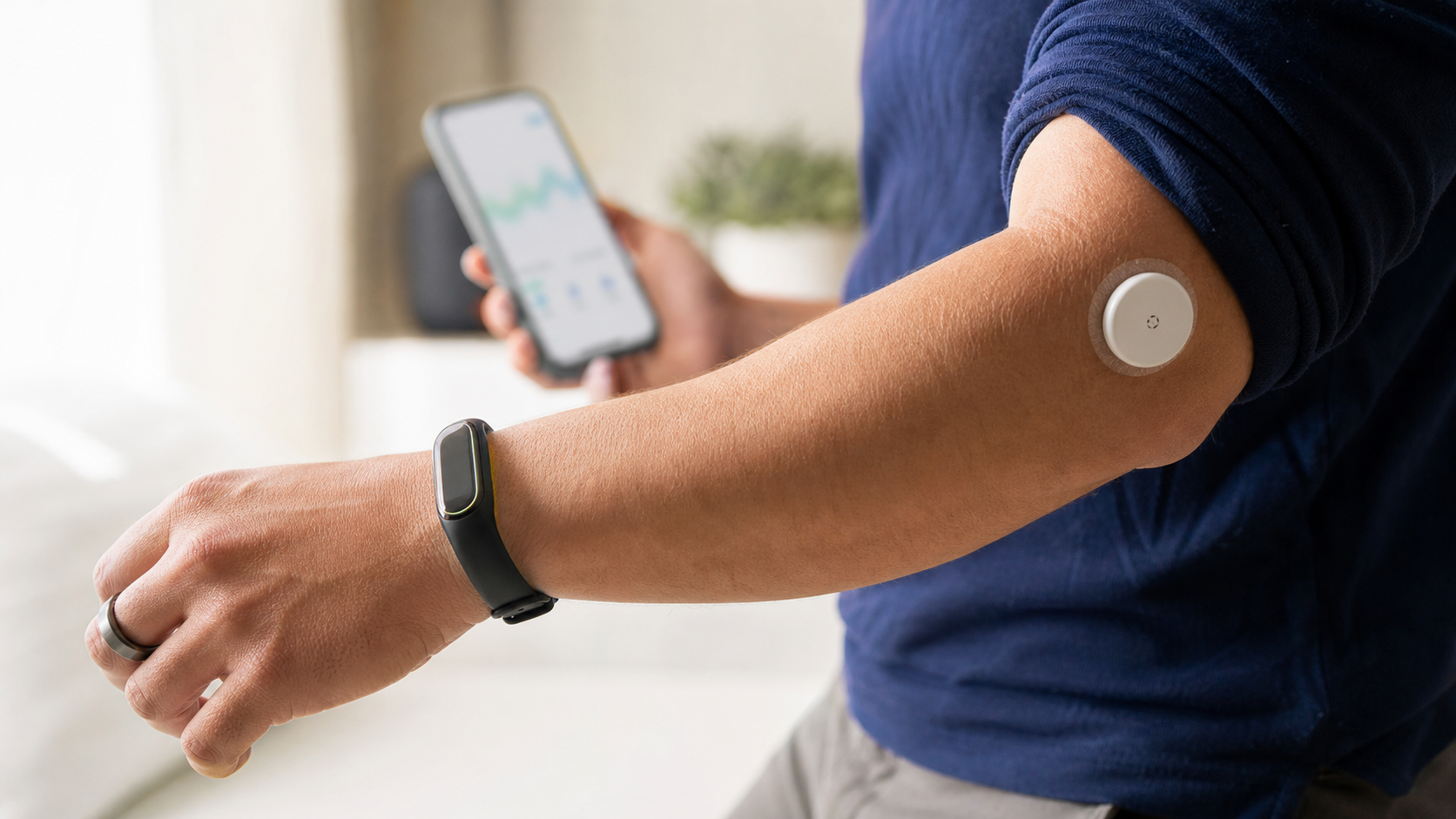
There is a quiet revolution happening on the wrists and fingers of millions of people. Oura Rings, WHOOP bands, continuous glucose monitors, and heart rate variability trackers are turning the human body into an open book, updating in real time, 24 hours a day. For the first time in history, ordinary people can see their sleep architecture, their metabolic responses to a meal, and the state of their autonomic nervous system without setting foot in a clinic.
But data alone is not wisdom. And knowing your body is not the same as honoring it. At Genesis World Health, we believe this new era of biometric self-monitoring is not just a technological development. It is a spiritual invitation. The same God who declared that you are fearfully and wonderfully made (Psalm 139:14) has now given you tools to see, in real time, just how wonderfully that design operates. The question is not whether to use these tools. The question is how to use them faithfully.
What Wearables Actually Measure
Modern health wearables have moved far beyond step counting. Today's devices measure a constellation of physiological signals that, taken together, paint a remarkably detailed picture of your body's internal state.
Heart Rate Variability: The Window Into Your Nervous System
Heart rate variability (HRV) is the variation in time between consecutive heartbeats. It sounds like a minor detail, but it is one of the most powerful biomarkers in modern medicine. A high HRV indicates that your autonomic nervous system is flexible and responsive. Your parasympathetic (rest-and-digest) branch is active, inflammation is low, and your body is in a state of recovery and readiness. A low HRV signals the opposite: sympathetic dominance, elevated stress hormones, and a body under strain.
Research published in Frontiers in Cardiovascular Medicine (2025) describes HRV as a window into the "brain-heart axis," a bidirectional communication network where the brain modulates cardiac autonomic tone and the heart sends feedback signals back to the brain. Disruptions in this loop, driven by chronic stress, inflammation, or poor sleep, are linked to cardiovascular disease, depression, and accelerated aging. Conversely, higher HRV is associated with lower all-cause mortality, better mental health outcomes, and greater physiological resilience.
The Oura Ring Gen 4 measures HRV with a correlation of r² = 0.980 against clinical gold-standard measurements, while WHOOP 5.0 has demonstrated 99% HRV accuracy in research from the Australian Institute of Sport. These are not toy metrics. They are clinically meaningful signals, now available to anyone willing to wear a ring to bed.
Continuous Glucose Monitoring: Your Metabolism in Real Time
Continuous glucose monitors (CGMs) were originally developed for people managing diabetes. Today, devices like the Dexcom Stelo and Abbott Lingo have brought real-time glucose tracking to the general wellness market, and the insights they reveal are reshaping how people understand their metabolic health.
A CGM measures interstitial glucose levels every few minutes, creating a continuous curve that shows exactly how your body responds to every meal, every workout, and every stressful meeting. A systematic review and meta-analysis of 23 studies involving over 1,000 non-diabetic participants, published in the European Journal of Medical Research (2026), found that CGM use is associated with significant improvements in mean blood glucose compared to control groups, with the strongest benefits seen in individuals with prediabetes.
What CGM reveals is often surprising. Two people can eat identical meals and produce dramatically different glucose responses based on their gut microbiome composition, insulin sensitivity, sleep quality, and stress levels. Seeing your own glucose curve in real time transforms abstract nutritional advice into personal, actionable data. It is the difference between being told that refined carbohydrates spike blood sugar and watching your own glucose climb 40 points after a bowl of white rice.
Sleep Staging: A Brief Note, and Where to Go Deeper
Wearables also estimate sleep stages using accelerometry, photoplethysmography, and skin-temperature sensors. Validation research puts the Oura Ring at roughly 76 to 79.5% sensitivity for four-stage sleep staging (with about 94% agreement with clinical polysomnography for simple sleep/wake detection), while WHOOP leads consumer devices for deep-sleep detection. These estimates are useful for spotting longitudinal patterns, how alcohol, a late meal, or a consistent bedtime shift your recovery over weeks, but no consumer device replaces a clinical sleep study for diagnosing a disorder.
Because sleep is where wearable accuracy is most mature, we give it dedicated treatment elsewhere. For the full breakdown of what Oura and WHOOP measure versus estimate, an evidence-ranked list of what actually improves sleep, and a practical 14-day reset, see our companion guide, Sleep Like a High Performer. Here, our focus stays on the two signals that sit outside sleep: your nervous system (HRV) and your metabolism (glucose).
"Do you not know that your bodies are temples of the Holy Spirit, who is in you, whom you have received from God? You are not your own; you were bought at a price. Therefore honor God with your bodies." — 1 Corinthians 6:19-20
The Stewardship Lens: Why This Matters Beyond the Data
The apostle Paul's declaration in 1 Corinthians 6:19-20 is not a metaphor. It is a theological claim with practical implications. If your body is a temple of the Holy Spirit, not your own but purchased at the price of Christ's sacrifice, then caring for it is not vanity. It is worship. It is stewardship of something that belongs to God.
This reframes the entire conversation about biometric monitoring. You are not tracking your HRV to optimize your performance metrics. You are learning to be a faithful steward of the body God entrusted to you. You are not wearing a CGM to obsess over glucose numbers. You are learning how the food God provided interacts with the metabolism He designed. The data is not the point. The point is faithful, informed care of a body that is not ultimately yours to neglect.
This stewardship lens also guards against the most common pitfall of wearable technology: what researchers call "orthosomnia" or wearable-induced anxiety, where users become so focused on their metrics that the monitoring itself becomes a source of stress. A low HRV score is not a verdict. It is information. Faithful stewardship means using that information wisely: adjusting, resting, seeking support. Not spiraling into anxiety over a number.
What the Metrics Actually Tell You
Understanding what these biomarkers mean in practice is essential for using them well.
HRV: Trends Matter More Than Single Readings
Your HRV will fluctuate daily based on sleep quality, alcohol consumption, illness, emotional stress, and exercise load. A single low reading means little. What matters is your personal baseline and the direction of your trend over weeks and months. A consistently rising HRV baseline over 30 to 60 days is a reliable signal that your nervous system is recovering and adapting. A consistently declining baseline is a signal worth investigating with your healthcare provider, not just your app.
Research consistently shows that practices that improve HRV include: consistent sleep timing, aerobic exercise (particularly Zone 2 training), cold exposure, diaphragmatic breathing, prayer and meditation, and reduced alcohol consumption. Many of these align directly with biblical principles of rest, temperance, and Sabbath rhythm.
Sleep Scores: Use Them as Zones, Not Grades
Experts recommend treating sleep scores as three-zone indicators (good, moderate, or poor) rather than precise grades. A score of 72 versus 78 is not meaningfully different. What matters is whether you are consistently in the good zone, and what lifestyle factors correlate with your best and worst nights. Over time, your wearable becomes a personal experiment in sleep hygiene, revealing your individual sensitivities in ways that no general guideline can.
Glucose: Look for Patterns, Not Perfection
For non-diabetic users, the goal of CGM is not to maintain a perfectly flat glucose line. Some postprandial rise is normal and healthy. The goal is to identify your personal metabolic triggers: the foods, meal timings, stress patterns, and sleep states that produce large, prolonged glucose spikes. Making informed adjustments based on this data is the goal. A CGM used for 30 to 90 days can reveal metabolic patterns that would take years to discover through conventional annual bloodwork.
How Genesis World Health Supports Biometric Self-Stewardship
Understanding your data is only half the equation. The other half is knowing what to do with it. This is where Genesis World Health's Genesis Council becomes invaluable.
When your HRV is chronically low and your sleep data shows fragmented deep sleep, you may be dealing with HPA axis dysregulation, mineral deficiencies, or autonomic nervous system imbalance. Our Stress and Adrenal Health specialist (VIP tier) and Sleep and Circadian specialist (VIP tier) can help you interpret these patterns and identify root causes that a wearable app cannot identify.
When your CGM reveals persistent postprandial glucose spikes despite a clean diet, our Metabolic Health specialist and Nutrition and Diet specialist can help you understand whether you are dealing with insulin resistance, gut microbiome dysbiosis, or a food sensitivity that is driving the pattern.
When your data shows consistent improvement in HRV and sleep quality following dietary changes, our Epigenetics specialist can help you understand how those lifestyle inputs are reshaping your gene expression, and what additional changes might accelerate your progress.
The Genesis Council does not replace your physician. It complements your physician by providing the depth of integrative analysis that a 15-minute appointment cannot accommodate. Your wearable data becomes the starting point for a richer, more informed conversation about your health.
The Limits of Self-Monitoring: When to Seek Professional Guidance
Biometric self-monitoring is a powerful tool, but it has real limits. Consumer wearables are not diagnostic medical devices. A low HRV reading does not diagnose heart disease. A CGM spike does not diagnose diabetes. A poor sleep score does not diagnose a sleep disorder. These devices identify patterns and trends that warrant attention. They do not replace clinical evaluation.
If your wearable data reveals persistent concerning patterns (chronically low HRV, consistently poor sleep quality, or glucose readings that remain elevated hours after meals), that is a signal to bring to your healthcare provider, not to self-manage in isolation. Faithful stewardship means knowing when to seek help, not just when to optimize.
It also means maintaining perspective. Your body is not a machine to be optimized. It is a temple to be honored. The goal of biometric monitoring is not a perfect score. It is a life lived with greater awareness, greater care, and greater gratitude for the extraordinary design God placed within you.
"I praise you because I am fearfully and wonderfully made; your works are wonderful, I know that full well." — Psalm 139:14
Practical Steps to Begin
If you are new to biometric self-monitoring, here is a grounded, faith-centered approach to getting started:
Start with one metric. Do not try to track everything at once. Begin with sleep quality or HRV, establish your personal baseline over 30 days, and learn what factors move your numbers before adding more data streams.
Track your inputs alongside your outputs. Your wearable data is most useful when paired with a simple log of your sleep timing, meals, exercise, stress events, and alcohol consumption. Patterns emerge when you can see cause and effect together.
Bring your data to your care team. Share your wearable trends with your physician, functional medicine provider, or Genesis Council specialist. Longitudinal data from a wearable can reveal patterns that a single office visit cannot capture.
Hold the data loosely. A bad night's sleep score is not a crisis. A low HRV reading is not a verdict. Use the data as a guide, not a verdict. The goal is informed stewardship, not anxious optimization.
Let the data point you toward gratitude. When you see your HRV rise after a week of consistent sleep and prayer, or watch your glucose stabilize after removing ultra-processed foods, let that be a moment of worship. You are witnessing God's design responding to faithful care.
The body God gave you is not a mystery to be feared. It is a gift to be understood, honored, and stewarded well. In this new era of real-time biometric insight, you have more tools than any generation before you to do exactly that.
Understand Your Body. Honor God's Design.
Your wearable data is a starting point, not a destination. The Genesis Council brings together specialists in Metabolic Health, Sleep and Circadian rhythms, Stress and Adrenal Health, Epigenetics, and Nutrition to help you interpret your biometric patterns and build a whole-person approach to the body God entrusted to you.
A Personal Note from Genesis World Health
The information shared in this article is for educational purposes and reflects our commitment to integrating faith, science, and whole-person wellness. It is not a substitute for professional medical advice, diagnosis, or treatment. Every person's health journey is unique — fearfully and wonderfully made — and what works for one may not be right for another.
We encourage you to consult with metabolic health specialists, sleep medicine physicians, functional medicine practitioners, and your primary care provider when making significant changes to your approach to biometric self-monitoring and metabolic health management. Our prayer is that this knowledge empowers you to make informed, faith-guided decisions for the body God has entrusted to you.
Sources & References
- Shaffer F, Ginsberg JP. "An Overview of Heart Rate Variability Metrics and Norms." Frontiers in Public Health. 2017. https://pmc.ncbi.nlm.nih.gov/articles/PMC3684221/
- Fedorin I, et al. "Heart Rate Variability as a Biomarker of the Brain-Heart Axis." Frontiers in Cardiovascular Medicine. 2025. https://www.frontiersin.org/journals/cardiovascular-medicine/articles/10.3389/fcvm.2025.1630668/full
- Perez MV, et al. "Wearable-Based Sleep Staging: Validation of Consumer Devices Against Polysomnography." npj Digital Medicine. 2024. https://www.nature.com/articles/s41746-024-01016-9
- Gu W, et al. "Continuous Glucose Monitoring in Non-Diabetic Populations: A Systematic Review and Meta-Analysis." European Journal of Medical Research. 2026. https://link.springer.com/article/10.1186/s40001-026-03920-0
- Bent B, et al. "Investigating Sources of Inaccuracy in Wearable Optical Heart Rate Sensors." npj Digital Medicine. 2020. https://pmc.ncbi.nlm.nih.gov/articles/PMC11511193/
- Morselli LL, et al. "Continuous Glucose Monitoring for Metabolic Health Optimization." Sensors. 2025. https://www.mdpi.com/1424-8220/25/1/187