The Sweet Deception: What the 2026 ESC Study Reveals About Xylitol, Your Heart, and God's Design for True Sweetness
When "Sugar-Free" Becomes a Hidden Risk
For decades, the promise of sugar-free living seemed straightforward: swap out sugar, protect your waistline, and spare your blood sugar. Xylitol, a naturally occurring sugar alcohol found in small amounts in fruits and vegetables, became one of the most trusted alternatives. It appears in chewing gum, protein bars, toothpaste, jams, and hundreds of "diabetic-friendly" products. Dentists praised it. Nutritionists recommended it. And millions of health-conscious people made it a daily staple.
But a landmark study presented at the European Society of Cardiology (ESC) Congress in August 2026 has raised a serious question: could the sweetener you chose for your health actually be working against your heart?
At Genesis World Health, our Nutrition and Cardiovascular Digital Health specialists have been watching this research closely. The findings do not call for panic, but they do call for wisdom. And wisdom, as Proverbs reminds us, begins with understanding what we are actually putting into the bodies God has entrusted to us.
"Do you not know that your bodies are temples of the Holy Spirit, who is in you, whom you have received from God? You are not your own; you were bought at a price. Therefore honor God with your bodies." — 1 Corinthians 6:19-20
What the 2026 ESC Study Found
The research, drawing on data from 17,710 participants across two large prospective cohorts (the Canadian Longitudinal Study on Aging and the EPIC-Norfolk study), examined the relationship between blood levels of xylitol and major adverse cardiovascular events (MACE), including heart attack, stroke, and cardiovascular death.
The results were striking. Participants in the highest quartile of blood xylitol levels faced a 57% higher risk of major adverse cardiovascular events over a six-year follow-up period compared to those in the lowest quartile. Even after three decades of follow-up, those with the highest xylitol levels remained at an 18% higher risk of a cardiovascular event. The relationship appeared dose-dependent: higher blood xylitol, higher risk, independent of age, sex, body mass index, smoking status, diabetes, or hypertension.
This was not a small, preliminary signal. It was a consistent finding across large populations, spanning different countries and decades of follow-up.
The Mechanism: How Xylitol May Affect Your Heart
The ESC findings build on earlier mechanistic research, including a 2024 study published in the European Heart Journal, which identified xylitol as "prothrombotic." That is a clinical term for something that promotes blood clot formation, and it points to a specific biological pathway worth understanding.
When you consume a product containing a meaningful dose of xylitol, your blood xylitol levels can surge dramatically. In a human challenge study involving 10 healthy volunteers, ingesting a beverage with 30 grams of xylitol (a typical dose in some commercial products) caused blood xylitol levels to rise 1,000-fold within 30 minutes. During that window, researchers observed a rapid and significant increase in platelet reactivity.
Platelets are the tiny blood cells responsible for clotting. When they become overactive, they can aggregate and form clots inside blood vessels, potentially blocking arteries and triggering heart attacks or strokes. The research showed that xylitol increases the activation of glycoprotein IIb/IIIa (a key clotting receptor), elevates p-selectin expression, increases calcium mobilization, and accelerates clot formation in animal models. These are not theoretical concerns. They are measurable, reproducible biological effects.
The good news: blood xylitol levels returned to baseline within four to six hours. The concern: for people consuming xylitol multiple times daily across years or decades, the cumulative exposure may matter.
Putting the Risk in Context
Science requires nuance, and this research is no exception. Several important caveats deserve honest acknowledgment.
First, the initial observational cohorts included many participants who were already undergoing cardiac evaluations, meaning they may have had pre-existing cardiovascular risk factors. Critics, including the Calorie Control Council, have raised the possibility of reverse causation: could metabolic dysfunction in high-risk individuals cause elevated endogenous xylitol levels, rather than dietary xylitol causing the risk?
Second, the research does not apply to topical xylitol use, such as in toothpaste, which is not intended for ingestion and involves negligible systemic absorption.
Third, this is observational and mechanistic data, not a randomized controlled trial. Definitive causal proof requires further study.
That said, the consistency of the findings across multiple large cohorts, the plausible biological mechanism, and the dose-dependent relationship make this research worth taking seriously. The broader scientific literature on artificial sweeteners and cardiovascular risk has been accumulating for years. A 2025 systematic review and meta-analysis in PubMed found associations between high consumption of artificially sweetened beverages and cardiovascular events. UK Biobank data has linked artificial sweetener consumption to coronary artery disease, peripheral artery disease, and heart failure, independent of genetic predisposition.
The picture emerging from the science is not that all sugar alternatives are equally dangerous. It is that the assumption of automatic safety for any processed sweetener deserves scrutiny.
What About the Gut?
Xylitol's relationship with the gut microbiome adds another layer of complexity. Because xylitol is not fully absorbed in the small intestine, it reaches the colon, where gut bacteria ferment it. This fermentation can promote the growth of beneficial bacteria like Bifidobacterium and stimulate the production of short-chain fatty acids, including butyrate, which supports gut barrier integrity and immune function.
In this sense, xylitol has genuine prebiotic-like properties. It is not a simple villain. But the same fermentation process that produces beneficial metabolites also generates gas and can cause bloating, loose stools, and osmotic diarrhea, particularly at doses above 20 to 30 grams. For people with irritable bowel syndrome or sensitive digestive systems, xylitol can be a significant irritant.
The gut benefits are real. The cardiovascular signal is also real. Whole-person health requires holding both truths simultaneously and making informed choices rather than defaulting to marketing claims.
God's Design for Sweetness
Scripture does not shy away from sweetness. Honey appears throughout the Bible as a symbol of abundance, blessing, and God's provision. The Promised Land was described as flowing with milk and honey. Proverbs 24:13 says, "Eat honey, my son, for it is good; honey from the comb is sweet to your taste." The Psalms compare God's word itself to honey: "sweeter than honey, than honey from the honeycomb" (Psalm 19:10).
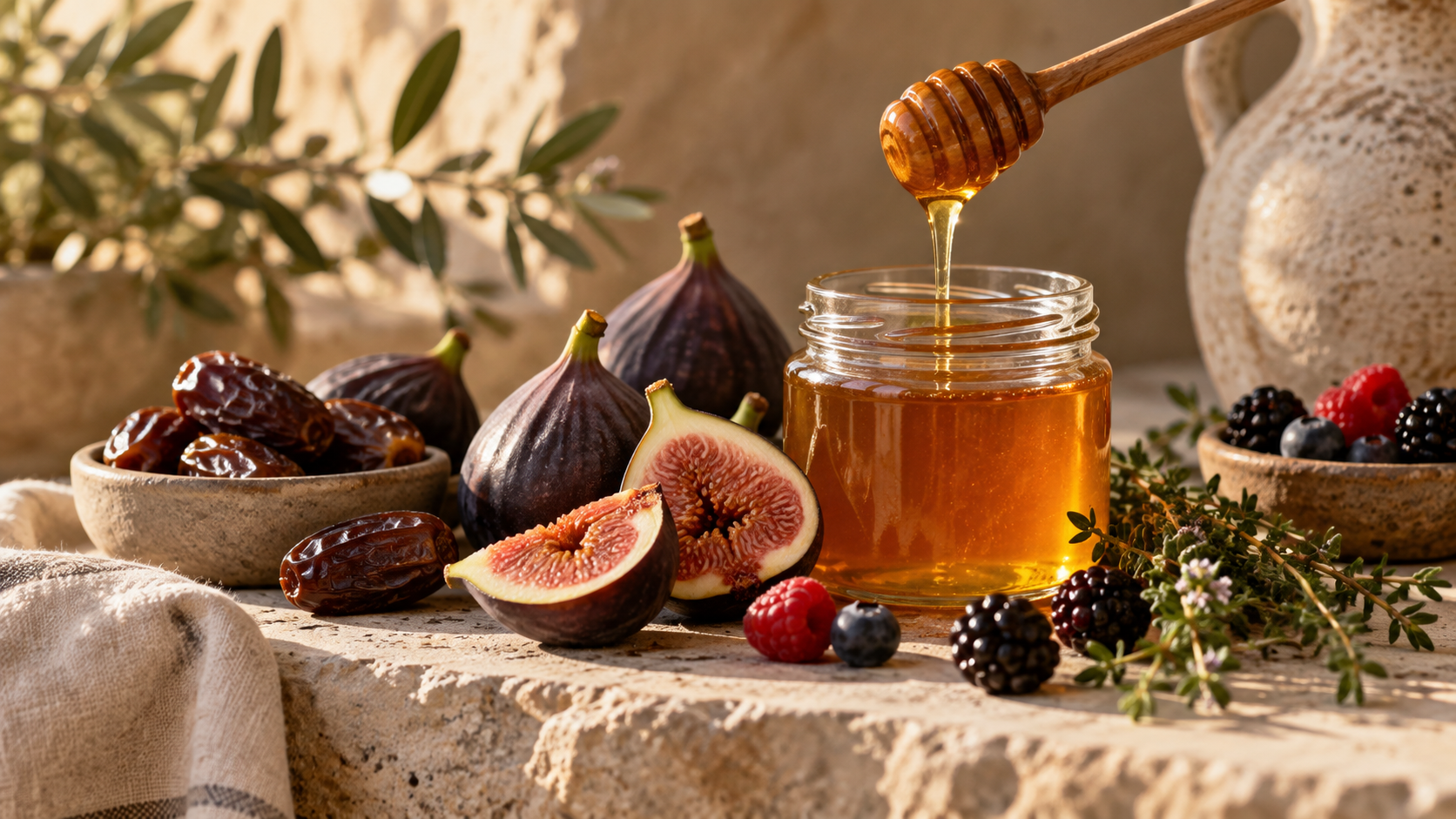
God designed the human body to experience and enjoy sweetness. He also designed natural sources of sweetness, including whole fruits, raw honey, and dates, to come packaged with fiber, antioxidants, vitamins, and minerals that moderate their metabolic impact and support the body's systems. The sweetness in a fresh fig arrives with potassium, calcium, and polyphenols. The sweetness in raw honey comes with antimicrobial compounds, enzymes, and trace minerals. The sweetness in a date comes with fiber that slows glucose absorption.
The modern food industry's project of isolating sweetness from its natural context, concentrating it, and inserting it into processed products at doses far exceeding anything found in nature, is a departure from that design. Whether the isolated sweetener is sugar, high-fructose corn syrup, erythritol, or xylitol, the principle holds: the body was designed to process sweetness in its whole-food form, not in industrial concentrations.
This is not a call to eliminate all sweeteners from your life. It is a call to stewardship: to understand what you are consuming, to prefer whole-food sources of sweetness when possible, and to use processed alternatives with awareness rather than assumption.
Practical Guidance for Whole-Person Sweetness Stewardship
Here is what the current evidence supports as a wise, integrative approach:
Prioritize whole-food sweetness. Fresh and dried fruits, raw honey in moderate amounts, and naturally sweet vegetables like sweet potatoes and beets provide sweetness within a nutritional matrix the body recognizes and processes well. These are the forms of sweetness God placed in creation.
Read labels with intention. Xylitol, erythritol, sorbitol, and other sugar alcohols appear in many products marketed as "healthy," "diabetic-friendly," or "keto." Awareness of their presence allows you to make informed choices about frequency and quantity.
Moderate, do not eliminate. The cardiovascular signal in the xylitol research appears dose-dependent. Occasional, small amounts in products like toothpaste or a single piece of gum are unlikely to carry the same risk as daily consumption of multiple xylitol-containing products. Context and quantity matter.
Support your cardiovascular system holistically. The GWH Cardiovascular Health specialist and Nutrition specialist work together to help members understand how dietary choices, including sweetener use, interact with their overall heart health picture. Factors like omega-3 intake, anti-inflammatory nutrition, physical activity, sleep quality, and stress management all shape cardiovascular risk in ways that no single food choice can override in either direction.
Consider your individual context. People with existing cardiovascular risk factors, platelet disorders, or a history of clotting events may have particular reason to discuss xylitol consumption with their cardiologist or primary care provider. The research does not suggest universal harm, but it does suggest that individual risk profiles matter.
How Genesis World Health Supports Your Nutrition Decisions
One of the most common frustrations our members bring to the Genesis Council is the experience of trying to make healthy choices, only to discover that what they thought was safe may not be. The sweetener landscape is a perfect example: the science is evolving, the marketing is confident, and the gap between the two can leave health-conscious people feeling confused and misled.
The GWH Nutrition specialist helps members navigate exactly this kind of complexity, examining not just macronutrients and calories but the full biochemical and metabolic picture of what they consume. For members with cardiovascular concerns, the Cardiovascular Health specialist provides a deeper lens on how dietary choices interact with heart health markers, platelet function, and inflammatory pathways.
Our approach is never to generate fear or to issue blanket prohibitions. It is to equip you with the knowledge to make informed, faith-guided decisions for the body God has entrusted to you. That is what whole-person stewardship looks like in practice.
Understand What You Are Eating
The GWH Nutrition and Cardiovascular Digital Health specialists are ready to help you navigate the evolving science of sweeteners, food additives, and heart health. Get personalized insights grounded in faith, science, and whole-person wisdom.
A Personal Note from Genesis World Health
The information shared in this article is for educational purposes and reflects our commitment to integrating faith, science, and whole-person wellness. It is not a substitute for professional medical advice, diagnosis, or treatment. Every person's health journey is unique and what works for one may not be right for another.
We encourage you to consult with cardiologists, registered dietitians, functional medicine physicians, and your primary care provider when making significant changes to your dietary choices and sweetener use. Our prayer is that this knowledge empowers you to make informed, faith-guided decisions for the body God has entrusted to you.
Sources & References
- European Society of Cardiology Congress 2026. "Xylitol may increase the risk of cardiovascular events." ESC Press Release, August 2026. https://www.escardio.org/news/press/press-releases/xylitol-may-increase-the-risk-of-cardiovascular-events/
- Witkowski M, et al. "Xylitol is prothrombotic and associated with cardiovascular risk." European Heart Journal. 2024;45(27):2439. https://pubmed.ncbi.nlm.nih.gov/38842092/
- NIH Research Matters. "Xylitol may affect cardiovascular health." National Institutes of Health, 2024. https://www.nih.gov/news-events/nih-research-matters/xylitol-may-affect-cardiovascular-health
- Debras C, et al. "Artificial sweeteners and risk of cardiovascular diseases: results from the prospective NutriNet-Sante cohort." BMJ. 2022;378:e071204. https://pubmed.ncbi.nlm.nih.gov/36044987/
- Yin R, et al. "Artificially sweetened beverages and cardiovascular disease risk: a systematic review and meta-analysis." PubMed. 2025. https://pubmed.ncbi.nlm.nih.gov/39557594/
- Microbiome Journal. "Xylitol and gut microbiome: prebiotic effects and short-chain fatty acid production." Microbiome. 2021;9:65. https://microbiomejournal.biomedcentral.com/articles/10.1186/s40168-021-01029-6