Frankincense, Myrrh & the Healing Botanicals of the Bible: The Ancient Aromatic Medicine Science Is Rediscovering
Frankincense, Myrrh & the Healing Botanicals of the Bible: The Ancient Aromatic Medicine Science Is Rediscovering
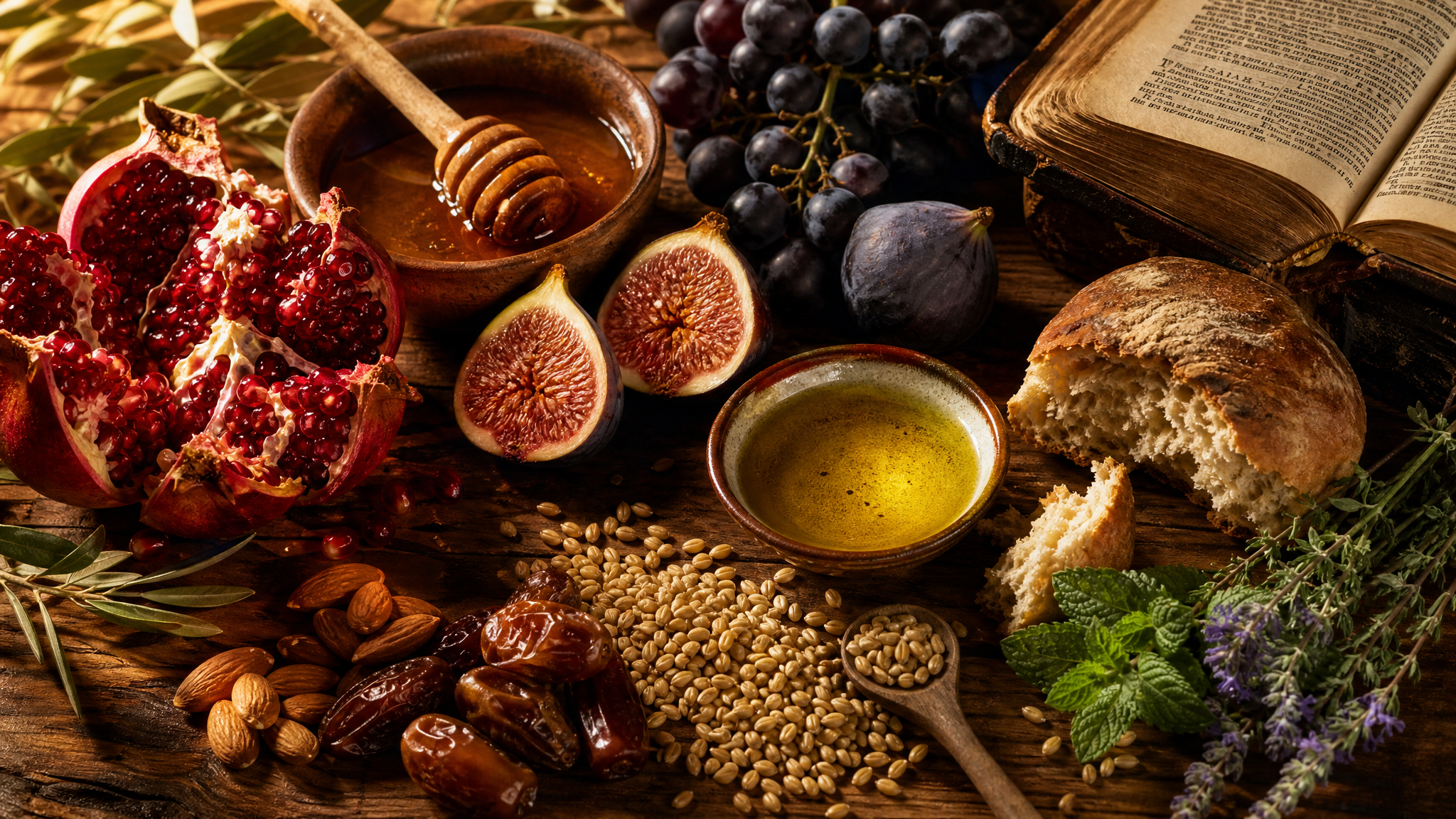
When most people think of "biblical foods," they picture olive oil, figs, and pomegranates — the edible staples of the Promised Land. But Scripture describes an entire second pharmacy: the resins, aromatic oils, and medicinal herbs that ancient peoples burned, anointed, and applied as some of the most valuable medicines of their age. Frankincense, myrrh, hyssop, cedarwood, cinnamon, and spikenard were not merely fragrant luxuries — they were sophisticated botanical therapeutics, and modern research is now confirming much of what the ancients knew by experience.
At Genesis World Health, our Biblical Medicine AI agent draws on this ancient wisdom alongside 700 million+ peer-reviewed scientific studies to help you understand how faith and healing intersect in your personal wellness journey. This article focuses on the aromatic and medicinal botanicals of Scripture — the resins, oils, and herbs. (For the edible foods of the Bible — the seven species of Deuteronomy — see our companion article, Healing Foods of the Bible: Ancient Nutritional Wisdom Backed by Modern Science.)
"He sent out his word and healed them; he rescued them from the grave." — Psalm 107:20
Jehovah Rapha: The God Who Heals
Before we explore the botanicals themselves, it is essential to understand the theological foundation of biblical medicine. In Exodus 15:26, God reveals one of His most intimate names: Jehovah Rapha — "The Lord Who Heals." This name was first spoken at Marah, where bitter water was miraculously made drinkable, and it established a covenant promise: that God's design for humanity includes wholeness, restoration, and vitality.
The Hebrew word rapha means far more than physical cure. It encompasses emotional restoration, spiritual renewal, and the mending of broken relationships. This holistic understanding of healing — body, mind, and spirit as one integrated whole — is precisely the framework that Genesis World Health's Five Sacred Operating Principles are built upon.
"Praise the Lord, my soul, and forget not all his benefits — who forgives all your sins and heals all your diseases." — Psalm 103:2–3
In the New Testament, Jesus Christ is revealed as the living embodiment of Jehovah Rapha. Fittingly, the same aromatic resins used to anoint priests and kings — frankincense and myrrh — were brought to Him at His birth, and myrrh again at His burial. The medicines of Scripture are woven directly into the story of salvation itself.
The Healing Resins: Frankincense and Myrrh
Among the most iconic substances in Scripture, frankincense and myrrh were gifts brought to the infant Jesus by the Magi (Matthew 2:11) — not merely symbolic offerings, but medicines of extraordinary value in the ancient world, at times worth their weight in gold. Together these two resins appear over 600 times in Scripture in contexts of worship, anointing, and healing.
Frankincense (Boswellia)
Modern research has identified boswellic acids in frankincense as potent inhibitors of leukotriene synthesis — the inflammatory pathway implicated in arthritis, asthma, and inflammatory bowel disease. Clinical trials have demonstrated that Boswellia extract significantly reduces joint pain and stiffness in osteoarthritis patients, improves lung function in asthma, and may help manage symptoms of Crohn's disease and ulcerative colitis. Oncology researchers are actively studying frankincense's potential to reduce brain edema in tumor patients and to influence tumor blood-vessel development. For a resin the ancients burned on altars, the depth of modern anti-inflammatory evidence is striking.
Myrrh (Commiphora)
Myrrh contains sesquiterpenes with antimicrobial, anti-inflammatory, and analgesic properties. It has been used for millennia in oral care — a practice validated by modern research showing its effectiveness against the bacteria responsible for gingivitis and periodontal disease. Myrrh also supports tissue repair and has demonstrated anti-photoaging effects in skincare research. Traditional Chinese Medicine has long used frankincense and myrrh together as a "drug pair," and modern studies confirm that their combined effect is often greater than either resin used alone — an early example of botanical synergy that today's herbal medicine still relies upon.
Biblical Essential Oils: Hyssop, Cedarwood, Cinnamon, and Spikenard
Beyond the resins, Scripture references numerous plant-based medicines used in healing, anointing, and purification rituals. Far from primitive superstition, many of these plants contain the very compounds modern phytochemistry prizes today.
Hyssop (Psalm 51:7) was central to ceremonial cleansing and contains carvacrol and thymol — the same compounds that make oregano oil a modern antimicrobial staple, active against a broad range of bacteria and fungi.
Cedarwood oil, used in the purification of lepers (Leviticus 14), contains cedrol, which modern research associates with sedative, anti-anxiety, and anti-inflammatory effects — an early aromatic approach to what we would now call nervous-system regulation.
Cinnamon, one of the ingredients in the sacred anointing oil of Exodus 30:23, contains cinnamaldehyde — a compound shown to improve insulin sensitivity, lower blood sugar, and combat bacterial and fungal infections.
Spikenard (nard), the costly oil Mary poured over Jesus' feet (John 12:3), is derived from a Himalayan root still used today for its calming, sleep-supporting, and skin-soothing properties. That a single alabaster jar was worth nearly a year's wages reflects how highly these botanical medicines were valued.
Bitter Herbs, Garlic, and the Balm of Gilead
Scripture's botanical pharmacy extends well beyond oils and resins. The Israelites in the wilderness longed for the garlic of Egypt (Numbers 11:5) — and with good reason. Garlic contains allicin, a sulfur compound with powerful antimicrobial, antiviral, and cardiovascular benefits; regular consumption is associated with reduced blood pressure, improved cholesterol, and enhanced immune function.
The bitter herbs of Passover (Exodus 12:8) — plants like horseradish, chicory, and dandelion — are rich in compounds that stimulate bile flow and support liver and digestive function, a principle that survives in today's use of bitters before meals.
And the famous Balm of Gilead (Jeremiah 8:22 — "Is there no balm in Gilead?") referred to a prized aromatic resin used for wounds and skin conditions, celebrated across the ancient Near East for its soothing, tissue-healing properties. In Scripture it becomes a metaphor for healing itself — the very thing a broken people most needed.
"So whether you eat or drink or whatever you do, do it all for the glory of God." — 1 Corinthians 10:31
How Genesis World Health Integrates Biblical Medicine
At Genesis World Health, we believe that all paths of healing have value — and that the wisdom encoded in Scripture represents one of humanity's oldest and most profound healing traditions. Our dedicated Biblical Medicine AI agent is specifically trained to help you explore the intersection of faith and health, drawing on both ancient scriptural wisdom and modern scientific research.
Through our AI Agent Council, the Biblical Medicine agent collaborates with specialists in functional medicine, nutrition, naturopathy, and other healing traditions to provide you with a comprehensive, integrated perspective on your health. When you submit a health question to the Council, each agent contributes its unique expertise — and the Biblical Medicine agent ensures that the spiritual and faith-based dimensions of healing are never overlooked.
For those who want to go deeper, our Deep Dive sessions allow you to engage in an intensive 1-on-1 conversation with the Biblical Medicine agent specifically — exploring topics like the therapeutic use of biblical botanicals, scriptural wellness principles, faith-based approaches to chronic illness, or the theological foundations of integrative health.
What the Biblical Medicine Agent Can Help You Explore
- The history and science of biblical essential oils, resins, and their therapeutic uses
- How to safely incorporate botanicals like Boswellia and myrrh into a modern wellness plan
- The role of prayer, faith, and spiritual practice in physical healing
- Biblical perspectives on specific health conditions and their management
- The distinction between aromatic anointing traditions and evidence-based aromatherapy today
- How Christ-centered wellness principles align with evidence-based integrative medicine
- Supplement guidance rooted in biblical botanicals (available through our GWH Shopping resource)
Faith, Science, and the Five Sacred Operating Principles
Genesis World Health was founded on the conviction that faith and science are not adversaries — they are complementary lenses through which we can understand the magnificent complexity of the human body and the wisdom of its Creator. Our Five Sacred Operating Principles — Honor (Kavod), Integrity (Tamim), Authenticity, Informed Choice, and Absolute Truth — reflect this conviction at every level of our platform.
The biblical medicine tradition embodies all five principles. It honors the body as a sacred creation (Kavod). It operates with integrity, acknowledging both the power and the limitations of ancient remedies. It is authentic, drawing on genuine scriptural and historical sources rather than superficial spirituality. It supports informed choice, providing you with the science alongside the Scripture so you can make wise decisions. And it pursues absolute truth — recognizing that the God who created the universe also created the laws of biochemistry, and that these two sources of truth ultimately point in the same direction.
"Do you not know that your bodies are temples of the Holy Spirit, who is in you, whom you have received from God? You are not your own; you were bought at a price. Therefore honor God with your bodies." — 1 Corinthians 6:19–20
Practical Steps: Using Biblical Botanicals Wisely
Aromatic and medicinal botanicals are potent — they deserve respect and informed use. Here are practical, evidence-aware ways to explore the healing plants of Scripture:
- Consider a standardized Boswellia (frankincense) supplement if you struggle with joint inflammation — discuss dosing with your healthcare provider first.
- Look for myrrh in natural oral-care products such as rinses and toothpastes, where it supports gum health.
- Use culinary cinnamon generously — it is one of the easiest biblical botanicals to add to daily life for blood-sugar support.
- Crush fresh garlic and let it rest 10 minutes before heating to maximize allicin activation.
- Explore carvacrol-rich herbs (oregano, thyme, the family of hyssop) as culinary and seasonal-immune allies.
- Treat essential oils as concentrated medicine — dilute properly, never ingest without qualified guidance, and patch-test on skin.
- Add digestive bitters or bitter greens before meals to echo the Passover tradition and support bile flow.
For personalized guidance on how these botanicals interact with your specific health profile and any medications, consider starting with a Genesis World Health Health Assessment. Our AI agents will analyze your health history, goals, and current conditions to provide tailored recommendations that honor both your faith and your biology.
A Note on Inclusive Healing
While Genesis World Health is Christ-centered in its founding vision, we deeply honor ALL healing traditions and ALL people. The wisdom of biblical medicine is offered here as one powerful stream within the vast river of human healing knowledge — alongside Ayurveda, Traditional Chinese Medicine, naturopathy, functional medicine, and every other tradition that seeks to restore wholeness to the human person. Our platform is a sanctuary for anyone who seeks better health, regardless of their faith background.
Explore our full range of learning resources and discover how the ancient wisdom of Scripture, combined with the power of modern AI-driven health education, can transform your approach to wellness. Visit our blog for more articles on integrative health, AI agents, and the science of whole-person healing.
"A cheerful heart is good medicine, but a crushed spirit dries up the bones." — Proverbs 17:22
This article is for educational purposes only and does not constitute medical advice. Always consult a qualified healthcare provider before making changes to your diet, supplement regimen, or health practices.
Ready to Explore Scripture’s Ancient Pharmacy?
The resins and botanicals of the Bible still carry real healing power. Complete your Health Assessment and let the Genesis World Health AI Agent Council help you integrate time-honored, faith-rooted botanicals with evidence-based care — all grounded in both Scripture and science.
Medical Disclaimer: As always, we encourage you to work with qualified healthcare providers — including herbalists, integrative medicine physicians, biblical medicine scholars, and your primary care provider — when making significant changes to your use of biblical botanicals and aromatics. Genesis World Health is an educational platform, not a substitute for professional medical care. Our role is to equip you with knowledge, insight, and the integrative perspective you need to have more informed conversations with your healthcare team.
Sources & References
- Frankincense and Myrrh: Therapeutic Properties and Modern Research — PubMed Central (NIH)
- Biblical Essential Oils That Bridge Ancient Tradition With Contemporary Wellness — Natural News (2026)
- Integrative Medicine and Herbal Healing — National Center for Complementary and Integrative Health (NCCIH)
- What Does Jehovah Rapha Mean? — GotQuestions.org
- Top 10 Bible Foods That Heal — Dr. Axe
- From Scripture to Sustenance: The Healing Foods of the Bible That Still Nourish Us Today — Catholic Connect